

laarmann container laboratory solutions
Companies which are active in the mining sector have iron ore be analyzed by a laboratory to find out more about, for example, the composition. For that reason, big bags with thousand liters of material are sent to a laboratory and then sampled. This is time-consuming, costly and less reliable. LAARMANN will research and design a mobile sampling container to be a part of the sampling process at an iron ore mine. required machines depend on the material. generally to get a representative sample we recommend a crusher or a pulverizing ring mill and a sample divider to separate the samples
container labs and sampling containers are made to analyze or process samples on location. we offer a very broad selection of concepts and have experience with setting up specific laboratory labs and sampling containers for each customers specifications suitable for mobile and stationary purposes. we could offer options such as air conditioning according to requirements, completely self sufficient with power and water supply and multiple stores and rooms.
Laarmann offers a prefect solution for your container laboratory or sampling container whether it is for analyzing materials ,crushing and dividing the sample or an office for analyzing data we will enable to offer a tailor made solution
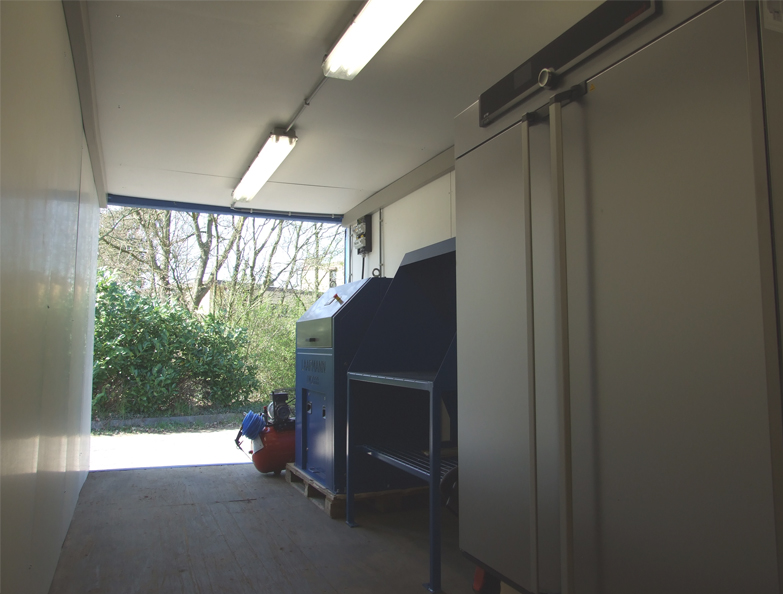
Container Laboratory
container labs are made to analyze or process samples on location. It is here more focused and supplied for scientist to have a clean and suitable working environment it could be that it would require a fixed temperature to carry out the work. These containers a more basic then the sampling containers and are used give an general lab space on site. We offer specific sample analyzing equipment such as a flotation machine, micro ball mills or sieve shakers build within the container lab.
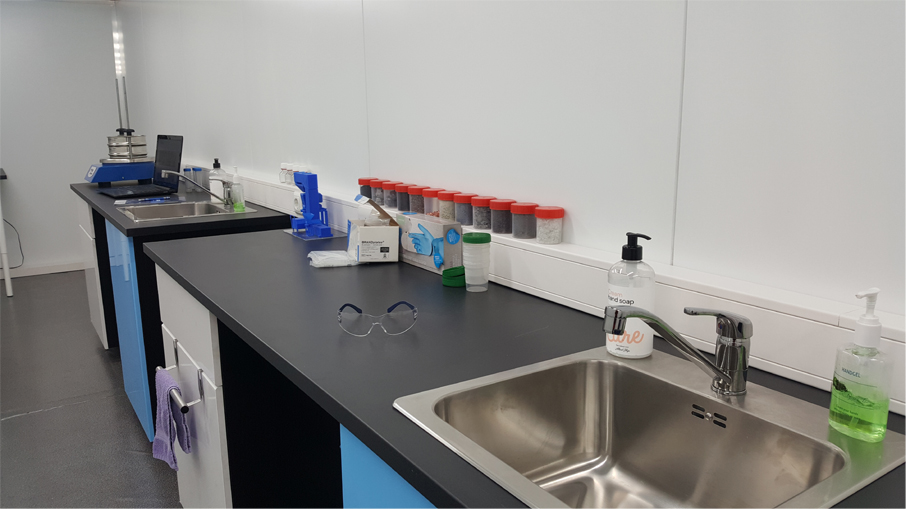 Container lab inside view
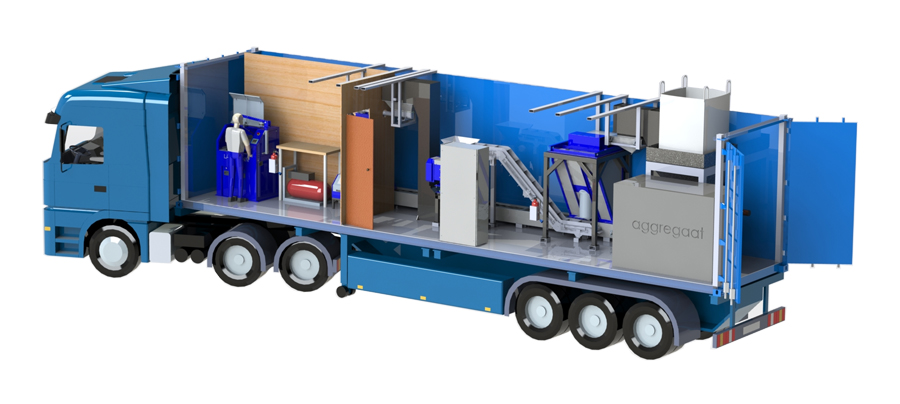 concept drawing transportable container lab
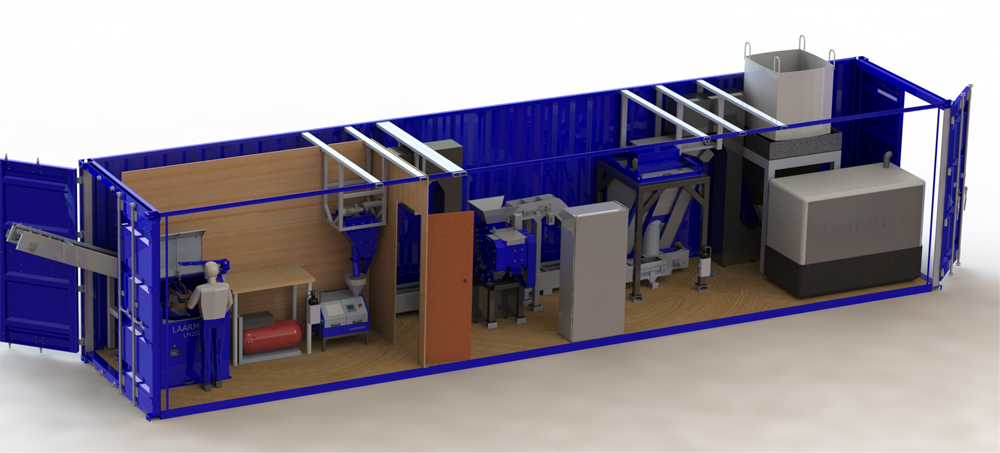 Container lab drawing with vezin sampler,fine crusher, rotary sample divider and lm2000 pulverizing ring mill for sample preparation
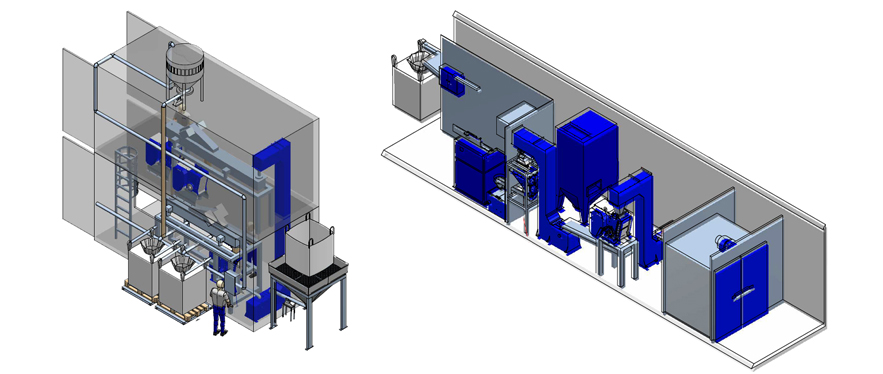 concept drawing of sampling lab with multi floors (left) and sampling container with crusher and sample divider (right)
Sampling container
The explanation underneath is based on iron ore, but in theory the systems process stays the same. We mention the LMFC250 (jaw crusher), but this is a modular system and there could be a rolls crusher (coal) or cutting mill (precious metals recovery from printed computer boards) for example. When looking at the 40ft container "Mobile Lab40ftC", there will be a pre-crushing installed, in the example it is a LMC400 jaw crusher, but again could be a different pre-crushing machine.
1. We send a closed container to the site where the big bag is being filled, at the mine or plant.
2. There will be a small instruction where to make a hole in the roof of the container. The hole will be marked on the outside of the container, as well as 4 holes to fix a hopper on the roof of the container
3. The Hopper of 1500L will be transported in the container and can be picked up out of the container when putting it on top; no extra costs for separate transport.
4. When the hopper is mounted on the top, the operator will have the possibility to open and close the valve letting the product out of the hopper.
5. In the container, exactly under the outlet of the hopper; fixed to the ceiling of the container, there is a vibratory feeder for transporting the product in an even low towards the sampling system.
6. The vibratory feeder feeds a large Vesin sampler taking in this case 5% of sample. Let's assume the starting volume is around 1000L of sample, then we end up with 50L of product.
8. The reject (950L) will be transported outside the container by a conveyor belt into a Big Bag or truck; also the conveyor belt is transported inside the container overseas, no extra costs for separate transport.
9. Than we have the option with a small beaker elevator to transport the product vertically in the crusher (LMFC250); this also could be done in 4 manually standard buckets of 12 Litre.
10. The LMFC250 will crush the iron ore into a particle size < 2.0 mm. The LMFC250 has proven itself as a robust machine after the experiences we have with crushing Ferrochrome and Tungsten carbide for the last 8 years. 11. After the crushing the material is put into a secondary sampler (also a Vesin but smaller model.). Now we can take from the 50 Litre sample a secondary let's say 10%: 5 Litre.
12. The 5 litre sample will enter the RSD-10L rotary sample divider. The carrousel with buckets will contain several different sizes. Each bucket will collect an different sample amount. At the outside of the buckets the specific bucket weight is mentioned. The operator takes out several buckets, calculates the weight inside of the bucket and makes the correct combination of buckets to reach the 1.2kg
13. Finally he can put this sample in a LM2000 pulveriser ring mill to mill the product down to the required end finesses. After the milling process the operator can the final sample (500gr) directly out of the milling bowl using only a coffee spoon.
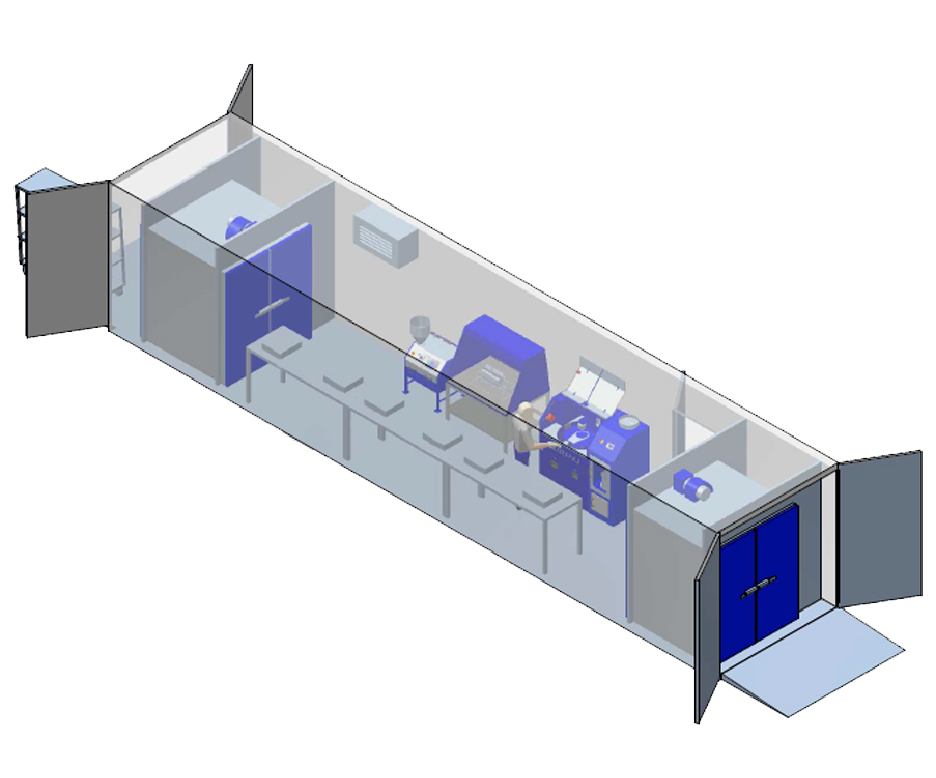 Container lab concept drawing with LM2000 pulverizing ring mill and rotary sample divider