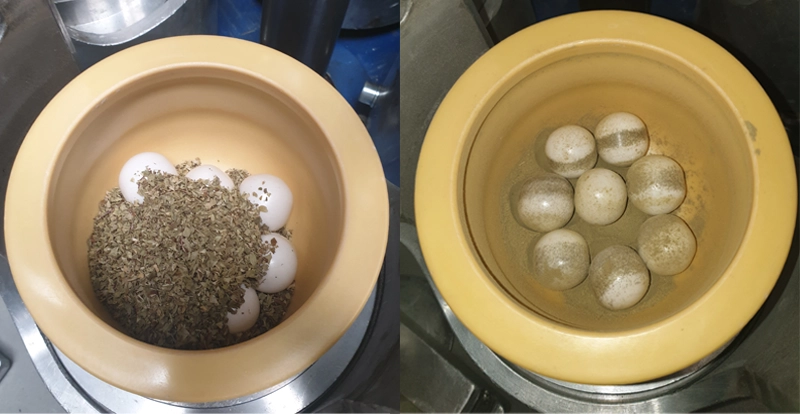
LMPBM4000 Planetary Ball Mill
Planetary ball mill with 8 grinding jar positions for fine grinding and mixing materials

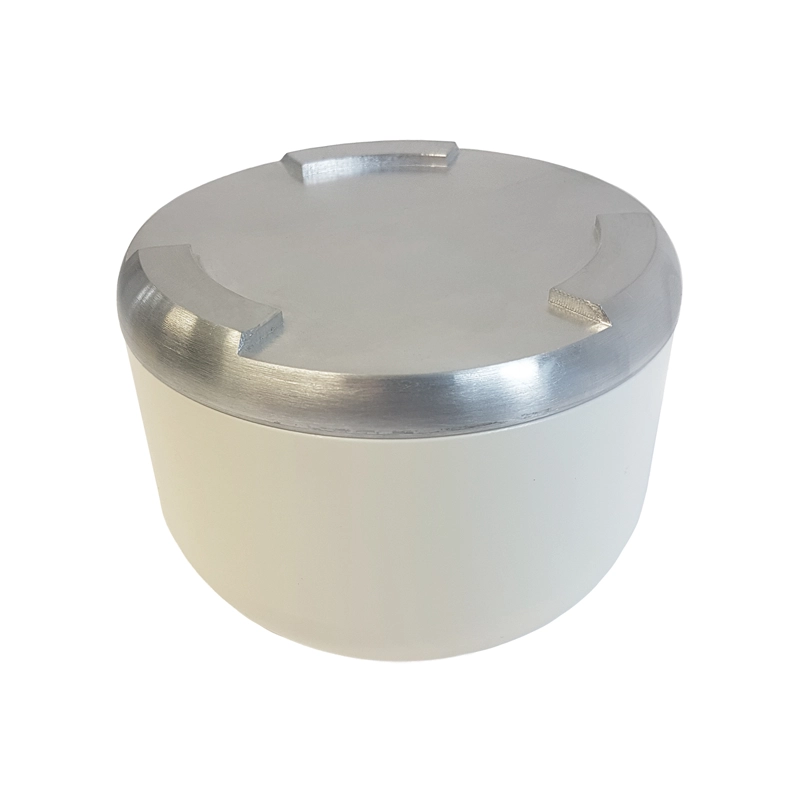
LAARMANN's Planetary Ball Mill has, unlike other similar machines, four positions where up to eight 500ml grinding jars can be placed. Each grinding jar needs to be filled with a right combination of grinding balls in order to guarantee the best results. Like in a planetary system the grinding jars rotate on a orbit around the center. This rotational movement is the self-rotation of the grinding container. The resulting centrifugal and acting acceleration forces lead to a strong grinding effect. Furthermore there are forces working according to the Coriolis acceleration. The result is an intensive grinding effect between the grinding balls and the sample. Depending on the speed ratio different movement patters of the grinding balls / media can be achieved.
Features and Benefits
- High efficient fine grinding up to end fineness 1µm
- Different speed ratios available
- up to 8 Grinding jars from 125ml to 500 ml
- different materials of grinding jars available
- Suitable for long-term trials and continuous use
- Automatic direction reversal to avoid agglomerations
- Reproducible results due to program grinding parameters
- CE - certified

Technical Specifications
| Applications | Crushing and blending materials, achieving uniform mixtures, producing colloids through fine milling, combining metals mechanically, initiating solid-state reactions, reducing particles to the nanoscale, and screening for co-crystal formations. |
| Application fields | agriculture, biology, chemistry, construction materials, engineering / electronics, environment / recycling, geology / metallurgy, glass / ceramics, medicine / pharmaceuticals |
| Working principle | Impact / friction / shear / compression / attrition |
| Process materials | dry, wet, cryogenic - hard, soft, brittle and fibrous |
| Feed size | < 10 mm |
| Batch size / feed quantity | max 8 x 500ml when stacked |
| End fineness | < 1µm; < 0,1µm for colloidal grinding |
| Speed setting | 30 - 425 min-1 |
| Speed ratio | 1:-2 / 1:-2.5 / 1:-3, determine at order |
| Sun wheel speed | 50-650 min-1 |
| Setting adjustment method | digital control panel |
| Amount of grinding jar positions | 4 |
| Number of grinding jars | 1-8 |
| Consumable material/material of grinding tools | Hardened steel, agate, silicon nitride, stainless steel, zirconium oxide, aluminum oxide, tungsten carbide others on request |
| Jar coating | available on request |
| Consumable sizes/grinding jar sizes | 12 ml / 25 ml / 50 ml / 80 ml / 125 ml / 250 ml / 500 ml |
| Stackable grinding jars | 12 ml / 25 ml / 50 ml / 80 ml / 125 ml / 250 ml / 500 ml |
| Grinding ball sizes | 0,1 - 50mm |
| Power supply | 200-240 V 50/60 Hz |
| Central lubrication | yes, single point |
| Electrical requirements | 1.5 kW |
| Power connection | 1 phase |
| Standard | CE |
| Protection code | IP40 |
| Weight | 158kg |
| Dimensions (width x length x height) | 1090 x 660 x 1400 mm |
Planetary ball mill working principle
A planetary ball mill is a type of grinding device that is widely used in laboratories for fine grinding and mixing of materials.
It is named for its unique design, which involves a central sun gear around which multiple smaller grinding jars rotate, much like planets orbiting around the sun.
This setup creates highly efficient grinding by combining the rotational movement of the jars with the spinning action of the mill itself.
The planetary ball mill features a central sun wheel or disk, which is the primary rotating component of the mill. This sun wheel drives the grinding jars and is connected to a motor that powers the rotation.
The speed of the sun wheel's rotation can be adjusted to control the grinding process.
Samples to be ground are placed inside the grinding jars along with the grinding media. The jars are then securely closed with lids, ensuring that no material escapes during the grinding process.
The planetary motion is characterized by the jars rotating around their own axes while they orbit around the sun wheel. This counter-rotating movement creates high-energy impacts between the grinding balls and the sample material, leading to efficient size reduction and mixing.
The combination of centrifugal and Coriolis forces generated by the planetary motion results in very fine and uniform grinding.

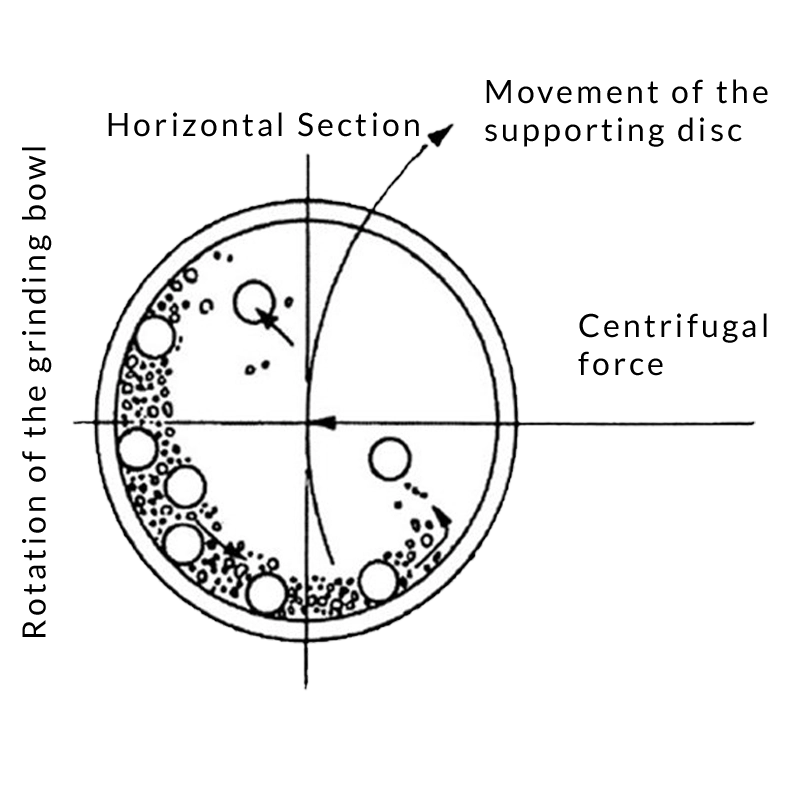
How it works
The sample material, along with the appropriate grinding media, is loaded into the grinding jars. The jars are then sealed tightly to prevent leakage during grinding.
The operator sets the desired grinding parameters, including the rotation speed of the sun wheel, the duration of grinding, and any interval settings for pulse grinding. The direction of rotation can also be reversed to optimize the grinding process.
Once the parameters are set, the planetary ball mill is started. The jars rotate around their own axes while simultaneously orbiting the central sun wheel. This dual movement creates intense grinding action inside the jars.
The grinding media inside the jars are subjected to high-energy impacts, which result in the crushing, grinding, and mixing of the sample material.
The planetary motion produces a high degree of energy transfer to the sample material, leading to rapid and efficient size reduction. The process is highly effective for producing very fine powders, down to the micron or even nanometer scale.
In addition to grinding, the planetary ball mill can also be used for mechanical alloying, mixing, homogenizing, and even for chemical reactions in the solid state.
After the grinding cycle is complete, the machine is stopped, and the jars are carefully removed. The finely ground material is then retrieved from the jars for further analysis or processing.

Grinding media
Surrounding the sun wheel are grinding jars, this model supports 4 to 8 grinding jars.
These jars are the "planets" in the system, and they rotate around the sun wheel while simultaneously spinning on their own axes.
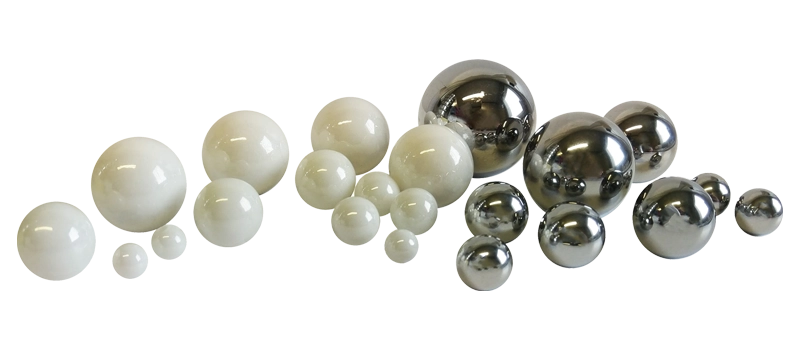
The jars are made of materials like stainless steel, tungsten carbide, or zirconia, depending on the hardness and chemical compatibility required for the grinding process.
Each jar contains grinding media, such as balls made of the same material as the jar, which are used to crush and grind the sample material.
The grinding media inside the jars are typically small balls made from hard materials like stainless steel, ceramic, or tungsten carbide.
The size and number of these balls can vary depending on the desired fineness of the final product.
The media create a powerful grinding action by rolling and cascading inside the rotating jars.

Control Panel
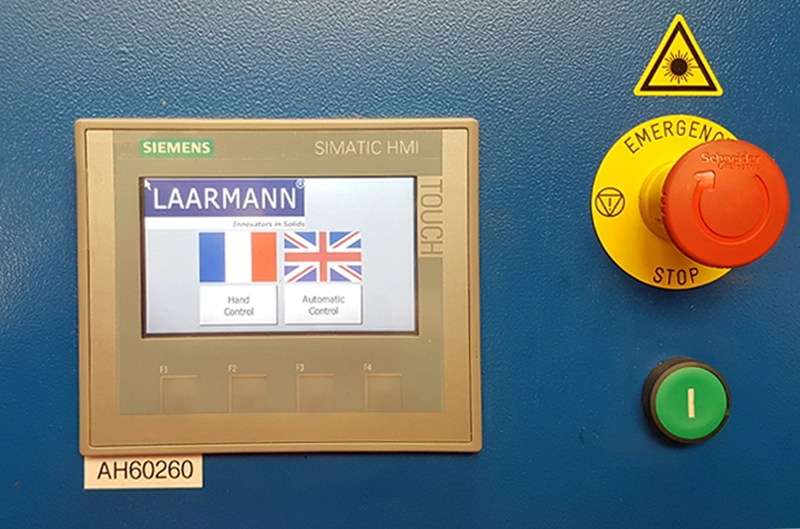
The planetary ball mill is equipped with a control panel that allows the user to adjust parameters such as the rotation speed of the jars, the rotation direction, grinding time, and interval settings. This model offers programmable features for automated operation. The control panel include digital displays and safety features such as hood closing detection and overload protection.


Clamping system and safety features
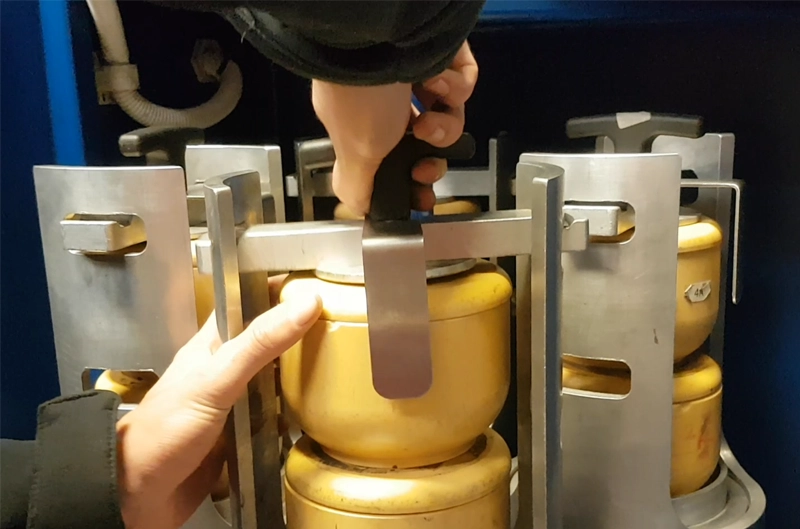
To ensure safe operation, planetary ball mills are designed with various safety features, including secure jar clamping mechanisms, protective covers, and systems to prevent accidental starting of the operation.
LM-PBM4000 Planetary Ball Mill FAQ (Frequently Asked Questions)
Applications
- Used for the fine grinding of hard, brittle, and fibrous materials. It is ideal for preparing samples for X-ray diffraction, electron microscopy, and other analytical techniques.
- Employed in the production of nanoparticles, where very fine particle sizes are required.
- Used for the homogenization of active ingredients and excipients, and for the production of fine powders for tablet formulation.
- Used in the development of new materials by alloying metallic powders through high-energy grinding.
- Ideal for grinding and mixing ceramics, pigments, and chemical compounds.
Visit our Applications page for our database of specific applications