

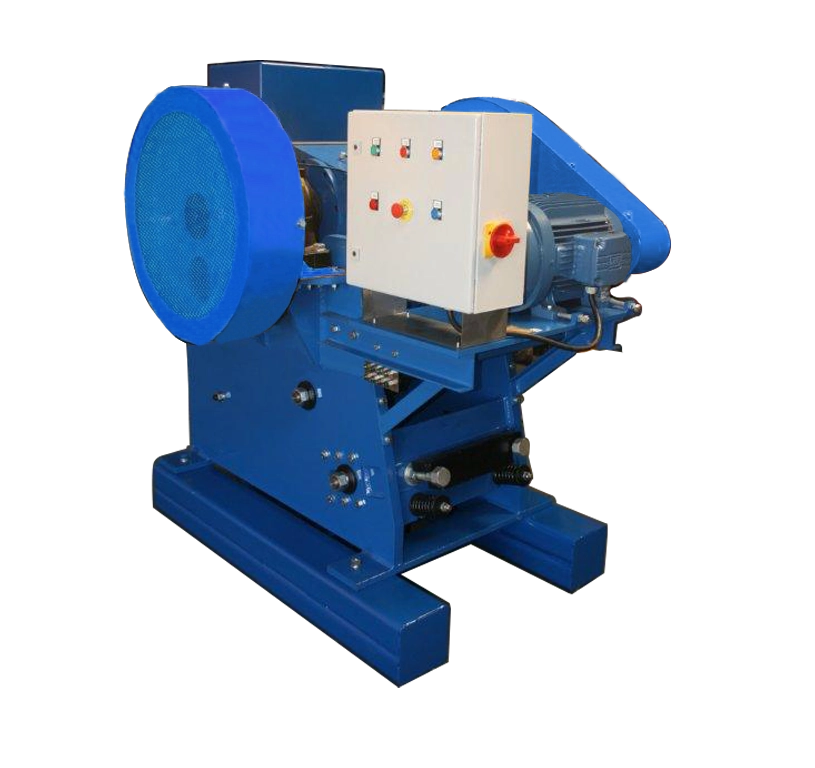
LMC500 Jaw Crusher
The LMC500 Jaw Crusher which is suitable for crusher high volumes of hard materials
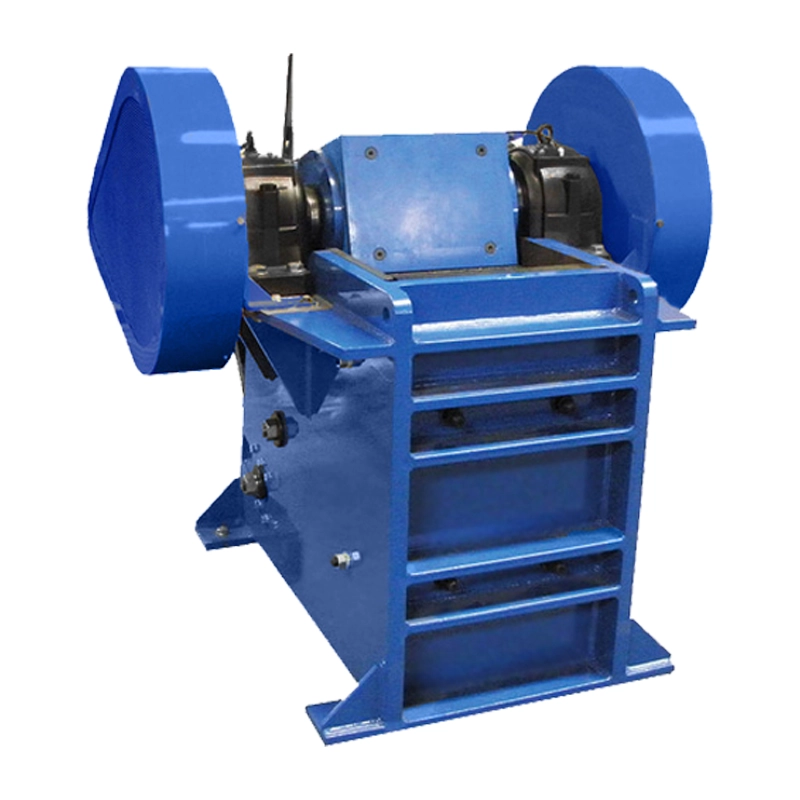
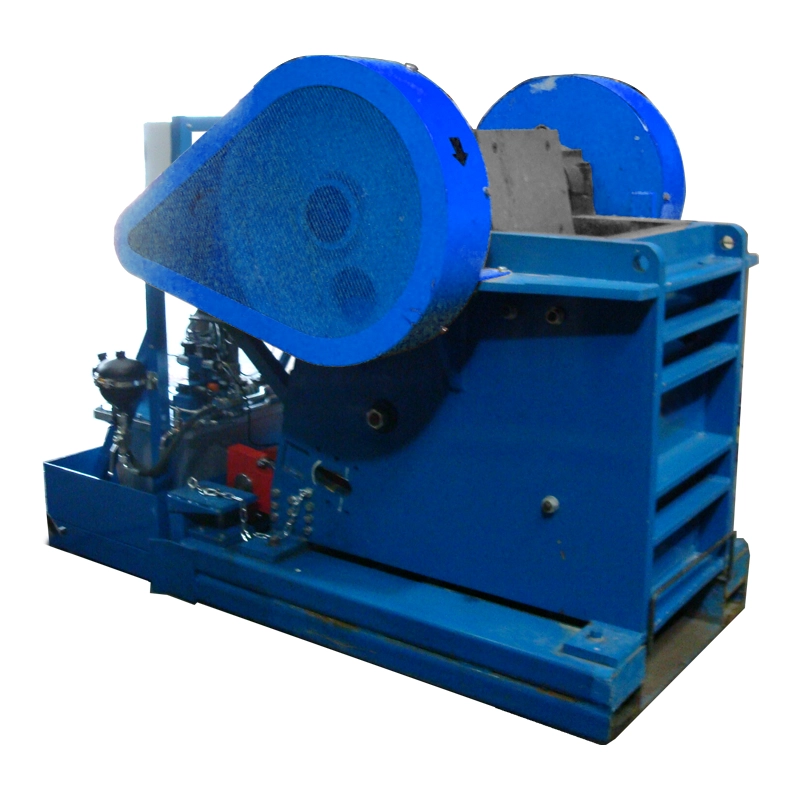
A robust and dependable high-capacity jaw crusher suitable for laboratory and plant applications. The Model LMC Jaw Crusher is used by laboratories and processing companies to crush solid materials such as rocks or soil and ores. The material to be processed falls into the crushing chamber of the LMC Crusher via a guide chute and is crushed by crushing action of a static and a dynamic jaw plate until it passes the preselected gap of the crusher.
Features and Benefits
- Highest throughput and feed size because of jaw inlet and high powered motor
- Quick and easy to clean due to front door access
- Easy exchange of jaw plates and side liners
- Various infeed hoppers: removable, with safety guard, batch loader and metering
- External control by Start/Stop
- End-fineness: 12 mm
- Contamination-free crushing because of 4 different grinding tools
Technical Specifications
| Applications | Pre-crushing of hard and brittle materials |
| Application fields | Mining & quarrying, Recycling, Construction materials, Geology & metallurgy, Glass & ceramics, Chemistry & plastics, Environmental analysis, Engineering & electronics, Building materials, Research & laboratories |
| Working principle | Crushing with moving plate |
| Jaw inlet | 500 mm x 300 mm |
| Gap setting | 12 - 50 mm |
| Feed size | 250 mm (85% of jaw inlet) |
| End fineness | < 12 mm* |
| Throughput | 15.000 kg/h |
| Speed setting | 325rpm |
| Setting adjustment method | external control box |
| Jaw plates / side liner material | manganese steel, tungsten carbide others on request |
| Dynamic frequency | 5.42 Hz |
| Dynamic loading - horizontal | +/- 1.87 kN |
| Dynamic loading - vertical | +/- 8.34 kN |
| Electrical requirements | 22 kW |
| Power supply | 400V ± 10% - 50/60Hz |
| Power connection | 3 phase |
| Dust extraction point | 1 |
| Standard | CE |
| Protection code | IP40 |
| Weight | 3500 kg |
| Dimensions (width x length x height) | 765 x 1190 x 1370 mm |
Jaw Crusher working principle
A jaw crusher is a primary crushing machine used in the mining and construction industry to break down large stones into smaller pieces.
It consists of a fixed jaw and a movable jaw, which are positioned in a "V" shape. The movable jaw exerts force on the rock by pressing it against the fixed jaw, creating a crushing motion.
The raw material, such as rock or concrete, is fed into the jaw crusher from the top through the feeding mechanism. The material enters the crushing chamber, which is composed of the fixed jaw and the movable jaw.
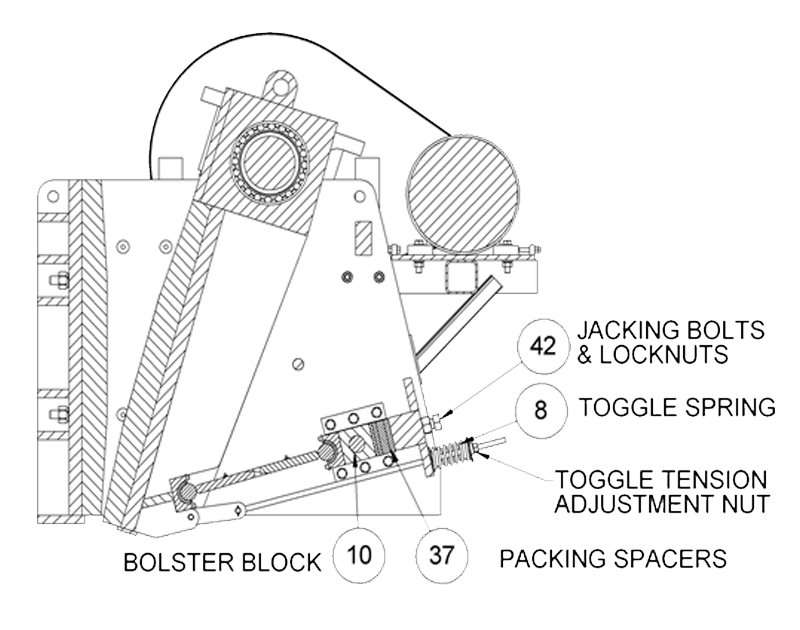
The movable jaw moves back and forth against the fixed jaw due to the eccentric shaft's rotation. This movement causes the two jaws to come together and crush the material between them.
The crushing action is similar to that of a nutcracker, where the jaws apply pressure to break the material.
As the sample is crushed, it is reduced in size and passes through the narrowest point between the two jaws, known as the discharge opening.
The size of the crushed material can be adjusted by using a setting mechanism to control the distance between the jaws.
Once the material is crushed to the desired size, it is discharged from the crushing chamber through the bottom opening. The jaw crusher continues to repeat this crushing process until the material is sufficiently small to pass through the discharge opening.
It can be operated manually or by using an electric motor to drive the eccentric shaft, which in turn drives the movable jaw.
Jaw crushers are commonly used in mining, quarrying, recycling, and construction industries to process various types of materials, including hard rocks, ores, and concrete. They are designed to handle large feed sizes and have a high crushing capacity. Additionally, some jaw crushers may have additional features such as toggle plates, which provide additional protection for the crushing chamber and allow for the adjustment of the discharge opening size.
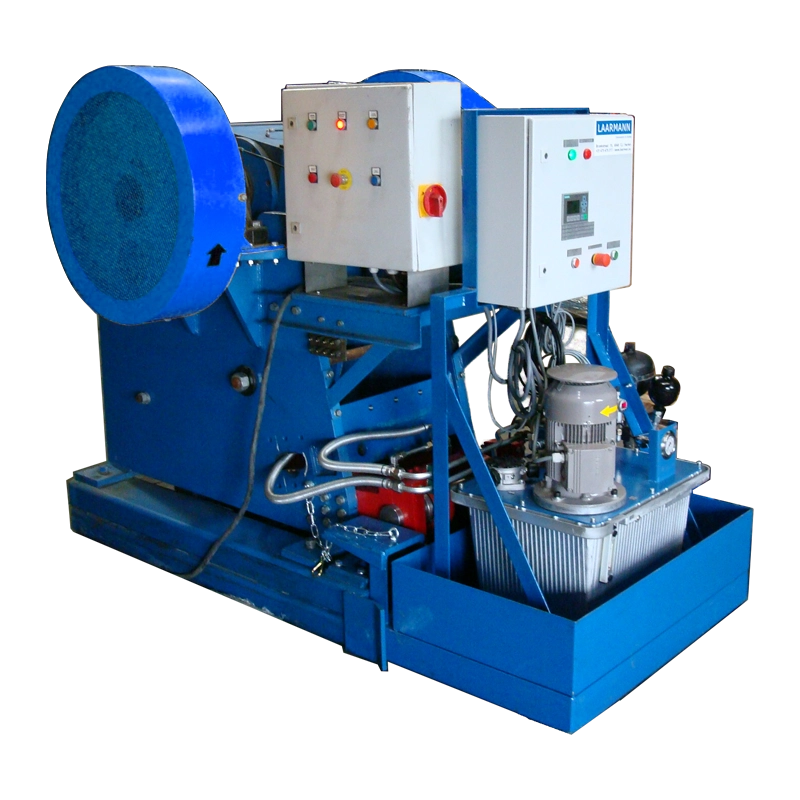
LMC500 Jaw Crusher with Hydraulic Adjustment
This Customized LMC500 Jaw Crusher Has Hydraulic Adjustment and Hydraulic Opening Feature The inclusion of the hydraulic adjustment and hydraulic opening features gives this model increased levels of safety and ease of use, minimizing down times. Should an unbreakable item jam the crushing action of the machine and end up being trapped between the jaws, the hydraulic system makes it easy for the operator to open the crushing chamber without any difficulty.
This helps to prevent any damage to the machine during the process of removing the jammed materials. After the machine has been cleared of any jamming items, the jaw gap distance can be easily set again using the hydraulic adjustment mechanism, which ensures that the size of particles generated by the machine remains constant even without using tools.
LMC500 Jaw Crusher FAQ (Frequently Asked Questions)
Applications
Ores, alloys, basalt, cement, ceramics, quartz, chamotte, coke, construction materials, coal,feldspar, glass, granite, minerals, oxide ceramics, rocks, silicon, slag, and many more
Visit our Applications page for our database of specific applications