

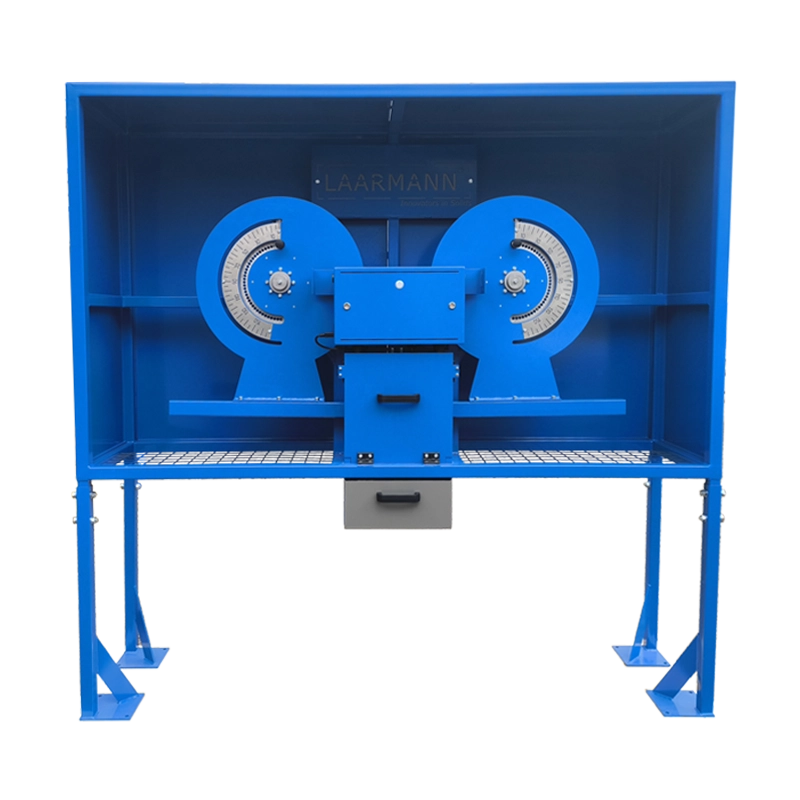
LMBIT Bond Impact Tester
The Impact Tester is a laboratory test machine, which is suitable to determine the crushability test that was developed by F.C. Bond
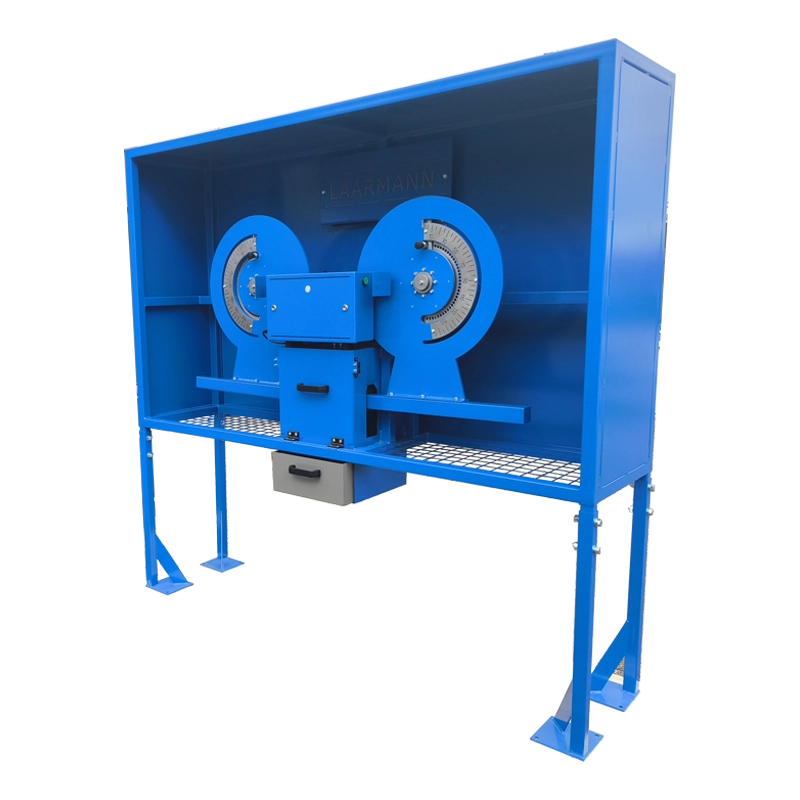
The LMBIT Bond Impact Tester is a tool for assessing the impact crushing resistance of rocks and minerals. By measuring the energy required to crush a sample, the tester provides crucial data for optimizing the design and selection of crushing equipment, which leads to significant improvements in the efficiency and cost-effectiveness of mining and mineral processing operations. Its versatility, accuracy, and cost-saving benefits make it an essential piece of equipment in both the mining industry and material research fields.
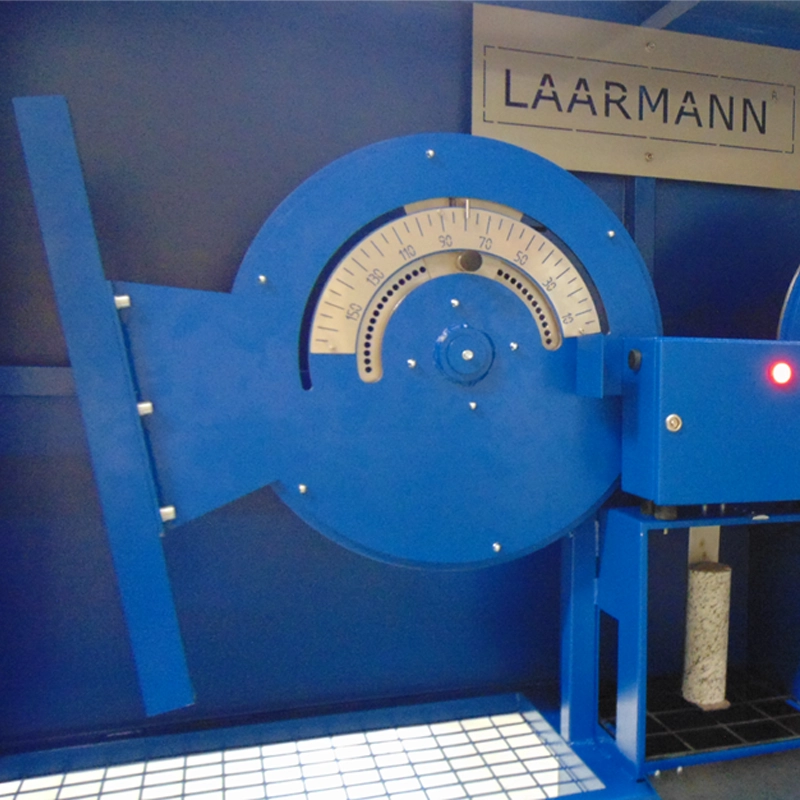
- The Impact Tester consists of two pendulum-mounted hammers, each weighing approximately 30 lb, and mounted to simultaneously strike equal blows on opposite sides of each rock specimen.
- The crushability test is to be performed on ten or more representative pieces of broken stone. Each is to pass a 3-in. square opening and be retained on a 2-in. square opening. More specimens will increase the reliability of the test results.
The impact tester is designed to be operated by one individual operator. Loosing electricity will shut down the magnets and impact hammers will drop when strained.
Features and Benefits
- Hammers controled with magnets from the most accurate results
- Easy to operate and maintain
- Provides precise and reliable data according to the bond norm
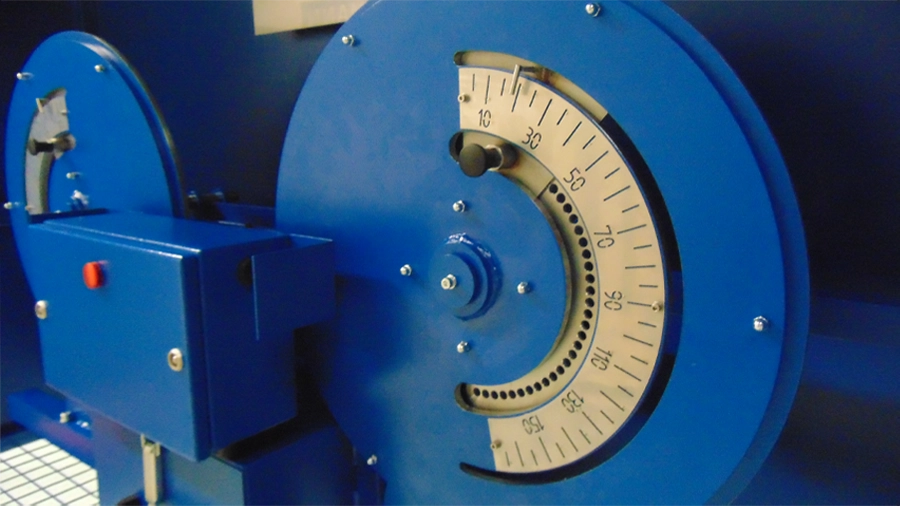
- Pendulum mounted hammer with scale
- Sample to be placed on the platform for specimen
- Test: At least 10 specimens preferably 20 specimens to be tested.
- Ergonomic and efficient design
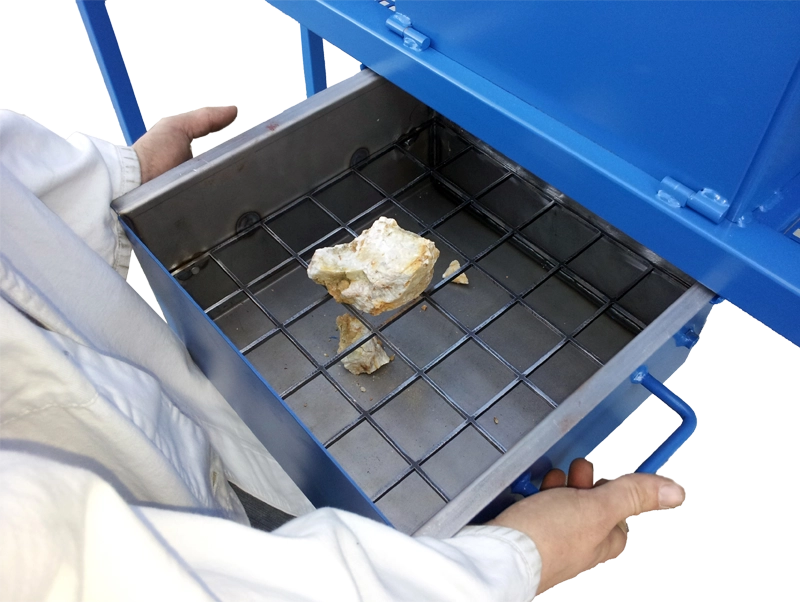
- Closed of sample collector for safety
- Quick, reproducible and accurate test results
- Sample holder adjustable
Technical Specifications
| Applications | Mining industry, providing data on the hardness and impact resistance of various materials, Material research |
| Working principle | Bond Index Material testing by measuring the impact strength or the resistance of the material to impact |
| Feed size | > 50 / < 76 mm |
| Test repetition (Throughput) | At least 10, preferably 20 test runs per sample |
| Setting adjustment method | 2 button activation and hammer adjustment by scale |
| Collector size | 200ml |
| Sieve mesh | 3 and 2 inch |
| Electrical requirements | 0,55kW |
| Power supply | 230V/50Hz/60Hz |
| Power connection | 1 phase |
| Standard | CE |
| Protection code | IP40 |
| Weight | 260kg |
| Dimensions (width x length x height) | 2006 x 506 x 1960 mm |
Bond Index Impact working principle
The LMBIT Bond Impact Tester is a specialized piece of equipment used to determine the impact strength and crushing resistance of rock and mineral samples.
This test is part of a series of Bond tests developed by F.C. Bond to measure the grindability of ores.
The Bond Impact Tester is particularly useful for evaluating the impact toughness of materials, which is critical in industries such as mining, metallurgy, and mineral processing.
A standard-sized rock or ore sample (typically around 2-3 inches in diameter) is prepared and placed securely in the impact chamber.
The pendulum hammer is raised to a predetermined height and then released. The hammer swings down and strikes the sample, breaking it into smaller pieces.
The device measures the energy absorbed by the sample during impact.
This absorbed energy is correlated to the Bond Impact Crushing Work Index (CWi), which represents the amount of energy required to break the sample under impact conditions.
The CWi value is used in the design and selection of crushing equipment, helping engineers predict the crushing power needed for a specific ore.
The Bond Impact Tester provides precise measurements of the impact crushing resistance of materials.
This is essential for determining the crushing power requirements for processing different ores in mining and mineral processing operations.
The data obtained from the Bond Impact Test is crucial in the design and selection of crushers (like jaw crushers, gyratory crushers, and impact crushers).
Knowing the impact strength helps ensure that the chosen equipment is efficient and durable for processing specific ores.
By understanding the impact toughness of the material, the test helps optimize the grinding circuit design, reducing energy consumption and improving overall plant efficiency.
The Bond Impact Tester can handle a wide range of rock and mineral samples, from soft to extremely hard materials, making it versatile for different types of mining operations and mineral processing industries.
Using the Bond Impact Test to predict the crushability of materials helps companies reduce operational costs.
By selecting the appropriate crushers and grinding mills, it lowers the wear and tear on equipment and reduces maintenance expenses.
The precise data obtained from the Bond Impact Test allows for the optimization of crushing circuits, preventing over-design and ensuring that machinery is not over-specified, which can lead to higher initial costs.
Understanding the impact strength of materials ensures that processing equipment is not subjected to unexpected overloads, reducing the risk of equipment failure and enhancing workplace safety.


Safety Features
The Bond Impact Tester has a heavy-duty, steel-enclosed chamber where the rock sample is placed for testing. This camber is been sealed off for protection and can be openend to place a new sample The tester uses a swinging pendulum hammer to apply a controlled impact force on the test sample. The pendulum is released from a known height when pressing two buttons simultaneously for 2 to 3 seconds, and upon striking the sample, it crushes it using the energy of its swing.

Bond Impact Tester FAQ (Frequently Asked Questions)
Applications
Used for ore characterization and for determining the energy requirements for ore comminution.
Helps in the design and optimization of grinding circuits by providing data on the hardness and impact resistance of various materials.
Useful in research and development for testing the impact strength of different materials and alloys.
- Determine the impact strength of ores before they are processed in crushers and grinding mills, helping optimize equipment and reduce energy consumption.
- Provides data that is critical for selecting the right type of crusher for a specific material, ensuring that crushers are neither underutilized nor overloaded.
- Helps in the development of new alloys and materials by testing their impact strength, useful in industries like construction and manufacturing.
- Used to assess the impact strength of construction materials, such as rocks and aggregates, which are used in building foundations, roads, and other infrastructure projects.
Visit our Applications page for our database of specific applications