

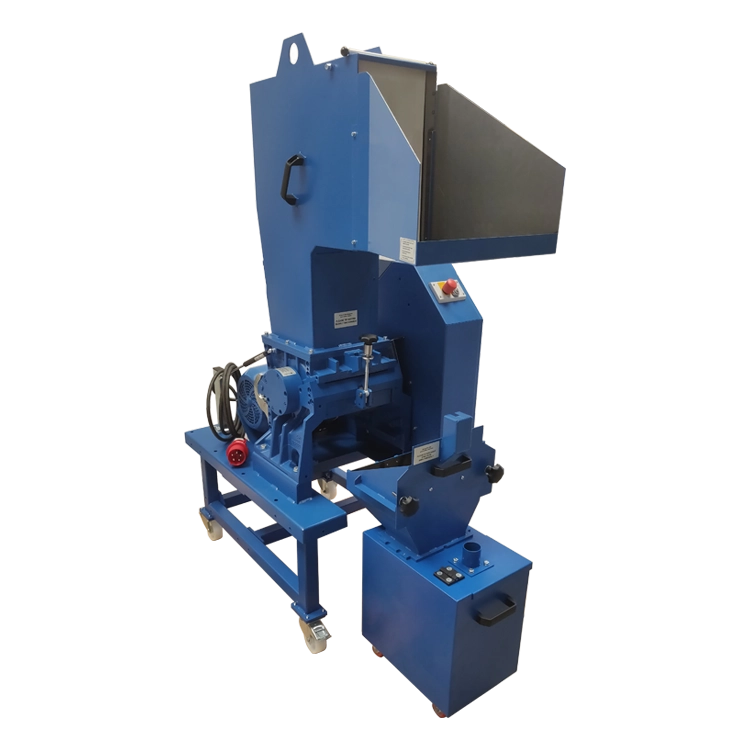
CM2500 Cutting Mill
The CM2500 Cutting Mill is used by laboratories and processing companies for cutting granulate solid materials such as waste, wood and thermoplastics.

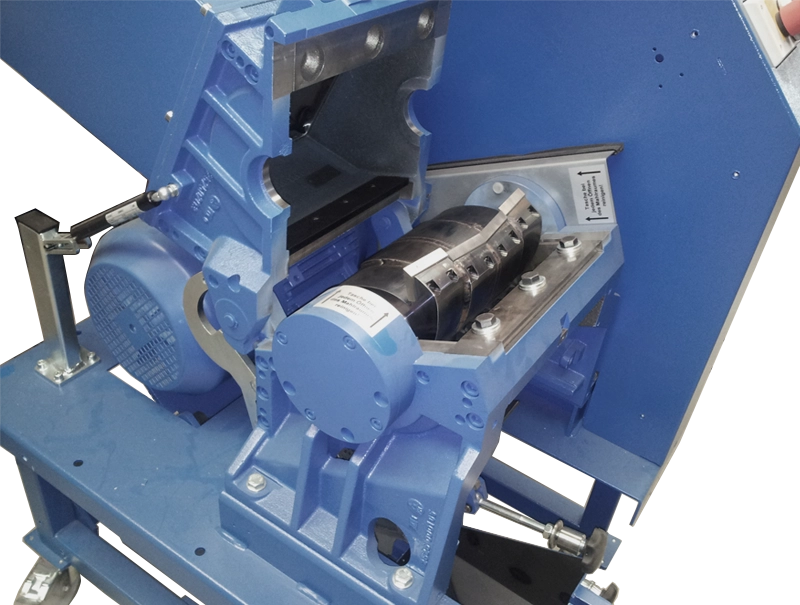
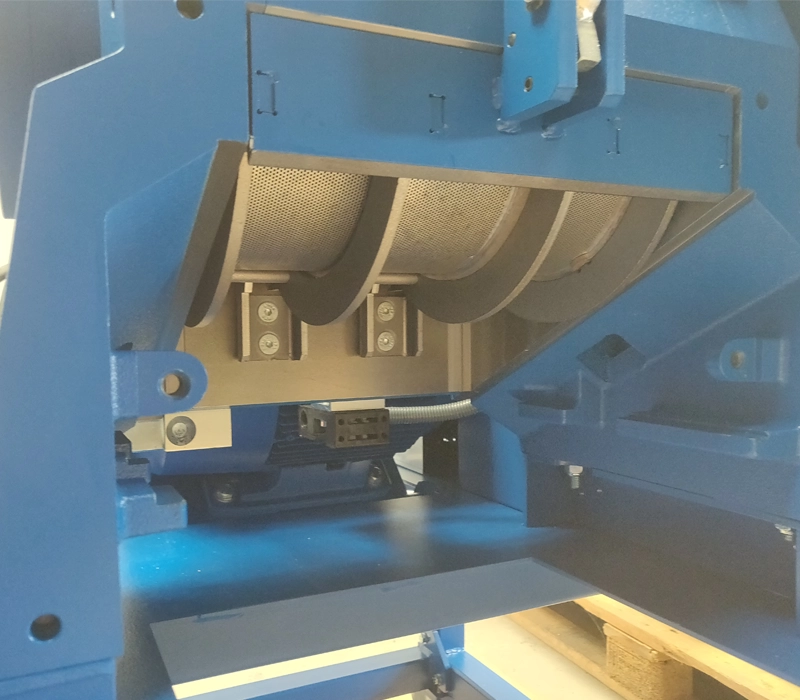
The CM2500 Cutting Mill is used by laboratories and processing companies for cutting granulate solid materials such as waste, wood and thermoplastics. The material to be processed falls into the cutting chamber of the Cutting Mills via a guide chute. Than the product is shredded between rotating and fixed knives. The product passes the sieve as soon as its reached the desired size. The sieve extends over the lower half of the grinding chamber and can be changed easily. Final particle size is determined by the selected sieve perforation aperture. When the grinding process is finished the grinding chamber is fully accessible for quick and easy cleaning by unscrewing two hand screws and folding back the infeed hopper.
Features and Benefits
- Quick and easy to clean
- Full range of bottom sieves
- high feed size of 250mm
- The CM2500 can handle samples of up to 150Kg/h
Technical Specifications
| Applications | rapid size reduction of tough, fibrous, or heterogeneous materials, ideal for sectors like environmental analysis, recycling, agriculture, and pharmaceuticals |
| Working principle | cutting with rotating and stator knifes |
| Feed size | up to 350mm* |
| End fineness | < 1 mm* |
| Throughput | up too 150 kg/h* |
| Speed setting | 280 - 540 rpm |
| Cutting chamber | 250mm * 250mm |
| Setting adjustment method | external start and stop button |
| Rotor material | stainless steel, others on request |
| Bottom sieve material | stainless steel, others on request |
| Bottom sieve sizes | 4 - 20mm round holes |
| Rotor sizes | 195mm diameter |
| Number of rotor knifes | 12 |
| Number of stator knifes | 2 |
| Electrical requirements | 4 / 5,5 / 7,5 kW |
| Power supply | 400V ? 10% - 50/60Hz |
| Power connection | 3 phase |
| Dust extraction point | 1 |
| Standard | CE |
| Protection code | IP40 |
| Weight | 380kg |
| Dimensions (width x length x height) | 900 x 1025 x 1930 mm |
Cutting Mill working principle
The LAARMANN CM2500 Cutting Mill is a powerful industrial cutting mill designed for processing large sample volumes and bulk materials. Built for continuous operation, it delivers efficient size reduction for plastics, biomass, rubber, wood, and recyclable materials.
Its heavy-duty rotor system is equipped with multiple high-strength cutting blades that generate strong shear forces against adjustable stationary knives. This scissor-like cutting mechanism ensures rapid particle reduction and consistent output quality.
The CM2500 features an advanced feeding system that supports controlled material flow into the cutting chamber, optimizing efficiency and throughput. Material is discharged through an interchangeable sieve system, allowing precise control of final particle size.
Constructed from wear-resistant materials such as hardened steel and stainless steel, the LAARMANN CM2500 Cutting Mill is engineered for durability, minimal contamination risk, and long service life in industrial environments.
How it works
The material to be milled is fed into the cutting mill through the feed hopper. The feeding mechanism, if present, helps control the flow of material into the cutting chamber.
As the material enters the cutting chamber, it is caught by the rotating blades and subjected to cutting, shearing, and impact forces.
The stationary knives assist in the cutting process by providing a counteraction to the rotating blades.
The material is continuously cut and reduced in size as it moves through the chamber, with particles becoming progressively smaller until they can pass through the screen or sieve.
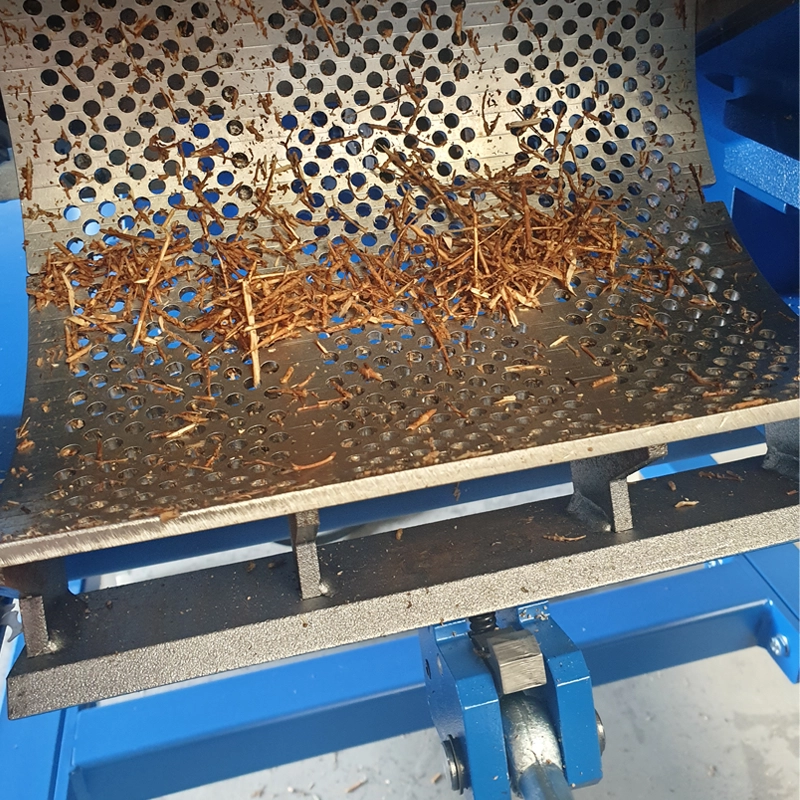
The final particle size is controlled by the size of the openings in the screen or sieve. Only particles that are small enough to pass through the screen are discharged from the mill, ensuring a consistent and uniform output.
By changing the screen size or adjusting the blade configuration, the operator can achieve different particle sizes and textures.
The milled material is collected in a container or directed to the next stage of processing. The resulting fine powder or granules can then be used for further analysis, production, or recycling.
In a recycling facility, a cutting mill might be used to process plastic waste. The plastic materials, such as bottles or containers, are fed into the mill, where the high-speed rotating blades shred the plastic into small granules. These granules can then be melted and reformed into new plastic products, reducing waste and promoting sustainability.
A cutting mill is a powerful and versatile milling device designed for efficient size reduction of a wide range of materials.
Its sharp, rotating blades and stationary knives work together to achieve precise and uniform particle sizes, making it an essential tool in industries such as pharmaceuticals, food processing, plastics, and environmental science.
Whether used for sample preparation, recycling, or production, cutting mills offer reliable and consistent performance.
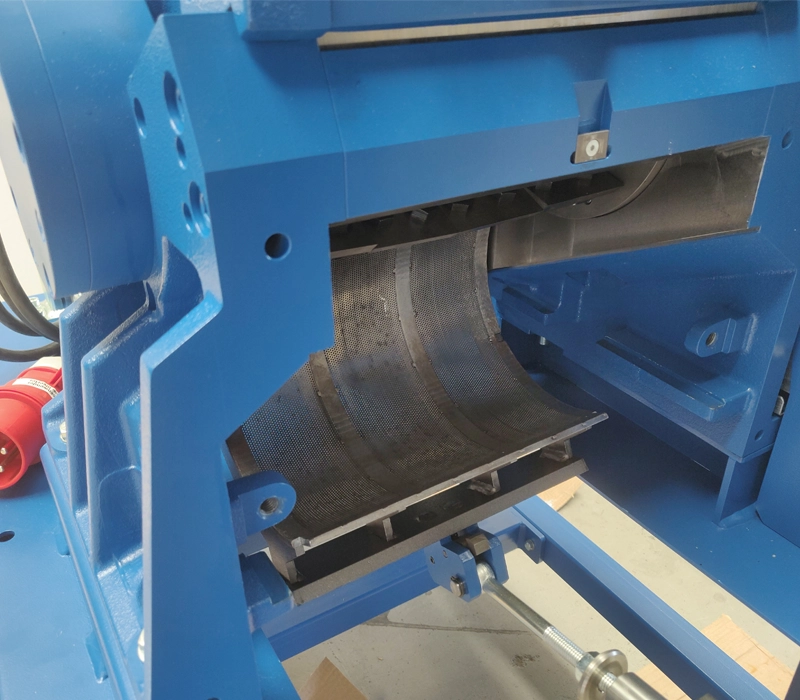
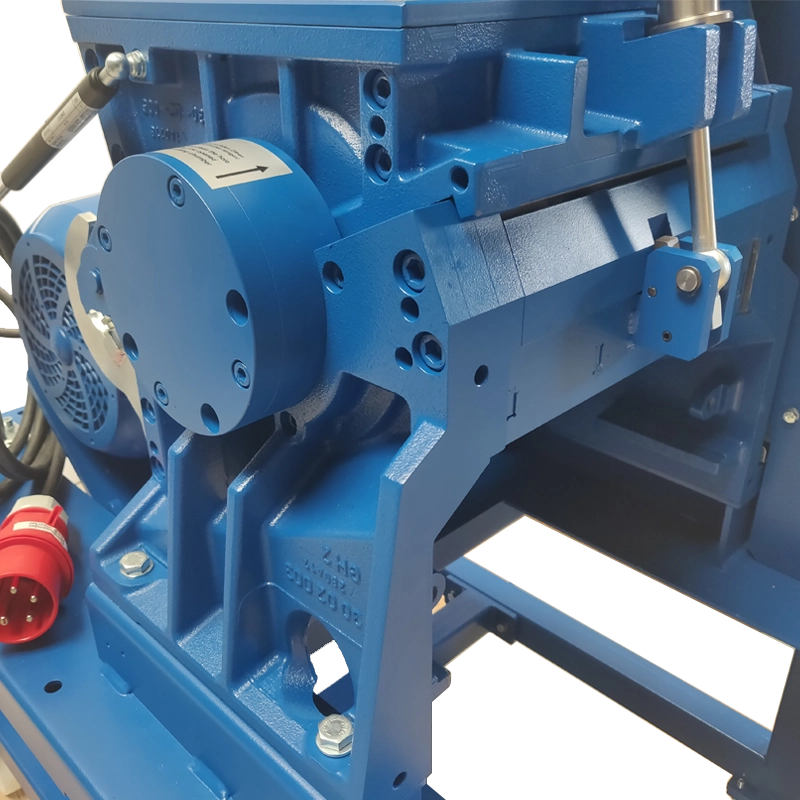
High operator convenience and maximum safety
To protect operators and equipment, cutting mills are equipped with safety features such as emergency stop buttons, overload protection, and safety covers that prevent access to moving parts during operation.
Due to the integrated safety switch the machine can only be started when the "Easy Lock Cover" is closed and the grinding chamber cover is inserted properly.
The Infeed Hopper as well as the housing of the CM2500 is made from solid steel.
The ergonomic design of the machine and the positioning of the funnel and the starter box require a minimum space in the laboratory.
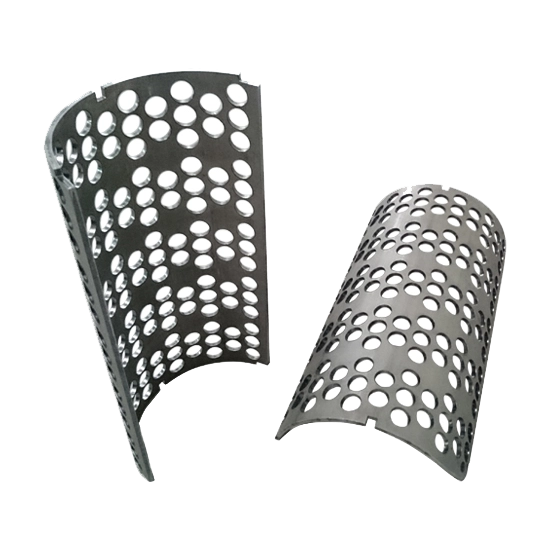
Bottom sieves
The size of the bottom sieve is important in order to decrease the heat creation during the grinding and to increase the capacity. This assures a large open surface which is essential for the cutting process to:
- Obtain a high throughput
- Have a low heat creation during the grinding process
- Receive a homogeneous result
CM2500 Cutting Mill FAQ (Frequently Asked Questions)
Applications
Used to mill active pharmaceutical ingredients (APIs) and excipients to a fine powder for tablet production or other dosage forms.
Employed to reduce the size of food products such as spices, grains, or dehydrated vegetables, enhancing their usability in production or packaging.
Ideal for shredding plastic waste, rubber, and other polymers into smaller pieces for recycling or reprocessing.
Utilized to grind seeds, grains, and other agricultural products for feed, biofuel production, or other applications.
Applied to reduce the size of environmental samples, such as soil or plant material, for analysis and testing.
Ores, alloys, basalt, cement, ceramics, quartz, chamotte, coke, construction materials, coal,feldspar, glass, granite, minerals, oxide ceramics, rocks, silicon, slag, and many more
Visit our Applications page for our database of specific applications