


LMUCM100 Ultra Centrifugal Mill
The LAARMANN Ultra Centrifugal Mill LMUCM100 is a process and laboratory machine, which is designed for grinding of soft, medium hard and brittle materials of any material..


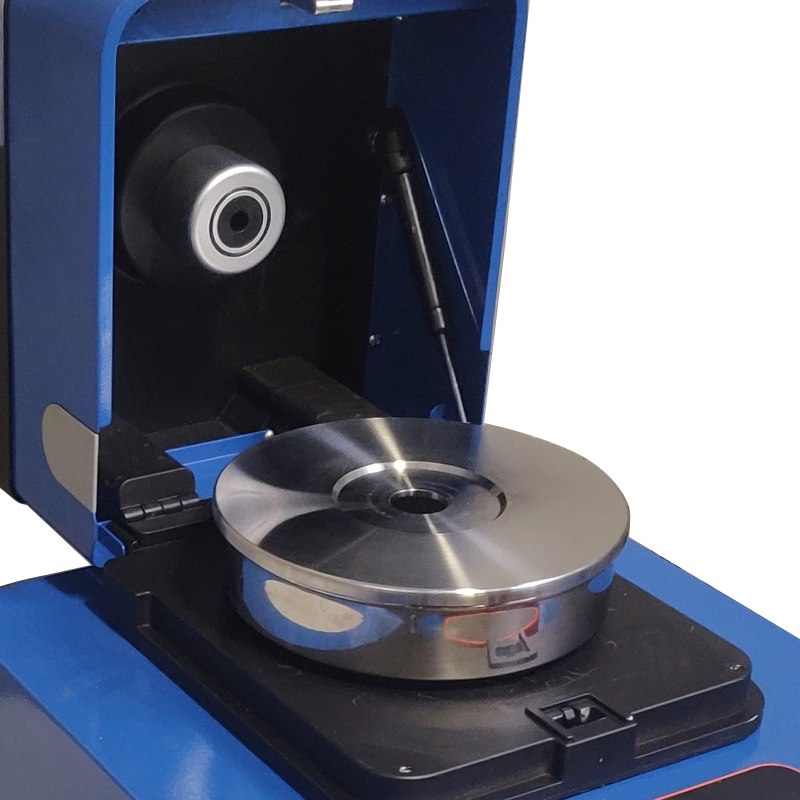
The LAARMANN Ultra Centrifugal Mill LMUCM100 is a process and laboratory machine, which is designed for grinding of soft, medium hard and brittle materials of any material. Its high-speed rotor, combined with the centrifugal forces it generates, ensures that materials are efficiently ground to a fine, uniform particle size, making it an essential tool in laboratories across various industries. The machine accept up to 12mm feed size with an end fineness of 40 ?m. The LMUCM100 Machine can accommodate 1 rotor of choice and one ring sieve of choice. The standard frame of delivery inlcudes the Sample collecting pan and the security cabinet and the infeed hopper form stainless steel. The security cabinet is made from steel. If the 2 handles are opened the grinding process will stop immediately. Ring sieves are available as following: 0,20mm / 0,25mm / 0,50mm / 0,75mm / 1,00 mm / 1,50 mm / 2,00 mm / 3,00 mm / 4,00 mm / 5,00 mm / 6,00 mm Ring sieves:
- Made from stainless steel
- 0,20 mm up to 2,00 mm with trapezoidal perforation
- 3,00 up to 6,00 mm with round holes
- One Collecting Pan stainless steel
- Infeed funnel
- stop/start / reset function
- Speed setting
When the sample enters the grinding chamber the shearing action between a rotor and a fixed grinding bar grinds the sample which, once smaller than the test sieves aperture size, falls trough into the collector bucket.
Features and Benefits
- Easy to clean and maintain
- High-speed centrifugal grinding for rapid particle size reduction.
- Controlled with user friendly digital touchpad
- Adjustable speed from 6000 to 18000 rpm for optimized processing results
- Fast and representative results
- Stainless steel collection pan and safety interlocks for reliable operation.
- Can handle a wide variety of materials
Technical Specifications
| Applications | spices, grains, seeds, pharmaceutical, plant material |
| Working principle | grinding with high speed rotor and centrifugal force |
| Feed size | < 10 mm |
| End fineness | < 40 ?m* |
| Speed setting | 10000-18000 rpm |
| Setting adjustment method | Digital control panel |
| Rotors | 6/12/24 teeth |
| Ring sieves |
200?m up to 2,00 mm with trapezoidal perforation 3,00 up to 6,00 mm with round holes |
| Ring sieves material | stainless steel, others on request |
| Collector volume | 900ml |
| Power supply | 230V/50Hz |
| Electrical requirements | 0,75 KW |
| Power connection | 1 phase |
| Standard | CE |
| Weight | 35 kgs |
| Dimensions (width x length x height) | 400 x 506 x 495mm |
Ultra Centrifugal Mill working principle
The LMUCM100 Ultra Centrifugal Mill from LAARMANN is a high-speed laboratory grinding mill designed for fast, reproducible, and contamination-free size reduction of a wide range of materials. It is ideal for soft to medium-hard, brittle, fibrous, and tough samples and is widely used for laboratory sample preparation in material science, chemistry, pharmaceuticals, food analysis, and environmental applications.
The working principle of the LAARMANN LMUCM100 Ultra Centrifugal Mill is based on the interaction of high rotor speed and strong centrifugal forces. The sample material is accelerated by a rapidly rotating rotor and projected outward against a grinding ring and sieve, where it is efficiently reduced to a defined and reproducible particle size.
At the core of the LM-UCM100 is a precision-engineered high-speed rotor operating at several thousand revolutions per minute (RPM). Depending on the application and sample characteristics, the rotor can be equipped with different blades or beaters to optimize grinding efficiency and particle size distribution.
The rotor is enclosed within a robust and durable grinding chamber fitted with an interchangeable sieve ring. The sieve ring determines the final particle size by allowing only particles smaller than the selected mesh size to pass through, ensuring consistent and reliable results.
Sample material is fed into the LM-UCM100 through a feed funnel or chute, allowing controlled and continuous introduction into the grinding chamber. For enhanced process control, optional automatic feeding systems can regulate the feed rate based on the grinding load.
Once the material has reached the desired fineness, it passes through the sieve and is collected in a sample container. Optional vacuum or suction systems support efficient collection of fine particles and help minimize dust during operation.
The LM-UCM100 Ultra Centrifugal Mill offers flexible adjustment of key parameters such as rotor speed, sieve size, and feed rate. A range of interchangeable sieve rings enables precise control of the final particle size for different applications.
All sample-contact parts, including the rotor, grinding chamber, and sieve ring?are manufactured from wear-resistant and contamination-free materials such as stainless steel, hardened steel, or ceramics, depending on the application requirements.
For safe and reliable operation, the LAARMANN LM-UCM100 is equipped with safety interlocks, overload protection, and an emergency stop function, protecting both the operator and the instrument.
A typical application of the LM-UCM100 is the grinding of dried medicinal plants in pharmaceutical laboratories. The high rotor speed effectively breaks down tough plant fibers, producing a homogeneous fine powder suitable for further analysis or formulation of herbal and pharmaceutical products.


How it works
The material is introduced into the feed funnel, which directs it into the high-speed rotor. The material can vary from powders and grains to tougher substances like plant materials or plastics. The rotor, spinning at high speed, generates centrifugal forces that propel the material outward against the grinding ring or sieve. The material is crushed and ground between the rotor blades and the sieve, resulting in particle size reduction. The grinding occurs quickly due to the high speed, and the material is subjected to intense impact and shearing forces. The material is forced through the sieve, with only particles smaller than the sieve openings passing through to the collection container. Larger particles remain in the grinding chamber until they are reduced in size sufficiently to pass through the sieve. The ground material is collected in a container or connected to a collection system. The resulting fine powder or granules can then be used for further analysis, testing, or processing.

LMUCM100 Ultra Centrifugal Mill FAQ (Frequently Asked Questions)
Applications
- Used for the fine grinding of active ingredients, excipients, and other pharmaceutical materials to achieve uniform particle sizes for tablet production, analysis, or further processing.
- Employed to grind spices, grains, seeds, or other food products to fine powders, enhancing their usability in food production or quality control.
- Applied to prepare materials like ceramics, polymers, and metals for further analysis or research, particularly in studies requiring precise particle size distribution.
- Used to grind soil, plant material, or other environmental samples for chemical analysis or testing.