


LMDM200 Disc Mill
A disc mill is a highly efficient and versatile grinding machine designed to finely process a wide range of materials, including minerals, grains, and other solid substances, by utilizing precision-engineered, rotating discs for rapid and consistent particle size reduction.


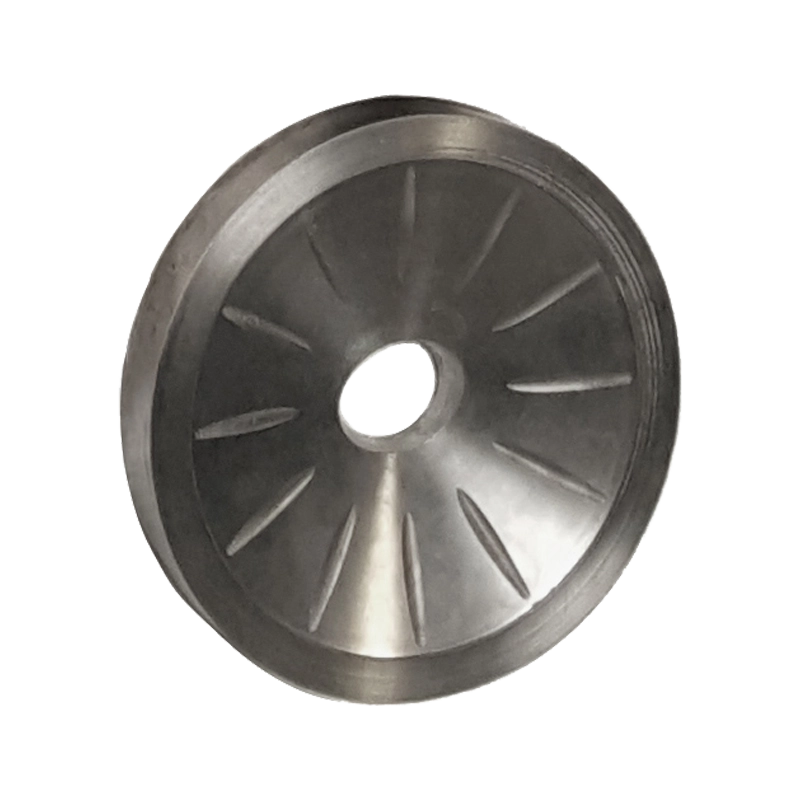

The LMDM200 Disc Mill is a simple, durable machine for fine grinding of soft to hard ores, alloys, rocks, ceramics, soils and similar materials.
The internal surface of the grinding chamber is smooth and easy to clean. Operating capacity depends upon the disc gap setting, feed size and the crushing properties of the material. The grinding chamber comprises one fixed and one rotating 200mm diameter grinding disc
Turning about a horizontal axis. The internal Surfaces of the grinding chamber are smooth Faced and easily accessed and cleaned between Samples.
The machine is supplied as standard complete with:
- 1.5 KW (3 phase) motor
- One fixed grinding disc
- One rotating grinding disc
- Stepless disc gap adjustment
- Sample collector
The operating capacity of the Disc Mill DM200 depends upon the disc gap setting, feed size and the crushing properties of the material being processed. The LAARMANN Disc Mill DM200 can be supplied as an option mounted on a specially built bench complete with dust extraction hood for dust free operation.
- Primary Crushing
- Pilot plants
- Use in Sampling stations
Features and Benefits
- Quick and easy to clean
- Contamination free grinding
- Easily exchange of discs
- Stepless gap settings
- Batch and continuous use
- Rpm adjustment
- Zero point adjustment

Technical Specifications
| Applications | separation of different materials, particularly minerals, by agitating a pulverized mixture of solids in liquids |
| Application fields | Agriculture, Food production, Plastic, Recycling, Research and development, Pharmaceutics |
| Working principle | Pressure and friction from one rotating disc and one stationary disc |
| Feed size | 20 mm |
| End fineness | < 100?m* |
| Throughput | 150 kg/h* |
| Speed setting | 690rpm (828rpm at 60Hz) |
| Setting adjustment method | digital display with buttons |
| Disc material | Zirconium oxide, Tungsten carbide, PU Coated, Stainless steel, Hardened steel, Abramax 500 others on request |
| Collector sizes | 3000ml |
| Electrical requirements | 1.5 kW |
| Power supply | 220V ? 10% - 50/60Hz |
| Power connection | 3 phase |
| Standard | CE |
| Protection code | IP40 |
| Weight | 130kg |
| Dimensions (width x length x height) | 865 x 420 x 385 mm |
Disc Mill working principle
The material is fed into the disc mill through the feeding system. As the material passes between the two grinding discs, it is subjected to intense shearing and crushing forces. The rotating disc grinds the material against the stationary disc, breaking it down into smaller particles.
The distance between the discs determines the particle size. A smaller gap results in finer particles, while a larger gap produces coarser particles. The processed material is then collected from the discharge system.
The disc mill machine is a versatile piece of grinding equipment used in a variety of industrial applications, including mineral processing, agriculture, food production, and waste recycling.
The machine uses a pair of horizontal grinding discs, one stationary and the other rotating, to crush, grind, or shear materials. Disc mills are known for their efficiency in producing fine and uniform particle sizes.
The core components of a disc mill are the two grinding discs: one is fixed, and the other rotates at high speed. The distance between these discs can be adjusted to control the fineness of the output material.
The machine has a feeding hopper where the material is introduced. The feed material is channeled between the grinding discs, where it is subjected to high shear and compression forces.
A powerful motor drives the rotating disc. The motor's speed and power depend on the application and the material being processed. After grinding, the processed material is discharged through an outlet.
The particle size of the output can be controlled by adjusting the gap between the grinding discs or by using screens or classifiers.
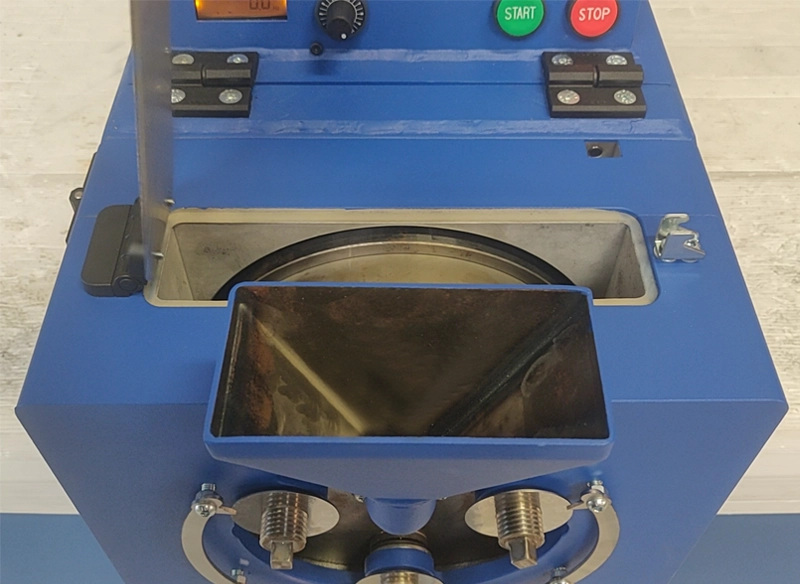

LMDM200 Disc Mill FAQ (Frequently Asked Questions)
Applications
- Used for grinding grains, seeds, and agricultural byproducts into flour, feed, or other processed forms. Disc mills are also employed for dehulling and processing cereal crops.
- In food production, disc mills are used for grinding spices, coffee beans, nuts, and dried fruits. The ability to achieve precise particle sizes is crucial for flavor and texture consistency in food products.
- Disc mills are used for pulverizing minerals and ores to prepare them for further processing or analysis. They are particularly useful in sample preparation for laboratory testing.
- They can process plastic, rubber, and other waste materials into fine particles for recycling. The consistent particle size improves the efficiency of the recycling process.
- Disc mills are used for grinding active pharmaceutical ingredients and chemical compounds. The fine and consistent particle size achieved helps improve the efficacy and stability of pharmaceutical formulations.
- In research and development, disc mills are used for studying the mechanical properties of different materials and for developing new products with specific particle size requirements.