

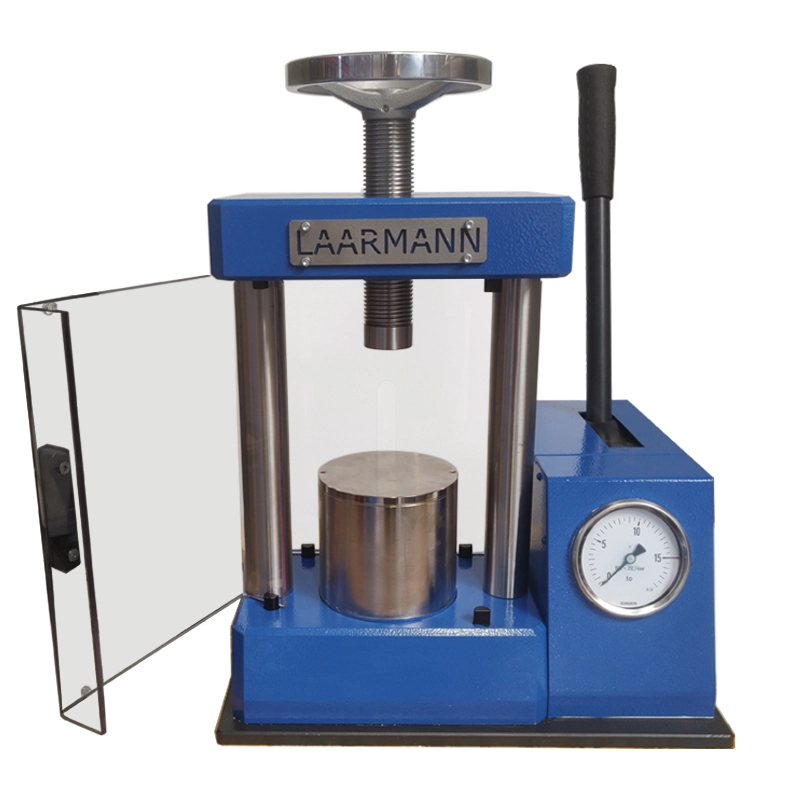
LMTP 1-15 Tons Pellet Press
High performance Pellet press for?compressing powdered raw materials into solid, cylindrical pellets


Manual Hydraulic Pellet Press for the precise and reproducible preparation of powder samples. The press unit is designed for free standing on the laboratory bench. The pressing pressure is freely selectable between 1 and 15 tons using a ergonomically designed lever for creating the required pressure.
Features and Benefits
- No maintance required
- Provides uniform sized pellets
- 1 - 15 tons of pressure
- Can convert a wide range of raw materials
- useful for biomass fuels and animal feed
Technical Specifications
| Applications | Preparation of pressed powder pellets for X-ray/XRF analysis |
| Working principle | Pressing fine powder to tablet form |
| Setting adjustment method | Analogue |
| Pressure control | Steps of 0,2 ton |
| Max pressure | 15 T |
| Piston | 108mm |
| Press tool | 13 / 32 / 40 mm |
| Width between pillars | 150 mm |
| Minimum inner heigth | 50 mm |
| Maximum inner heigth | 142 mm |
| Standard | CE |
| Protection code | IP40 |
| Weight | 42kg |
| Dimensions (width x length x height) | 400 x 360 x 300 mm |
Pellet Press working principle
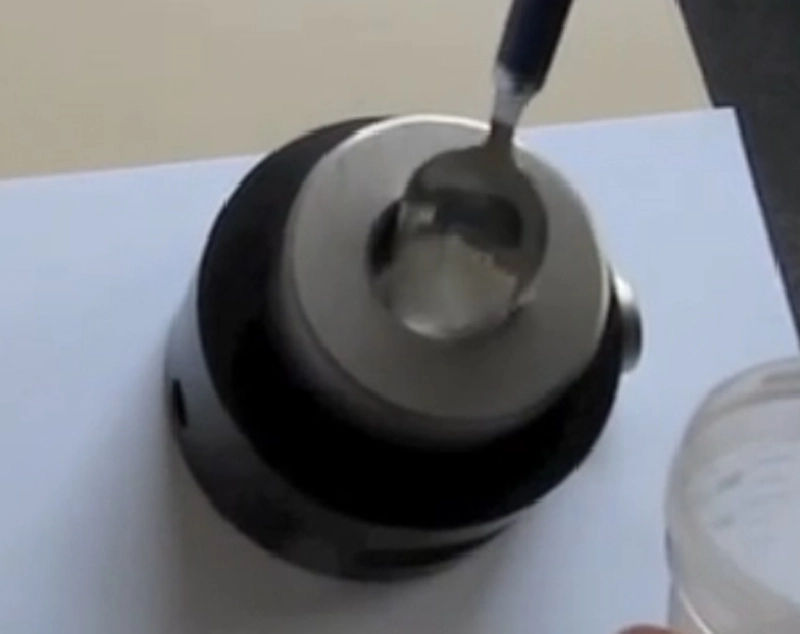
The LAARMANN LMTP 1-15 Tons Pellet Press prepares solid, reproducible pellets by applying controlled hydraulic pressure to powdered samples. The sample material is placed into a suitable press tool or die and positioned between the pressing surfaces.
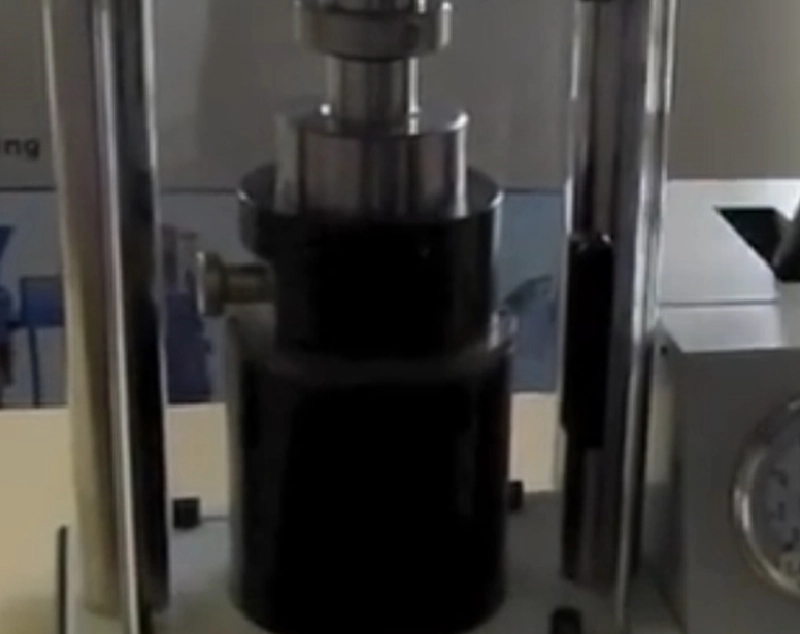
The operator manually operates the ergonomically designed lever to generate pressure in the hydraulic system. The applied force progressively compacts the powder inside the die until a dense and uniform pellet is formed. The pressing force can be adjusted between 1 and 15 tons, allowing the pressure to be matched to the sample material and preparation method.
Applying controlled and reproducible pressure helps produce pellets with consistent density, shape and surface characteristics. This makes the LMTP particularly suitable for laboratory sample preparation where consistent pellet quality is important for subsequent analysis.
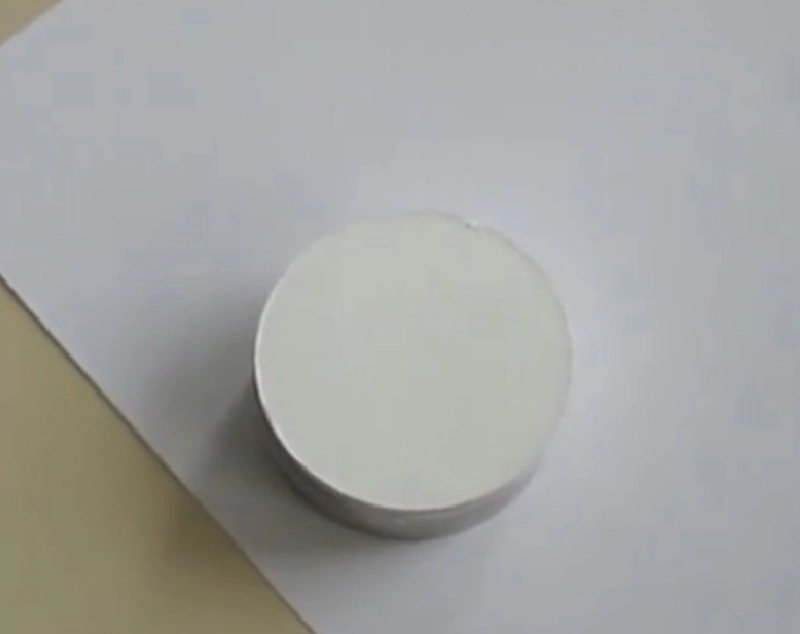
The press supports 13 mm, 32 mm and 40 mm press tools. After the pressing cycle is complete, the hydraulic pressure is released and the compacted pellet can be removed from the press tool for further handling or analysis.
Applications
- Preparation of pressed powder pellets for XRF analysis and other laboratory analytical techniques.
- Compaction of mineral, geological, soil and other powdered samples prior to instrumental analysis.
- Laboratory applications requiring manually controlled pressing forces from 1 to 15 tons.
- Research, method development and quality-control work where reproducible sample preparation is required.
- Preparation of stable powder pellets using different press-tool sizes to suit the sample and analytical method.