

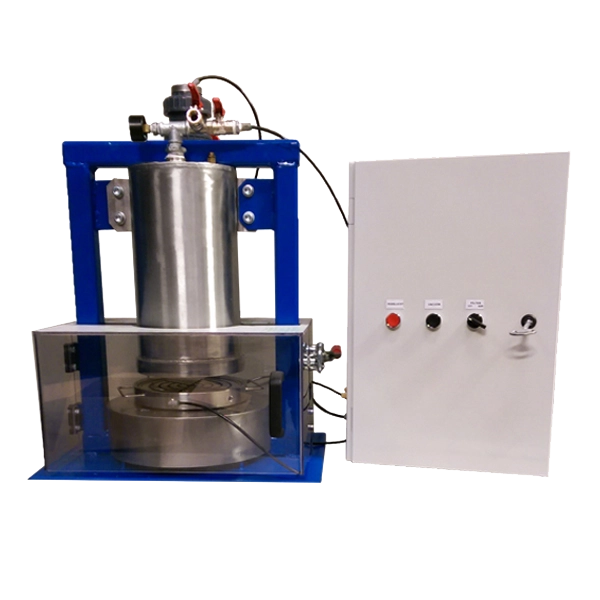
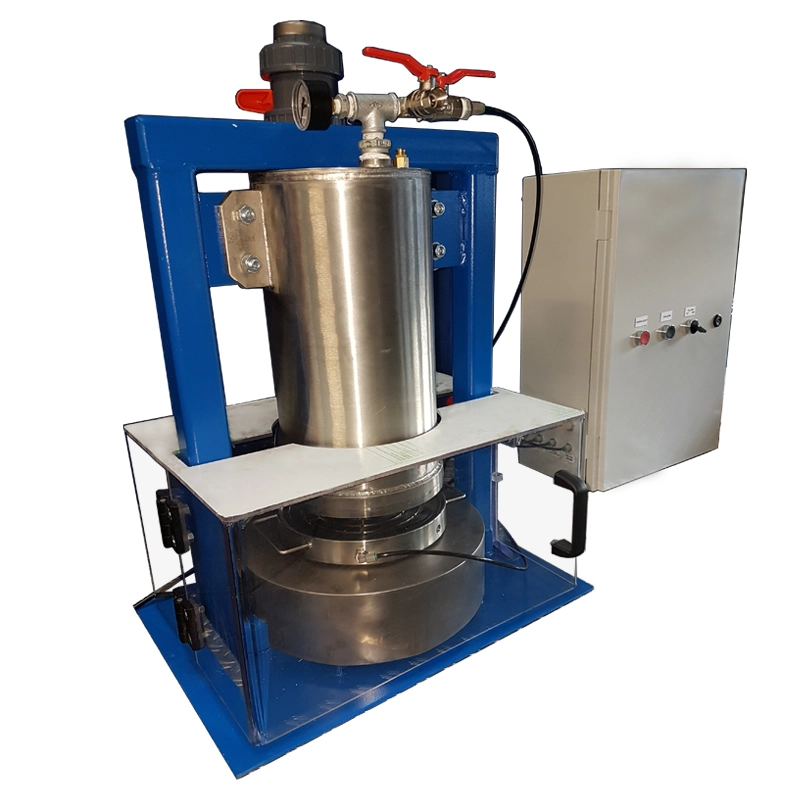
LMPF Pressure filter Table mounted version PED
User friendly pressure filter with extra PED (Pressure Equipment Directive) adjustment
Features and Benefits
- A minimum table space is required
- Minimised risk of environmental hazard from toxic, flammable or volatile cakes
- For the easy handling of saturated brines
- Reslurry washing / cake washing
- Sharp separation
- Suitable for filter cakes which tend to crack
- Easily recovering of the filter cake
- A full range of filter cloth with various permeability is available

Technical Specifications
| Applications | Filtering chemicals, pigments, and pharmaceuticals |
| Working principle | Dewatering concentrates and removing moisture with high pressure |
| Setting adjustment method | external start and stop button |
| Standard range of volume sizes | 4, 13, 24, or 41 Litres |
| Standard | CE |
| Weight | 250kg |
| Dimensions (width x length x height) | 640 x 520 x 1200 mm |
PED pressure filter working principle
The table-mounted PED pressure filter performs solid?liquid separation by applying compressed air (or inert gas) above a slurry inside a sealed pressure vessel. The pressure forces liquid through a filter cloth/support, while solids are retained and form a filter cake. As the cake builds, it becomes an additional filtration layer that can improve clarity but may reduce flow rate. Controlled pressurising, purging and bleeding allow repeatable tests and safe depressurisation, while the removable barrel supports fast cleaning and cake recovery.
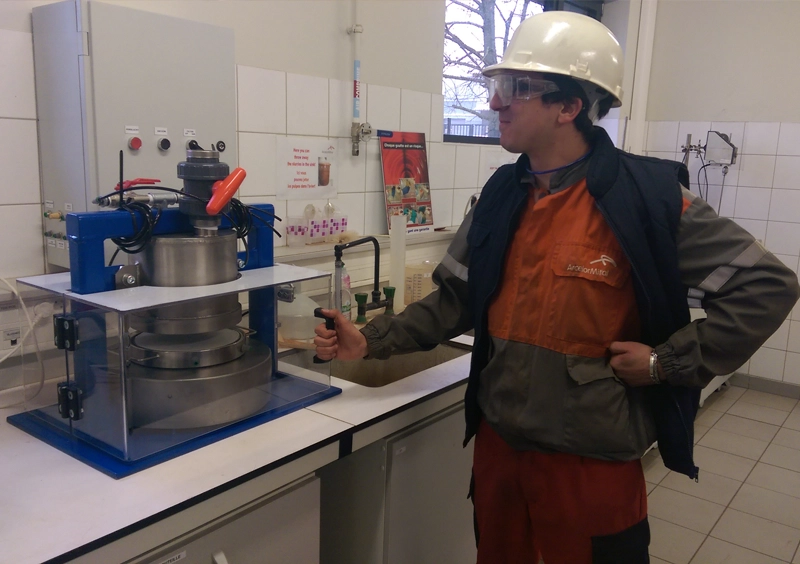
How it works
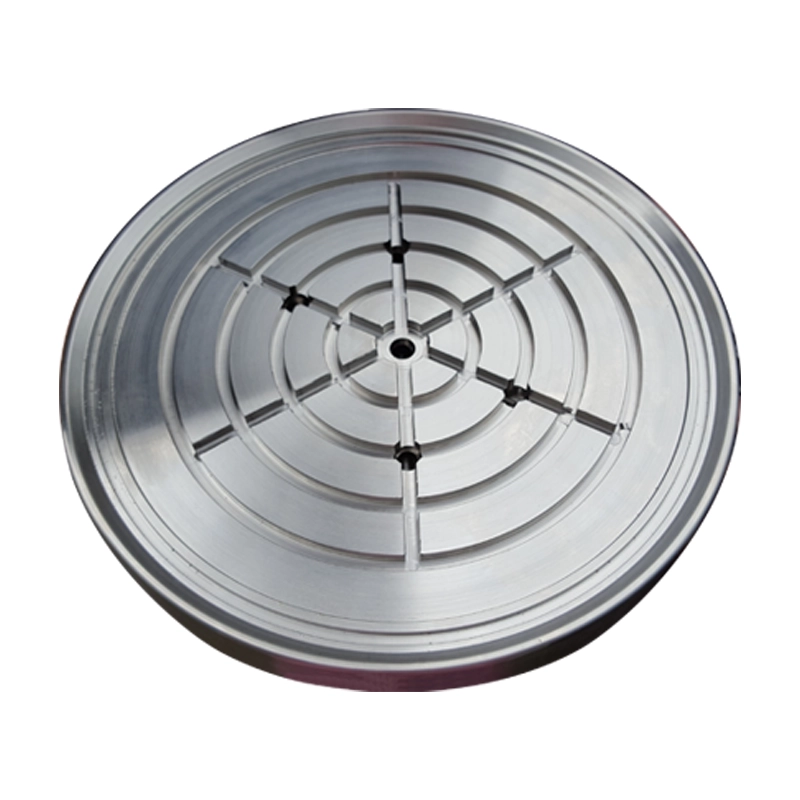
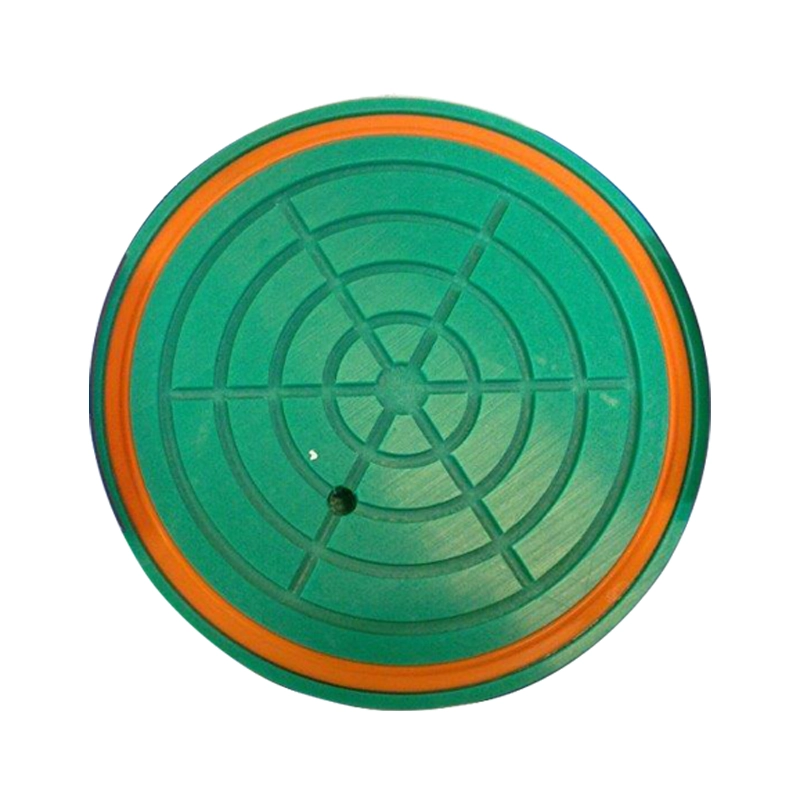
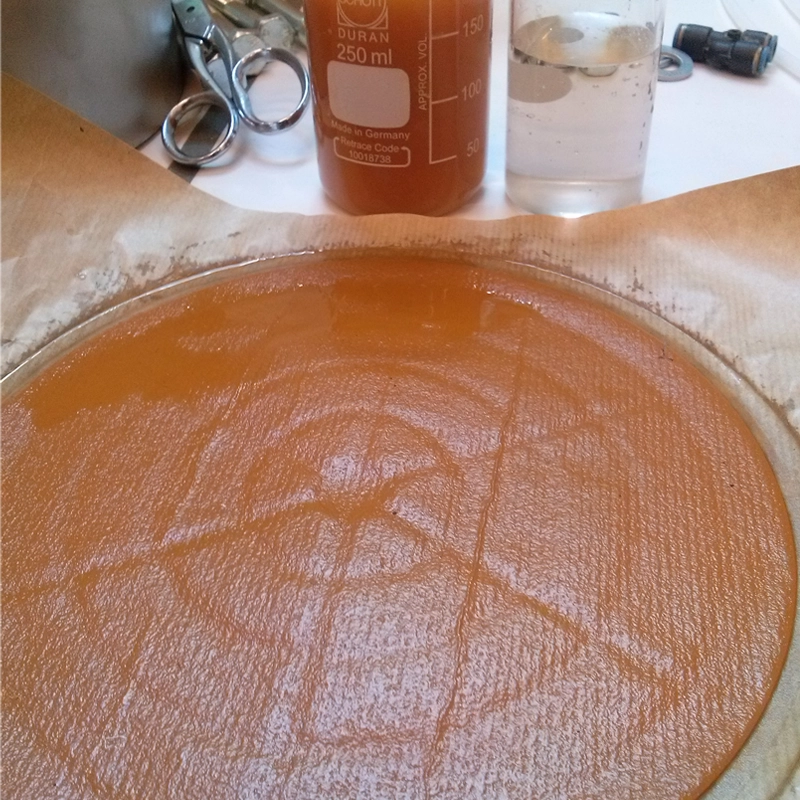
After the filter cloth is installed and the lid is secured, the slurry is loaded into the vessel and the system is closed. Compressed air (or an inert gas, depending on your setup) is then applied above the slurry to start filtration, forcing liquid through the filter medium while solids build a cake. Filtrate exits through the outlet into a collection container. The operator can maintain pressure for a defined time to increase dewatering and cake formation, and if required perform washing steps using the valve arrangement. Once the cycle is complete, pressure is released in a controlled manner via bleeding/purging until the unit is safe to open. The lid is opened and the barrel can be removed to allow easy access for cake recovery, cleaning, and cloth inspection.
Pressure Filter Table Mounted (PED) FAQ (Frequently Asked Questions)
Applications
- After flotation or other beneficiation processes, pressure filters are used to dewater the mineral concentrate, producing a dry cake that can be easily transported or processed.
- Pressure filters are ideal for dewatering tailings, reducing the volume and water content of waste materials, and making disposal safer and more cost-effective.
- In hydrometallurgical processes like heap leaching, pressure filters are used to separate the metal-rich leachate from the solid ore residue, enabling efficient metal recovery.
- In processes where the liquid phase needs to be reused or treated, pressure filters provide clear, high-quality filtrate, improving process efficiency.