


LMBM Ball Mill
The LMBM is a process and laboratory machine, which is suitable for milling and homogenizing soft, fibrous, hard and brittle materials in the dry and wet state for laboratory & process grinding solutions.
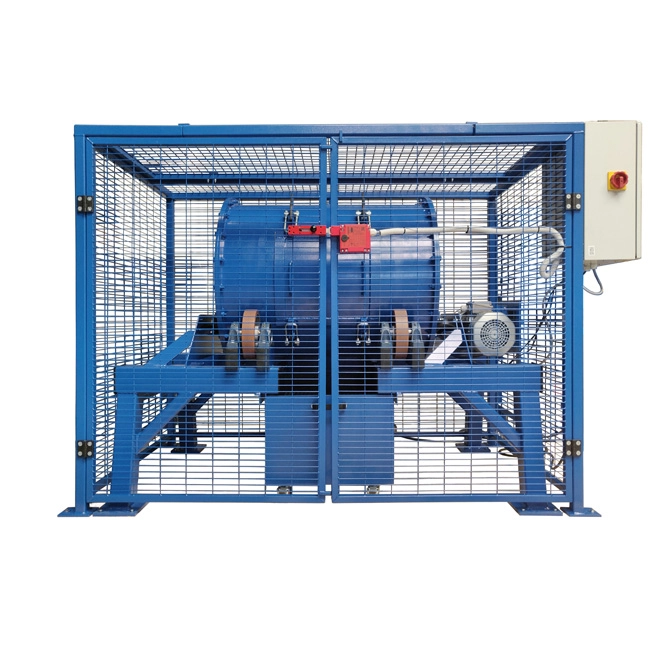
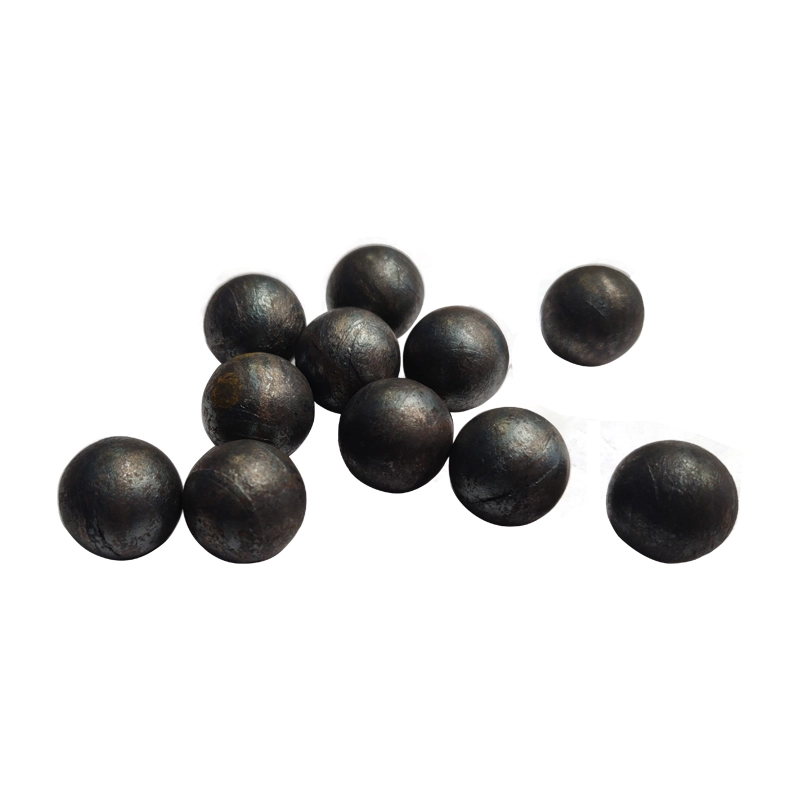
The LMBM Ball Mill by LAARMANN is a high-efficiency laboratory and process mill designed for precision milling and homogenising of soft, hard, fibrous, and brittle materials in both wet and dry conditions. Built with robust construction and digital touch control, it delivers uniform particle size and adaptable operation for R&D labs, pilot plants, and small-scale production environments.
The ball mill is designed to accept a ball charge to 30% of the total volume.
The barrel is charged with grinding balls and sample and allowed to grind for the desired time.
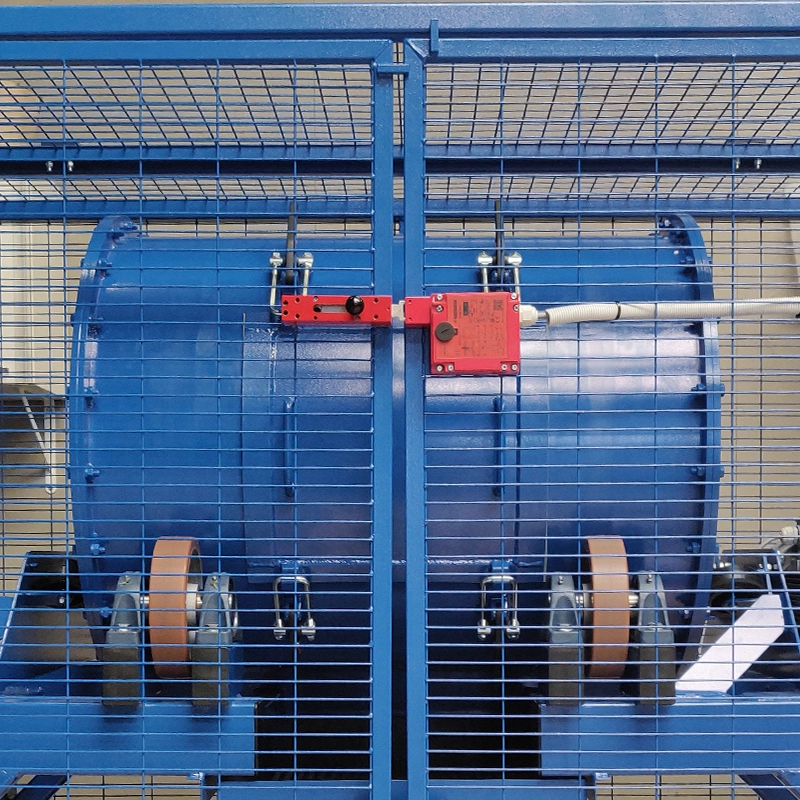
The milling chamber of the LMBM is surrounded by a safety cabinet, with a safety locking system.
on request we can adapt the volume of the ball mill to your requirement
Feautures and Benefits
- Digital control by touch screen
- High Grinding Efficiency
- Drum size on customer request
- Easy to maintain
- Easy to operate
Technical Specifications
| Applications | separation of different materials, particularly minerals, by agitating a pulverized mixture of solids in liquids |
| Working principle | Friction |
| Feed size | < 25 mm* |
| End fineness | 1 mm* |
| Speed setting | 7-33 rpm |
| Setting adjustment method | digital control panel |
| Consumeable material | standard steel, chrome steel, zirconium, tungsten carbide others on request |
| Max. volume of grinding barrel | 150L - 450L (customer request) |
| Power supply | 1,1 kW |
| Electrical requirements | 3 phase |
| Power connection | 380/400V ± 10% - 50Hz |
| Standard | CE |
| Protection code | IP30 |
| Weight | 750kg |
| Dimensions (width x length x height) | 1968 x 1088 x 1525 mm (with safety cage) |
Ball Mill working principle
The LMBM Ball Mill is a milling machine used primarily in laboratories, pilot plants, and small-scale production operations.
It is ideal for processing small batches of material with high precision, making it valuable in industries like mining, ceramics, chemicals, and materials science.
This type of ball mill is versatile and efficient, suitable for grinding, mixing, and blending materials to achieve fine and uniform particle sizes.
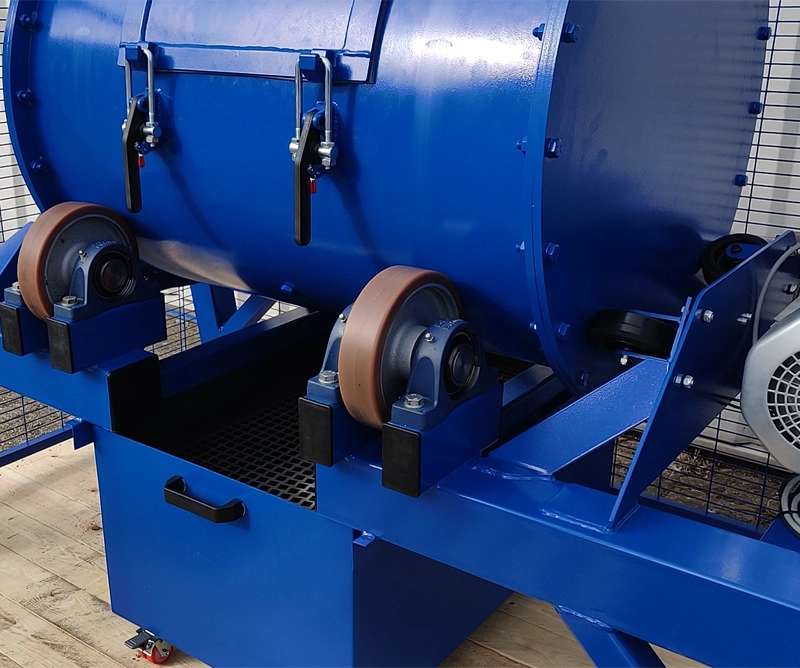
The ball mill consists of a rotating cylindrical drum made of high-strength steel or ceramic.
The drum is lined with wear-resistant liners to protect against abrasion.
The drum has a capacity ranging between 150 to 450 liters, making it ideal for medium-scale operations. This capacity allows it to handle substantial quantities of material without requiring a large footprint.
The drum is filled with grinding media, typically steel or ceramic balls of varying sizes. These balls are used to crush, grind, and mix the material through impact and attrition.
The drum is driven by an electric motor, which is connected to the drum via a gear system. The motor's speed can often be adjusted to optimize the grinding process.
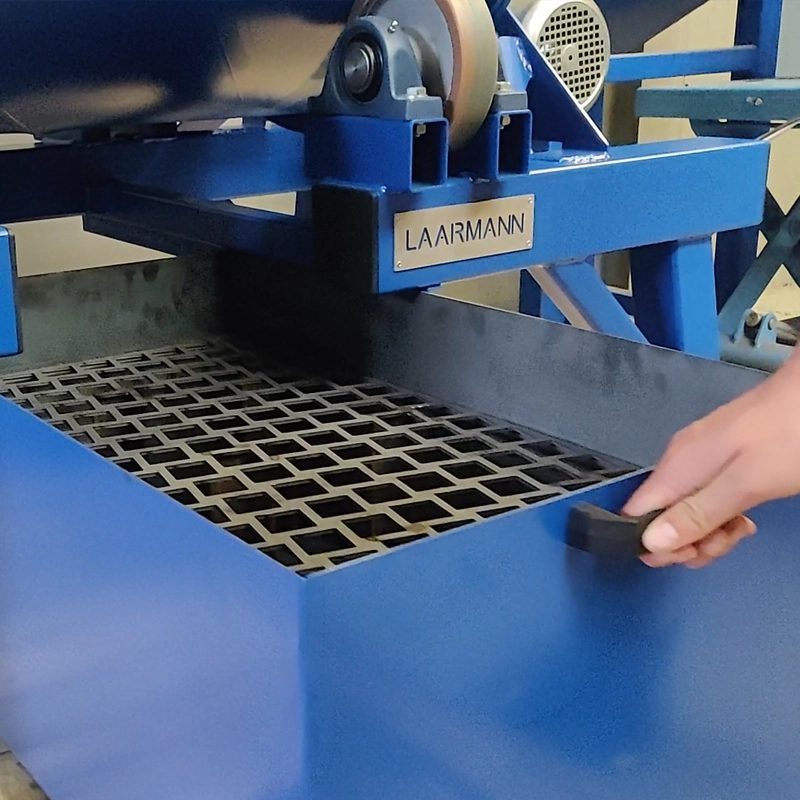
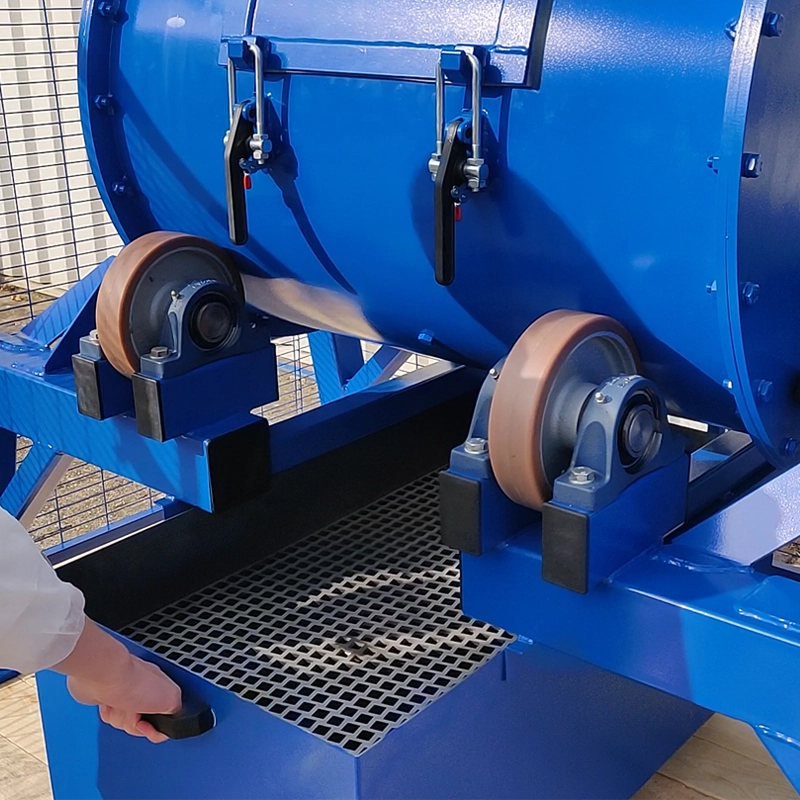
The ball mill features a discharge port that allows the milled material to be collected once the grinding process is complete. It may include screens or sieves to control the particle size of the output.
The 150-450 liter ball mill is a versatile, efficient, and compact milling solution for medium-scale applications. It offers high grinding efficiency, consistent particle size distribution, and flexibility in processing a wide range of materials.
With its robust construction, energy efficiency, and scalability, it is an excellent choice for industries like mining, ceramics, chemicals, and pharmaceuticals that require precision milling and mixing.
How it works
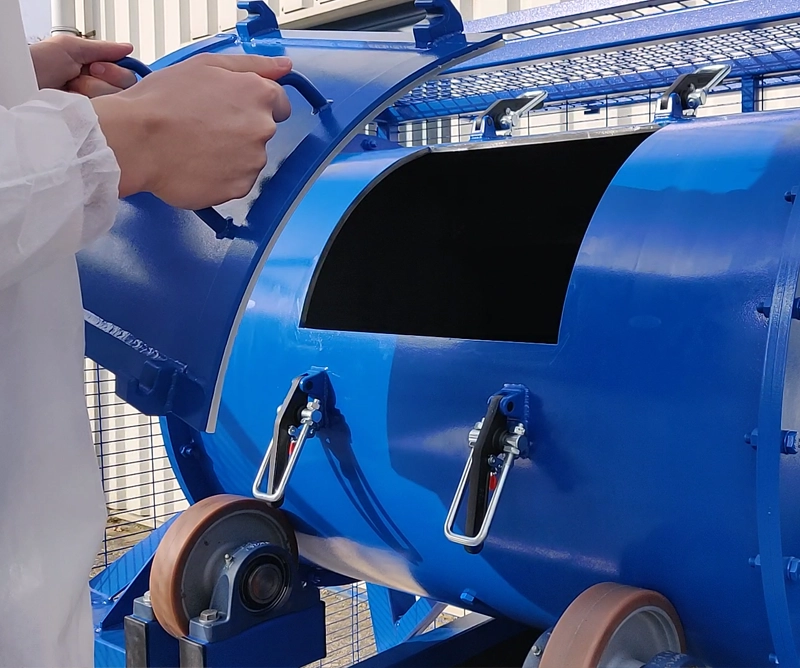
The raw material and grinding media are loaded into the drum through an opening at the top. The drum is then securely sealed. Once the drum begins to rotate, the grinding media are lifted along the inner wall of the drum by centrifugal force. As they reach a certain height, they fall back down, crushing the material through impact and friction. The duration of grinding, the rotation speed, and the size of the grinding media can be adjusted to control the final particle size and consistency of the milled material.
Safety Feautures
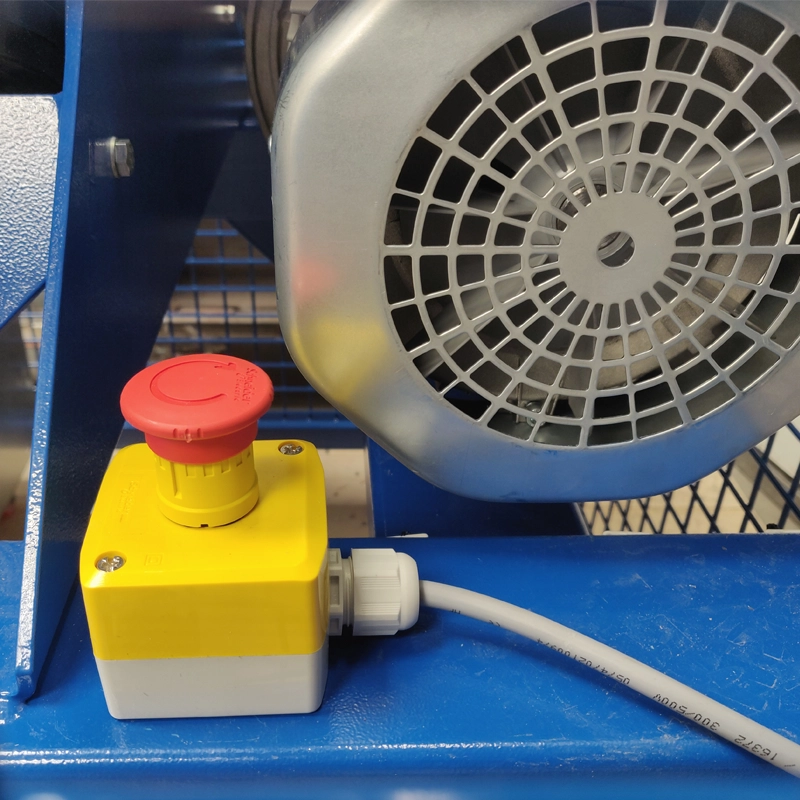
The machine is equipped with safety interlocks to prevent accidental operation when the drum is open or improperly secured. Ball mills have overload protection to prevent damage to the motor and other components in case of excessive loads.
LM-BM Ball Mill FAQ (Frequently Asked Questions)
Applications
- Used for grinding ores and minerals to prepare them for further processing, including flotation, leaching, or metallurgical testing.
- Ideal for mixing and grinding raw materials used in the production of ceramics, tiles, and glass. The uniform particle size ensures better quality in the final product.
- Useful for producing fine powders of chemicals and pigments, essential for coatings, paints, and other chemical formulations.
- Employed for grinding active pharmaceutical ingredients (APIs) to achieve the required particle size for tablet formulation and drug delivery systems.
- Widely used in R&D labs and pilot plants to develop new materials and test their properties. It is particularly useful in developing new alloys, composites, and advanced materials.
Visit our Applications page for our database of specific applications