


LMDA200 De-agglomerator
The LMDA200 is a laboratory machine which is suitable for de-agglomerating and sifting materials fast and efficient.
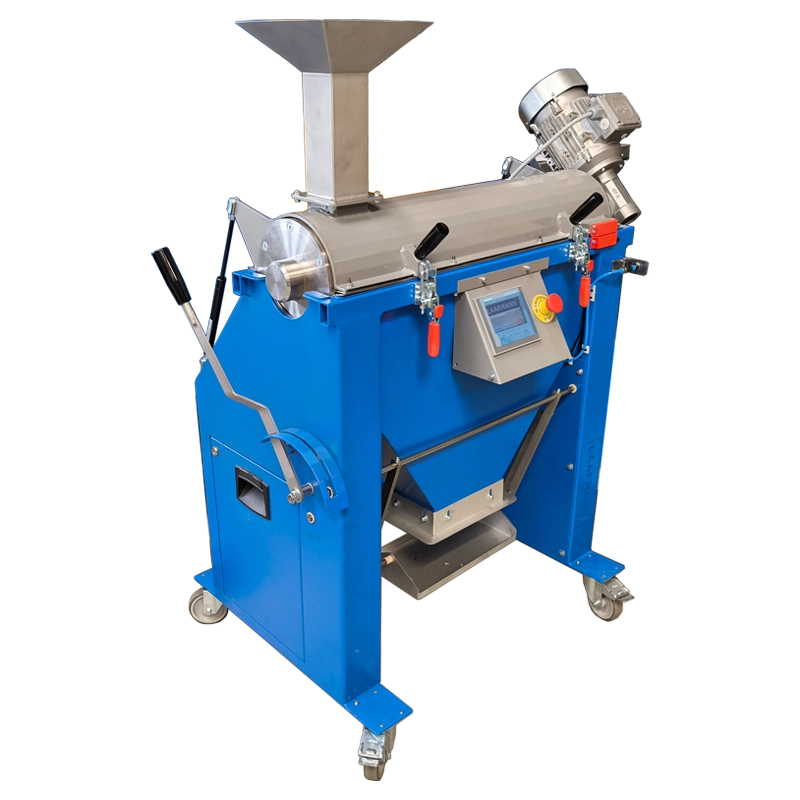
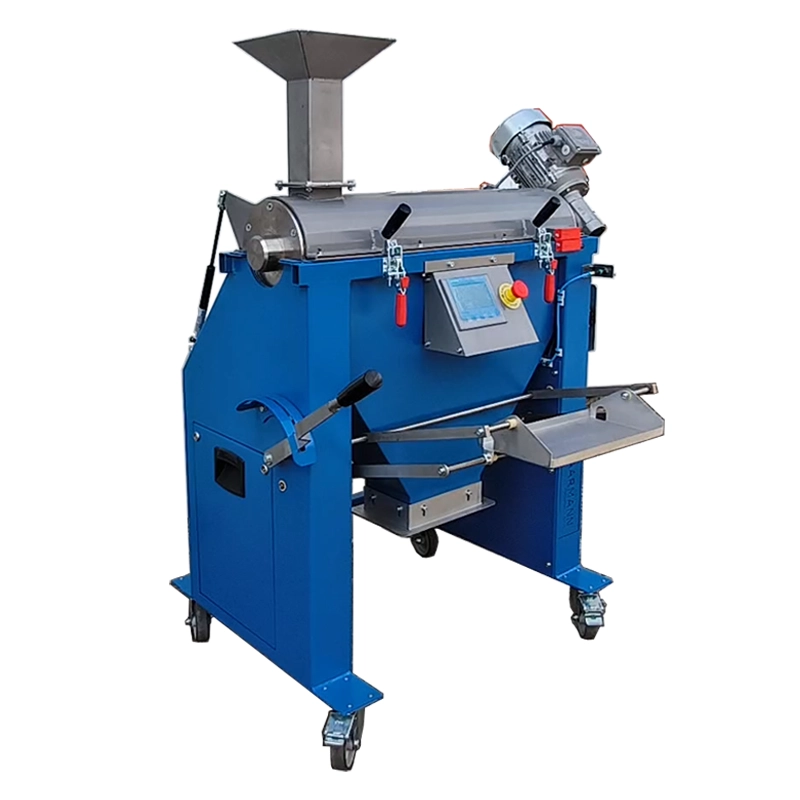
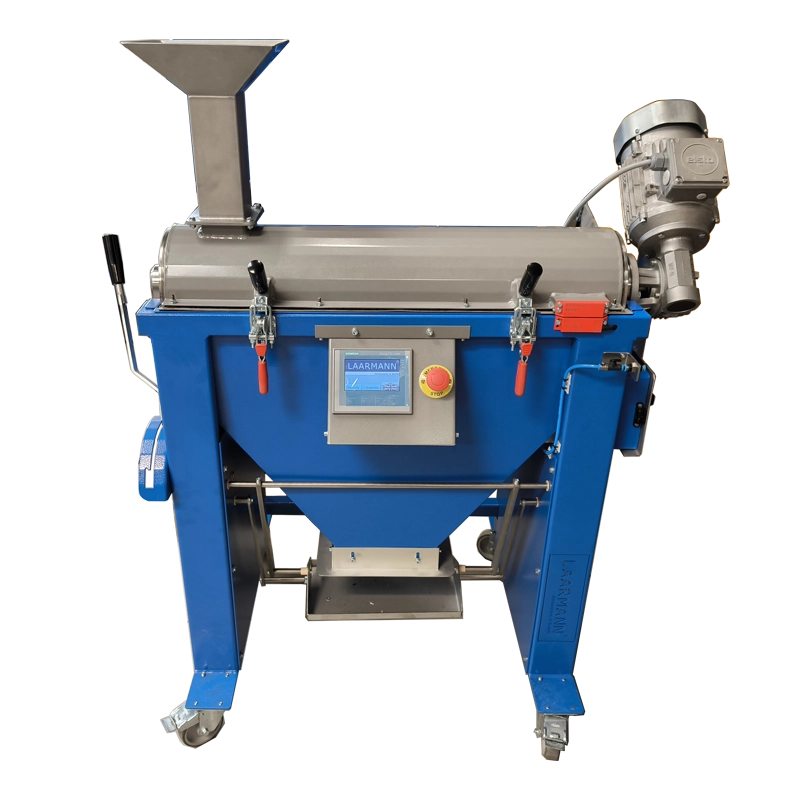
A de-agglomeration machine is crucial in laboratory and industrial settings to break up all types of lumps allowing the operator to separate valuable sample from polluting secondary materials. The LMDA200 will not only de-agglomerate the sample using the specially designed segmented brush, it will also create a uniform particle size due to the presence of the (exchangeable) bottom sieve.
Features and Benefits
- Quick and easy to clean due easy access and cleaning mode
- Segmented brush
- Different sieve sizes available
- Settings digital adjustable
- Can handle a wide range of materials
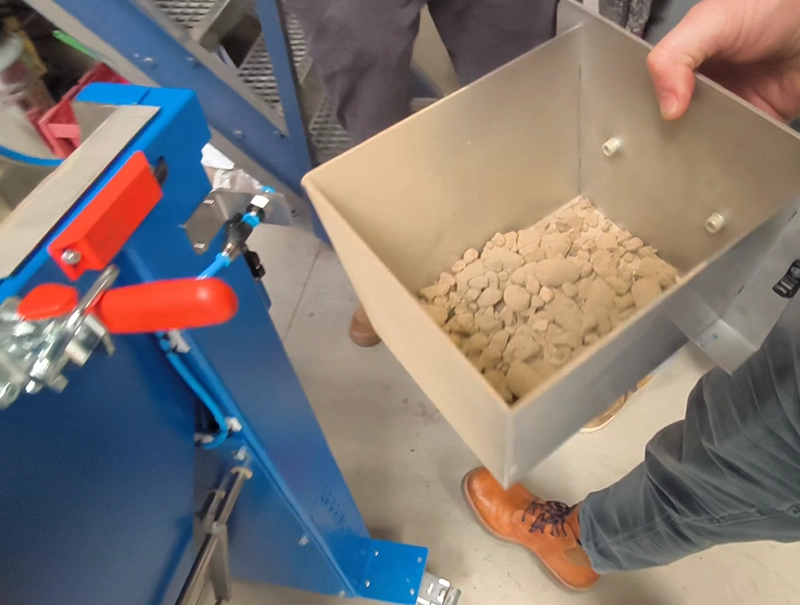
- Anti-splashing hopper

Technical Specifications
| Applications | Geological research, mining, waste and recycling |
| Working principle | De-agglomeration With a rotating brush and a stationary sieve |
| Feed size | < 75 mm |
| Speed setting | 206rpm |
| Setting adjustment method | digital |
| Sieve mesh sizes | 2,0mm trapezoid standard others on request |
| Collector volume | 5L, other sizes on request |
| Electrical requirements | 3 kW |
| Power supply | 220V ± 10% - 50/60Hz other specs on request |
| Power connection | 1 phase |
| Dust extraction point | 1 |
| Standard | CE |
| Weight | 190kg |
| Dimensions (width x length x height) | 640 x 520 x 1200 mm |
Deagglomeration working principle
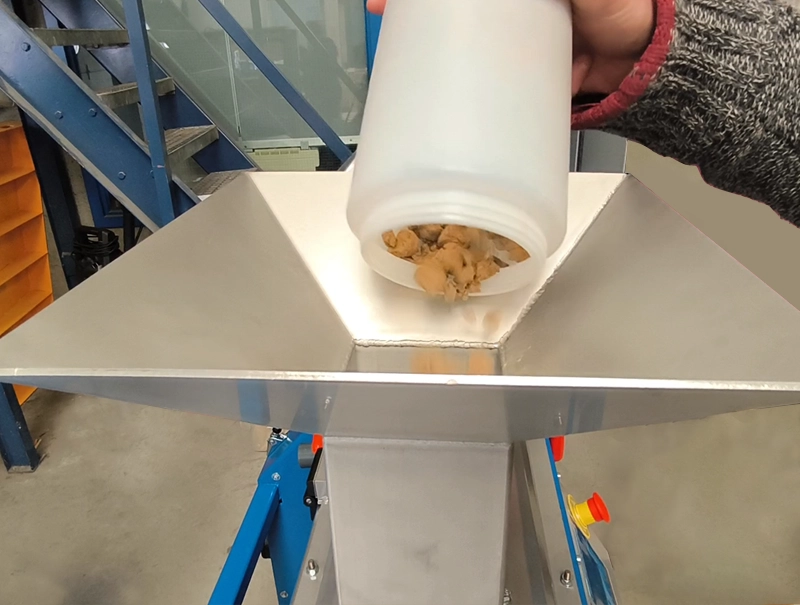
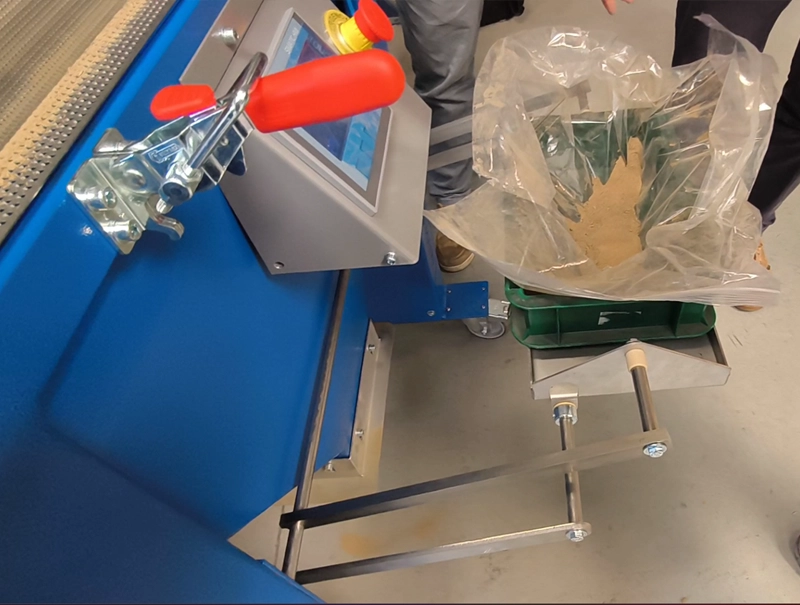
The lumps that have formed at an earlier stage due to compaction, moisture or static charge are deposited in the machine by the operator. The machine is equipped with a special brush consisting of various segments that are interchangeable. In addition, the machine has an interchangeable sieve, the mesh size of which can be manufactured on request. The rotating brush ensures that the agglomerates are pulled over the existing sieve. A combination of friction and impact ensures that the abrasive effect of the existing sieve is used optimally, and the lumps are broken into small pieces. The breaking down of the valuable, fine sample material ensures the separation of desired and unwanted material. The sample to be used for analysis is collected via the chute in a designated container. The residue is discharged to the reject container. For an optimal result, the operator has various settings, namely brush speed and direction selection.
LMDA200 De-agglomerator FAQ (Frequently Asked Questions)
Applications
- Deagglomerates pharmaceutical ingredients (APIs) and excipients for uniformity testing and formulation development.
- Used to break down clumps in powdered ingredients like flour or spices and divide samples for quality analysis.
- Prepares ore samples by deagglomerating and splitting them for testing and analysis of mineral content.
Visit our Applications page for our database of specific applications