

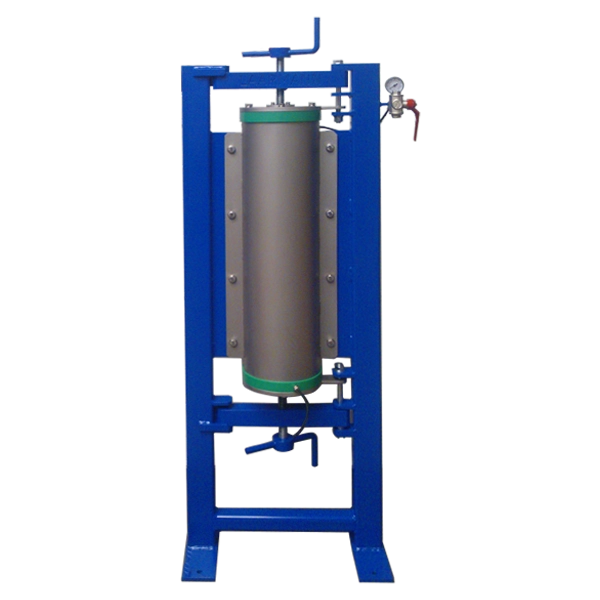
LMPF Pressure filter double spindle version
High performance Pressure filter for separating solids from liquids

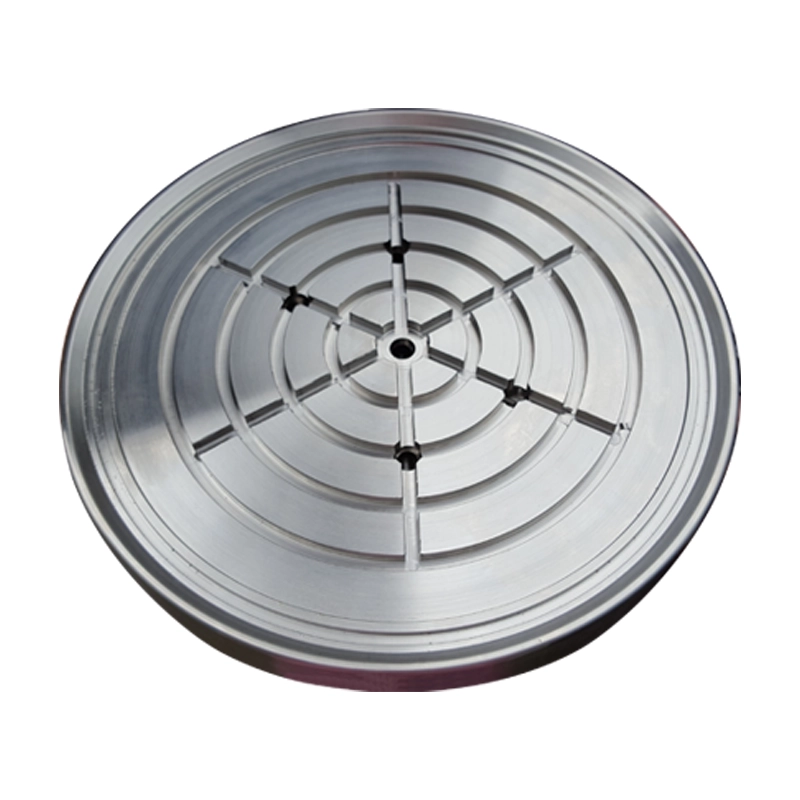
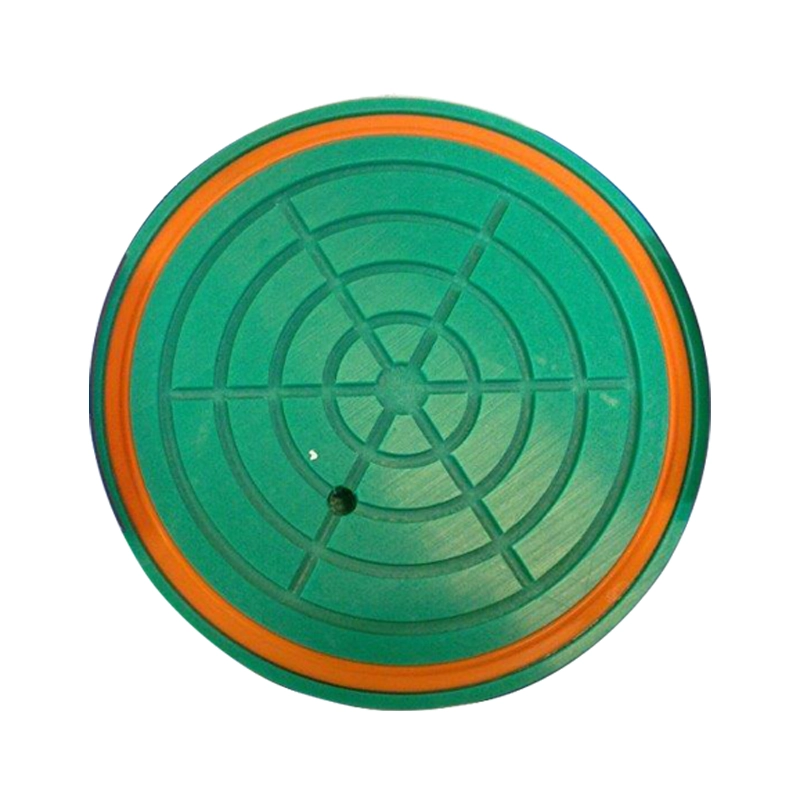
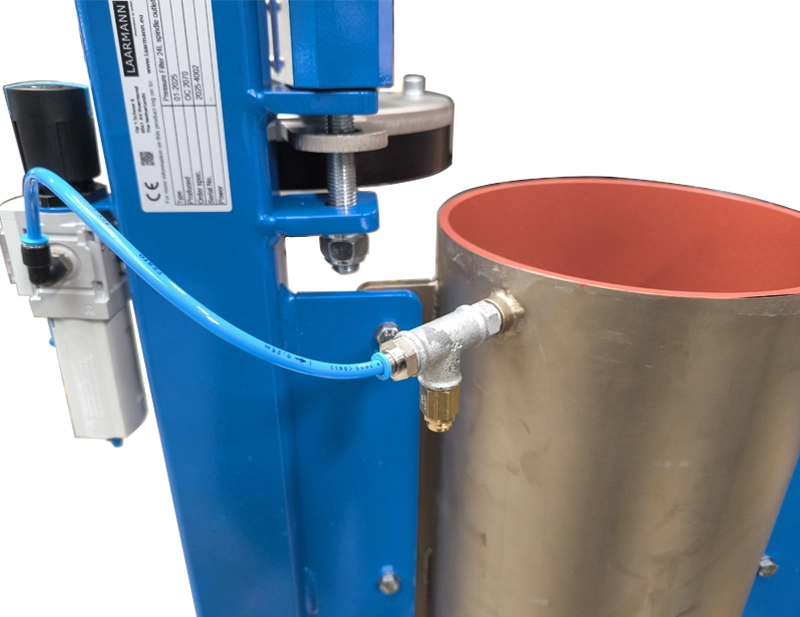
In dewatering applications, the most important question is the cost involved to reduce the moisture content of a slurry / suspension and process concentrate; both in regards to direct equipment investment and operation costs. With the usage of the LAARMANN Laboratory Pressure Filtration Unit the final rest residual and cake features that the process requires with less energy usage can be easily and quickly determined. It is a question of the added energy to reduce the moisture. This version is developed to ease the opening access to the filter cloth and labyrinth by attaching the barrel to the mainframe because of the heavy weight of the barrel
Features and Benefits
- A minimum floor / table space is required
- Minimised risk of environmental hazard from toxic, flammable or volatile cakes
- For the easy handling of saturated brines
- Reslurry washing / cake washing
- Sharp separation
- Suitable for filter cakes which tend to crack
- Easy recovery of the filter cake
- A full range of filter cloth with various permeability is available
Technical Specifications
| Applications | filtering chemicals, pigments, and pharmaceuticals |
| Working principle | dewatering concentrates and removing moisture with high pressure |
| Max air pressure to the filter | 500 kPa |
| Barrel coating | manganese steel, tungsten carbide, hardened steel, PFA, heavy metal free steel and stainless steel (others on request) |
| Barrel available volume | 13, 24, 41 Litres |
| Standard | CE |
| Weight | 180kg |
| Dimensions (width x length x height) | 800 x 600 x 1800 mm |
Dubble spindle pressure filter Working principle
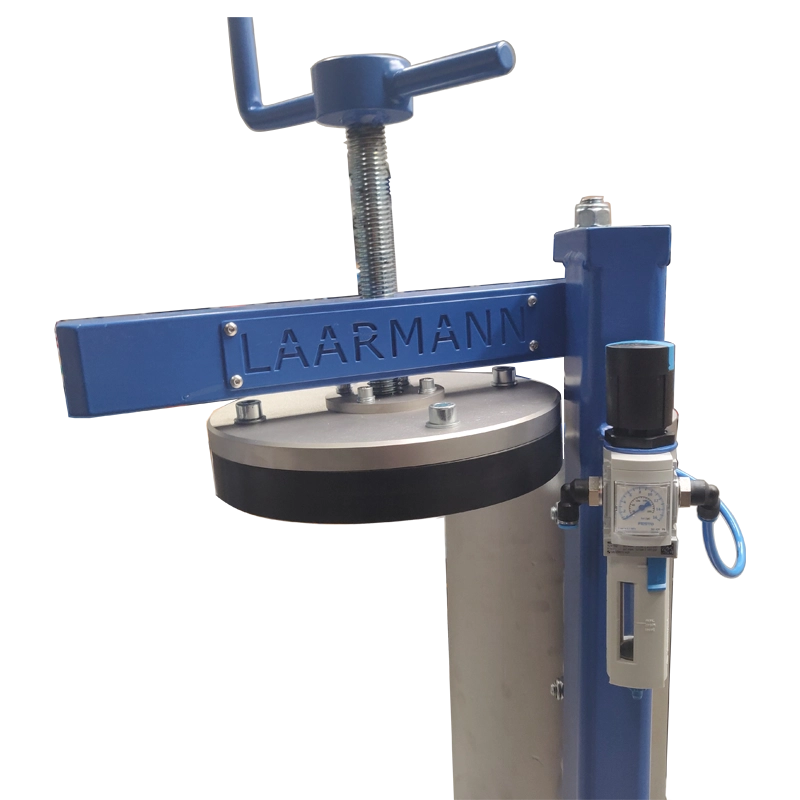
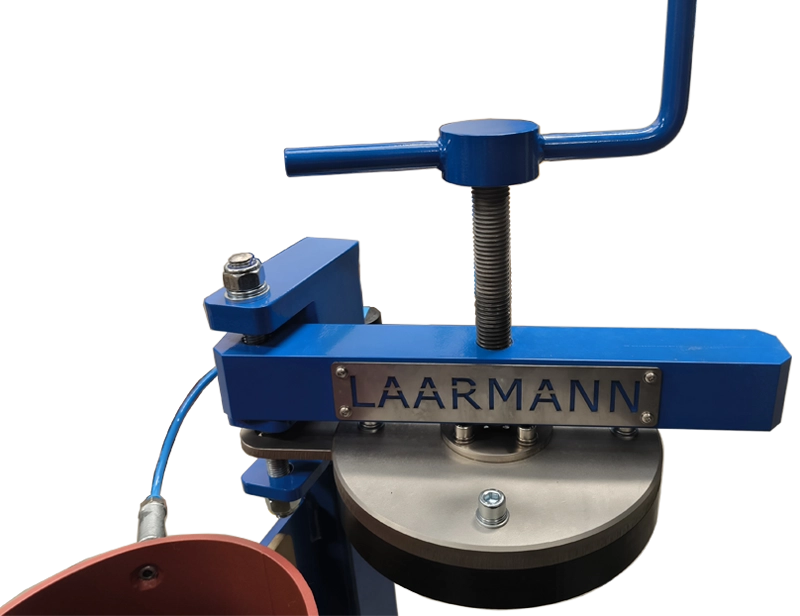
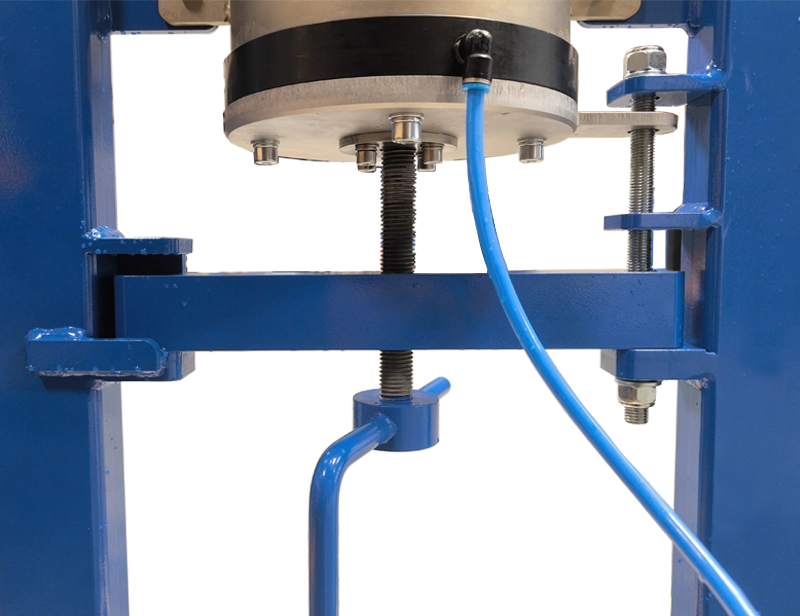
The LMPF double spindle pressure filter uses the same pressure filtration principle (gas pressure forces liquid through a filter cloth while solids form a cake) but is designed for improved handling and access. The double spindle mechanism provides controlled, stable closing/opening and helps manage heavier components during repeated testing. Keeping the barrel fixed to the frame supports consistent alignment of the cloth/support and sealing surfaces?useful when running multiple tests for cloth selection, filtration rate comparison, and cake moisture optimisation.
How it works
The filter cloth and support are installed and the slurry is loaded into the filter. The double spindle mechanism is then used to close the assembly evenly and securely, creating a stable seal for repeatable filtration conditions. When pressure is applied above the slurry, liquid is forced through the cloth and exits as filtrate, while solids form a cake inside the barrel. Pressure can be held to maximise dewatering, and optional washing steps can be performed if configured. At the end of the cycle, the system is depressurised in a controlled way until safe to open. The double spindles provide controlled opening and improved access to the cloth area, making cake removal and cleaning easier?especially during frequent test runs.
LMPF Pressure Filter Double Spindle FAQ (Frequently Asked Questions)
Applications
- Used for dewatering concentrates, tailings, and other slurries in the mining industry. It is especially effective for filtering fine mineral particles, reducing the moisture content in the final product.
- Ideal for filtering chemicals, pigments, and pharmaceuticals where precise separation and dewatering are needed. The double spindle design helps handle corrosive or viscous materials efficiently.
- In wastewater treatment plants, these filters are used to dewater sludge, reducing its volume and moisture content before disposal or further treatment.
- Used for filtering food products like fruit juice, starch, and other slurries where solid-liquid separation is necessary. The gentle but effective compression of the double spindles ensures that the quality of sensitive materials is preserved.
- Useful for dewatering paper pulp and other fibrous materials to achieve lower moisture content in the final product.