

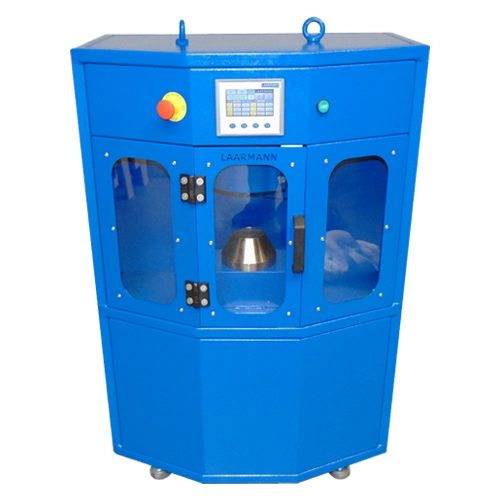
LMPP40 Tons Pellet Press
High powered Pellet Press for compressing fine or powdered materials into uniform pellets
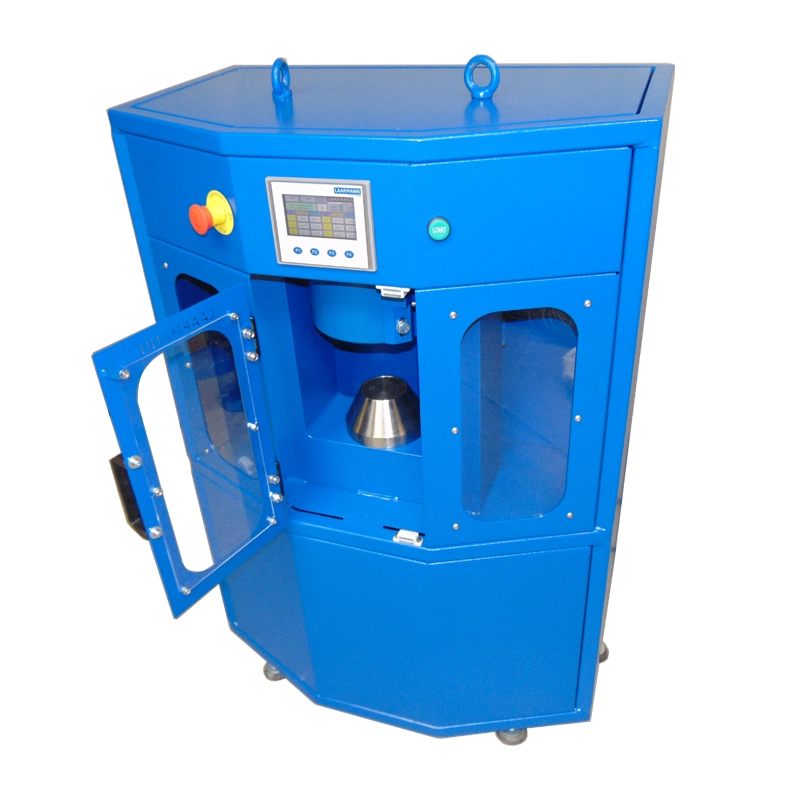

The LMPP40 Tons Pellet Press is a laboratory machine used for pelletizing of ground material for X-ray analyzing purposes.
Pellets of various thickness and diameters can be produced using the LMPP40 Tons Pellet Press.
Other available models in the market use pre-set hydraulic working principle, having no possibility to control the pressure during pressing the pellet. With the LMPP40 Tons Pellet Press the operator can visualize in the display which pressure is set and what is the time frame used this pressure.
This increases a lot the quality of the pallet and also the reproducibility of the pallet making the analyses more reliable.
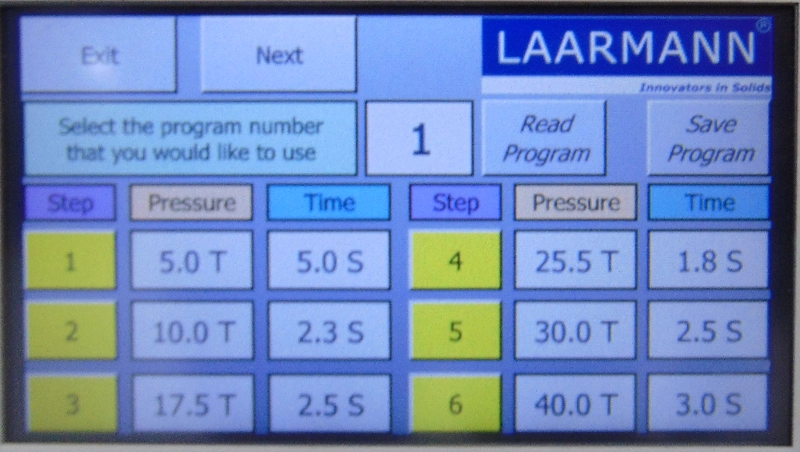
Up to 10 different programs are adjustable setting the pressure in relation to the time. A program consist of 1 to 6 steps. Within each step the press power and time can be adjusted.
For each material there is a different optimum pressure, which needs to be learned by doing.
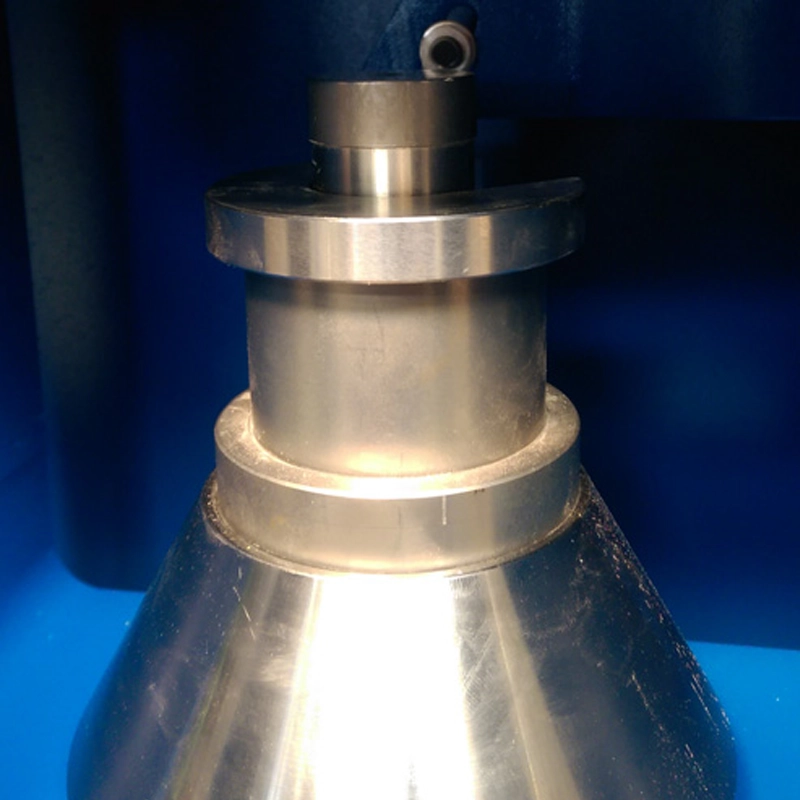
The automated LMPP40 Tons Pellet Press can press pellets of a diameter variating from 13 up to 50mm. Our die sets are made of high quality stainless steel.
To improve the surface of the pellet our plunger is high graded mirror polished.
The sets are available in high grade stainless steel as well as tungsten carbide, cobalt steels and iron free versions. Any specials requests on demand. The smallest die sets and most easy to handle are the ones having a diameter of 3, 5 and 8 mm.
For plastic pellets an option is available using a heated plate receiving a nice melted pellet.
The machine will be packed in a wooden box for safe transportation. The different die sets will be packed in a special box on request.
Features and Benefits
- 40 Ton pellet press
- User friendly digital program
- Easy to operate
- Visual display of pressure
- Can convert a wide range of raw materials
- Uuseful for biomass fuels and animal feed
- Easy to maintain
Technical Specifications
| Applications | Preparation of pressed powder pellets for X-ray/XRF analysis |
| Working principle | Pressing fine powder to tablet form |
| Setting adjustment method | Digital control panel |
| Time setting | 0-20 sec in 1 sec steps. Each level is controllable. |
| Power setting | 0-40t |
| Electrical requirements | 3.2 kW |
| Power supply | 220V ± 10% - 50/60Hz |
| Power connection | 1 phase |
| Standard | CE |
| Protection code | IP40 |
| Weight | 200kg |
| Dimensions (width x length x height) | 500 x 850 x 1150 mm |
LMPP40 Pellet Press working principle
The LAARMANN LMPP40 Pellet Press is designed to produce compact and reproducible pellets from ground or powdered samples, primarily for X-ray analysis such as XRF.
The sample is filled into a suitable die set and the plunger is positioned on top of the material. The operator then starts the pressing cycle using the digital touchscreen. The hydraulic system automatically applies the programmed pressing force, with a maximum capacity of 40 tons.
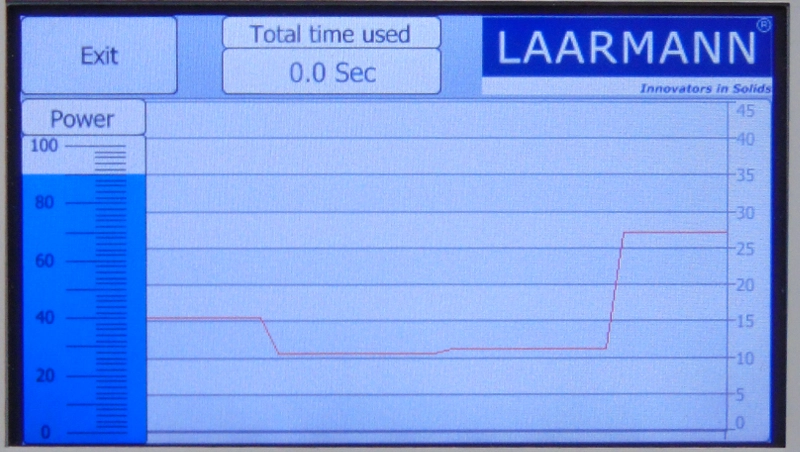
Up to 10 different programs can be configured on the LMPP40. Each program can contain between 1 and 6 individual steps, with pressing force and duration adjustable for every step. This makes it possible to create pressure profiles suited to different materials and sample preparation methods.
Precise control of pressing force and time helps produce pellets with a more consistent density, surface and structure. This improves sample preparation reproducibility and contributes to more reliable subsequent analysis.
After the programmed pressing cycle has been completed, the pressure is released. The pellet can then be ejected directly from the die using the press, allowing samples to be prepared quickly and reproducibly.
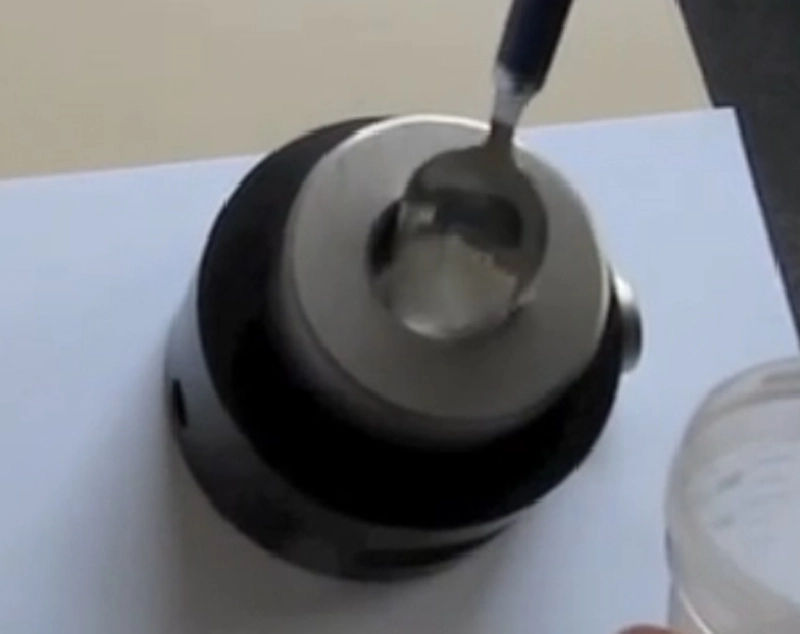
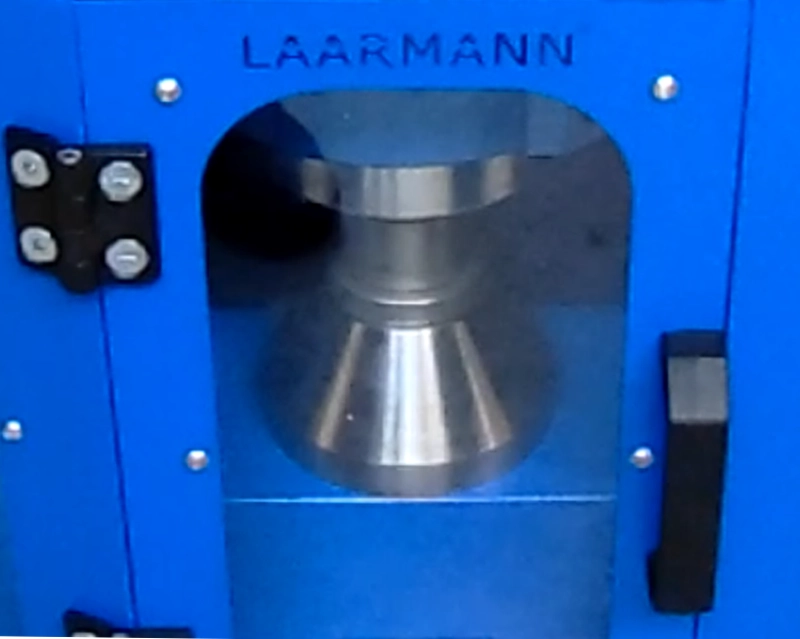
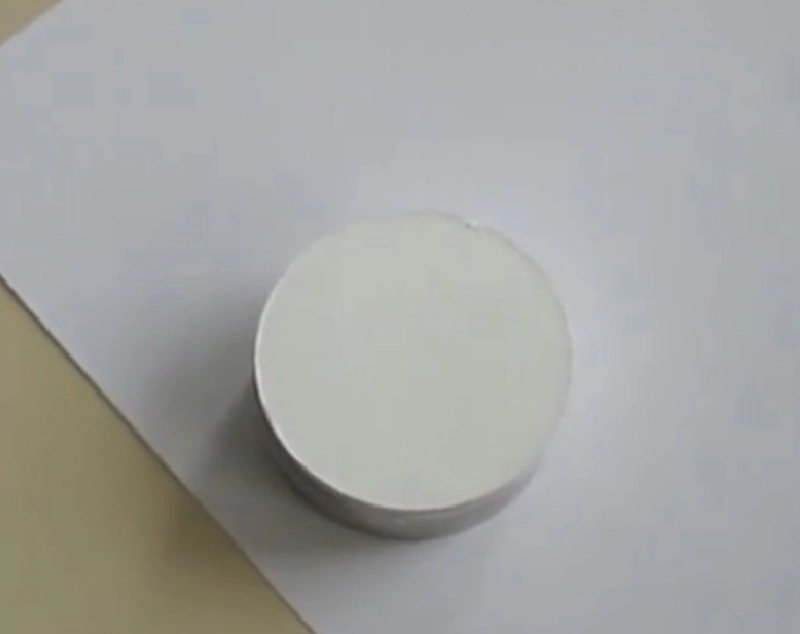
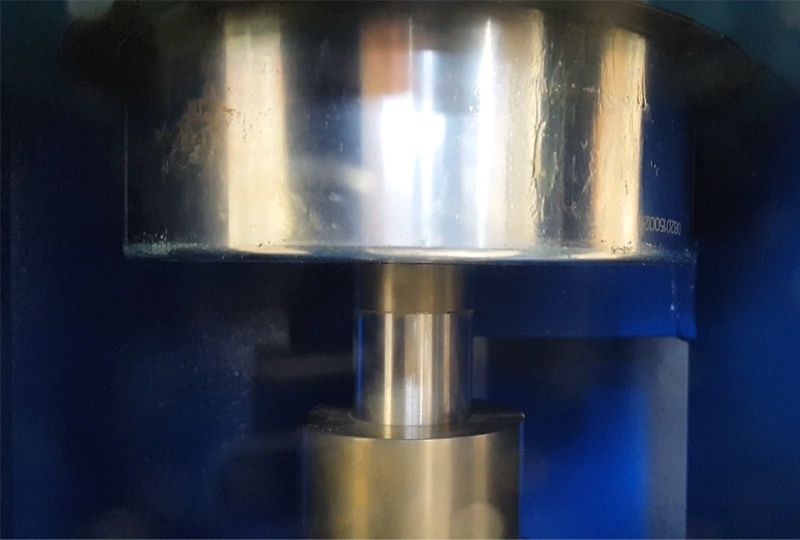
pellet press operation
Operating the LMTP40
- Filling the set with a 5-10ml of milled sample and insert the plunger on top
- Start the process of pressing using the digital touchscreen display
- The automated pre-set program will start the cycle
- After releasing the pressure, removing the die set is not needed: pull out the bottom slider
- Following the operator needs to use the machine to press the pellet down with a little force of the machine
- Result: nice smooth pellet
Control panel
Up to 10 distinct programs can be configured, allowing for precise adjustment of pressure in relation to time. Each program consists of 1 to 6 steps, where both the pressure and duration can be customized for each step. The optimal pressure for each material varies and must be determined through practical experience.
LMPP 40 Tons Pellet Press FAQ (Frequently Asked Questions)
Applications
- Preparation of pressed powder pellets for X-ray fluorescence (XRF) and other X-ray analytical methods.
- Compaction of ground and powdered samples to create a stable, uniform surface for instrumental analysis.
- Preparation of mineral, geological and other powdered raw-material samples for laboratory analysis.
- Development and optimization of sample preparation methods using programmable pressure and time profiles.
- Routine sample preparation in research and quality-control laboratories where high reproducibility is required.
- Production of pellets in different diameters using suitable die sets according to the material and analytical method.