

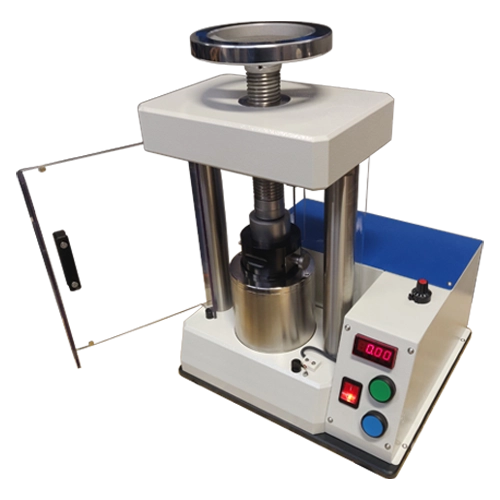
LMTP Pellet Press motorized
The LAARMANN motorized Hydraulic Pellet Press for frequent and reproducible preparation of small powder samples.
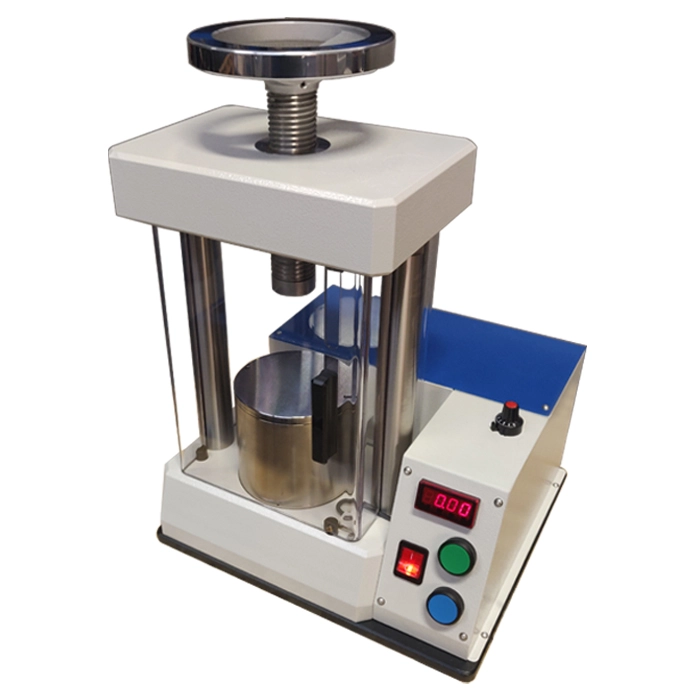
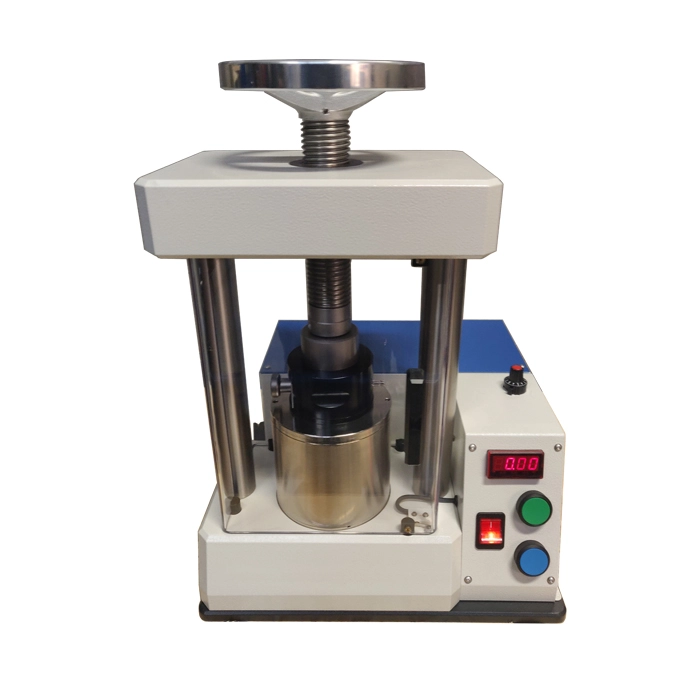
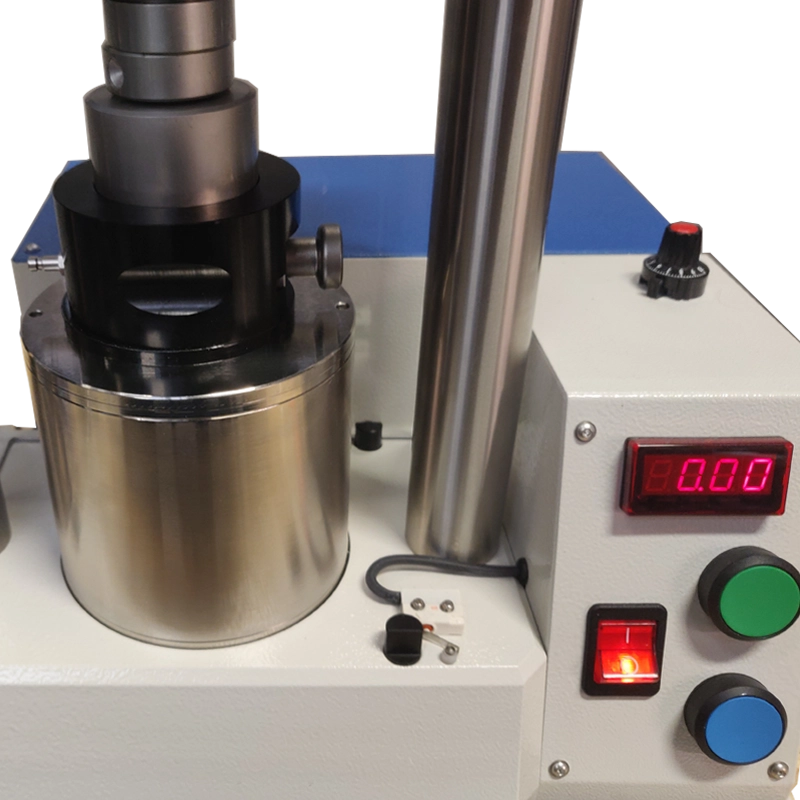
The LAARMANN motorized Hydraulic Pellet Press for frequent and reproducible preparation of small powder samples. The press unit is designed for free standing on the laboratory bench. The pressing pressure is freely selectable between 200 kg to 5 tons that can be changed with steps of 0.01 tons with the digital display. The LAARMANN compact motorized lab presses are made from solid stainless steel and aluminium construction for the best quality and can be used for different types of powder samples such as grounded soil and various powders and are really easy to operate
Features and Benefits
- No maintenance required
- Provides uniform sized pellets
- Can convert a wide range of raw materials
- Useful for biomass fuels and animal feed
Technical Specifications
| Applications | Preparation of pressed powder pellets for X-ray/XRF analysis |
| Working principle | Pressing fine powder to tablet form |
| Setting adjustment method | Digital 4 digits |
| Max pressure | 5t |
| Piston | 108mm |
| Pressure control | 200kg - 5ton |
| Press tool | 13 / 32 / 40 mm |
| Width between pistons | 150 mm |
| Minimum inner heigth | 52 mm |
| Maximum inner heigth | 142 mm |
| Power supply | 110-230 V / 50-60 Hz |
| Power connection | 1 phase |
| Standard | CE |
| Weight | 40kg |
| Dimensions (width x length x height) | 370 x 300 x 538 mm |
Pellet Press working principle
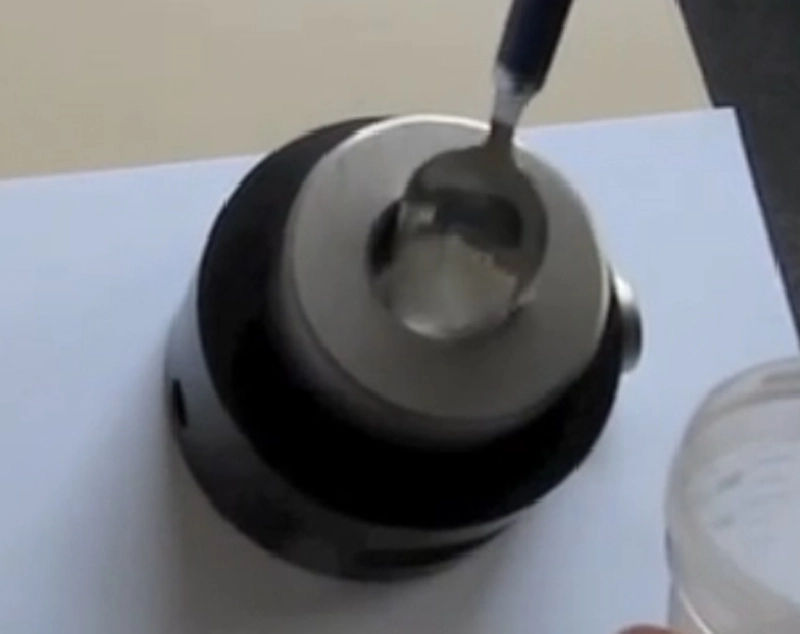
The LAARMANN LMTP Motorized Pellet Press prepares solid, reproducible pellets by applying controlled hydraulic pressure to powdered samples. The sample material is placed into a suitable press tool or die and positioned in the press.
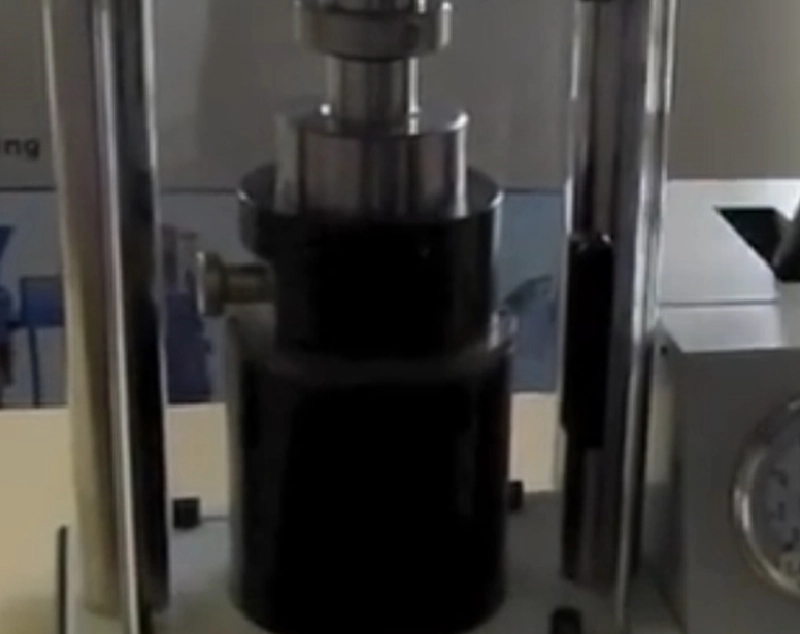
During operation, the motorized hydraulic system applies pressure to the sample, compacting the powder into a dense and uniform pellet. The pressing force can be selected between 200 kg and 5 tons and adjusted in increments of 0.01 tons using the digital control, allowing the pressure to be matched to the sample material and pellet preparation method.
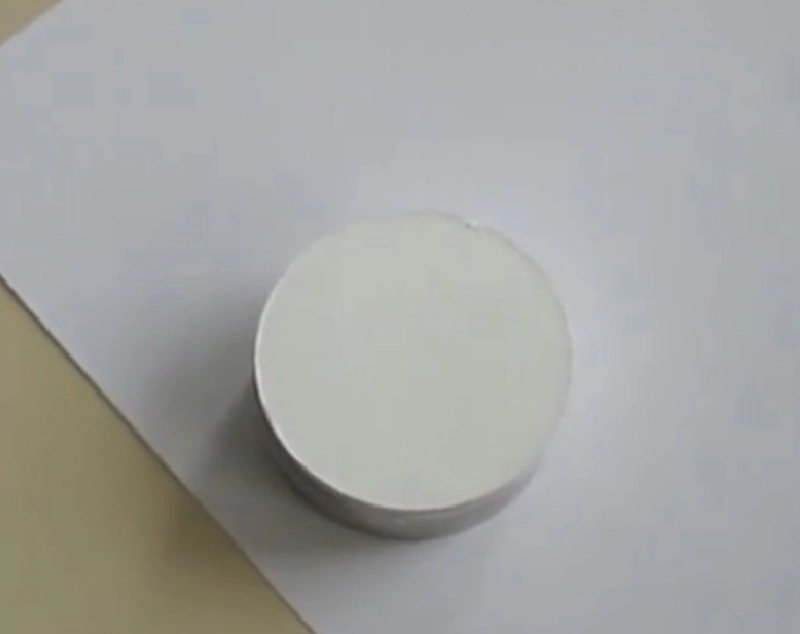
By applying a consistent and controlled pressing force, the LMTP helps produce pellets with uniform density and shape. This makes the press particularly suitable for repeatable laboratory sample preparation where consistent pellet quality is important for subsequent analysis.
Press tools are available in 13 mm, 32 mm and 40 mm sizes, allowing the press to be adapted to different sample and analytical requirements.
LMTP Pellet Press motorized FAQ (Frequently Asked Questions)
Applications
- Preparation of pressed powder pellets for XRF analysis and other laboratory analytical techniques.
- Routine preparation of mineral, geological, soil and other powdered samples where consistent pellet quality is required.
- Frequent and repetitive laboratory workflows requiring controlled and reproducible pressing conditions.
- Method development and quality-control laboratories where repeatable sample preparation helps reduce variation between measurements.
- Compaction of fine powders into stable pellets for handling, storage or subsequent instrumental analysis.