


Mini Sample Divider
Small model of the rotary sample divider for accurate laboratory sampling results
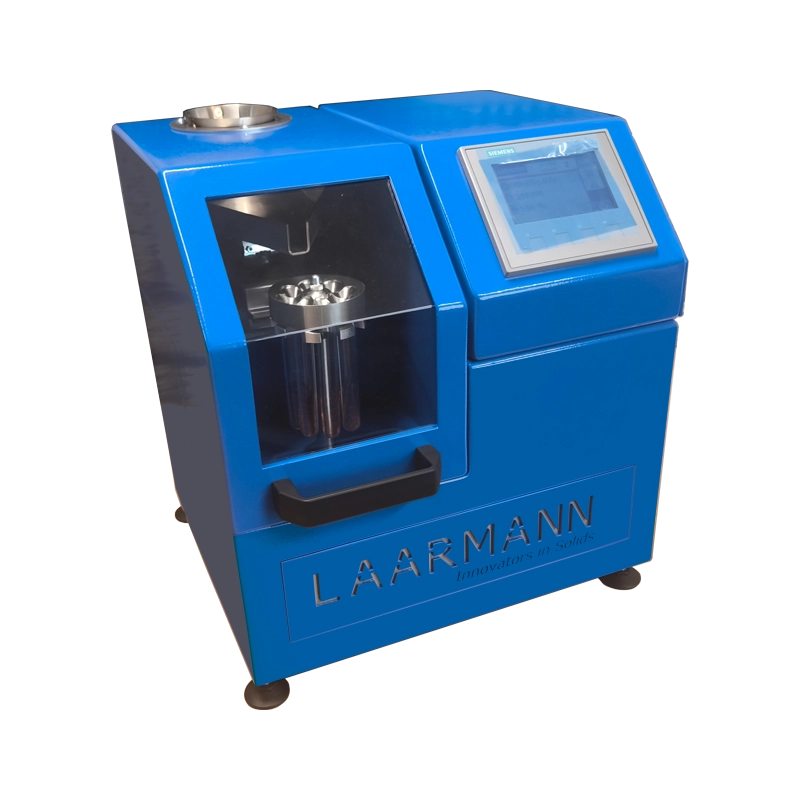
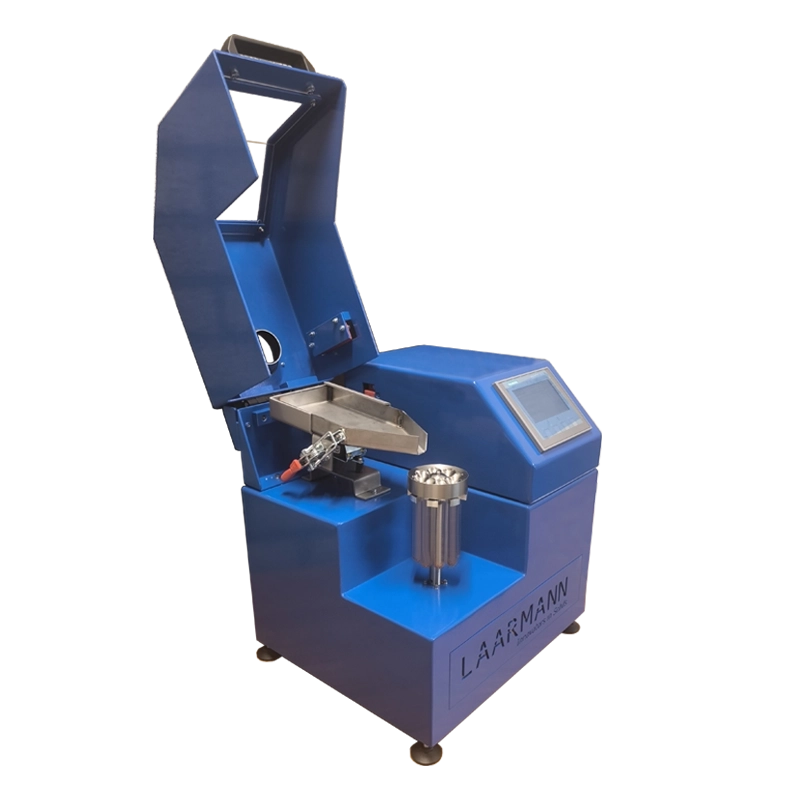
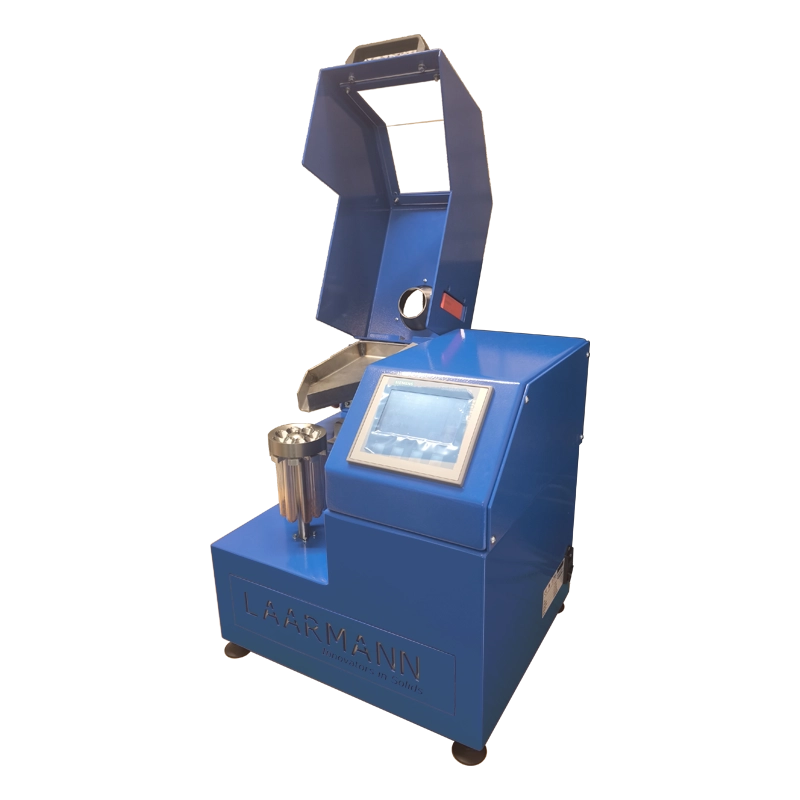
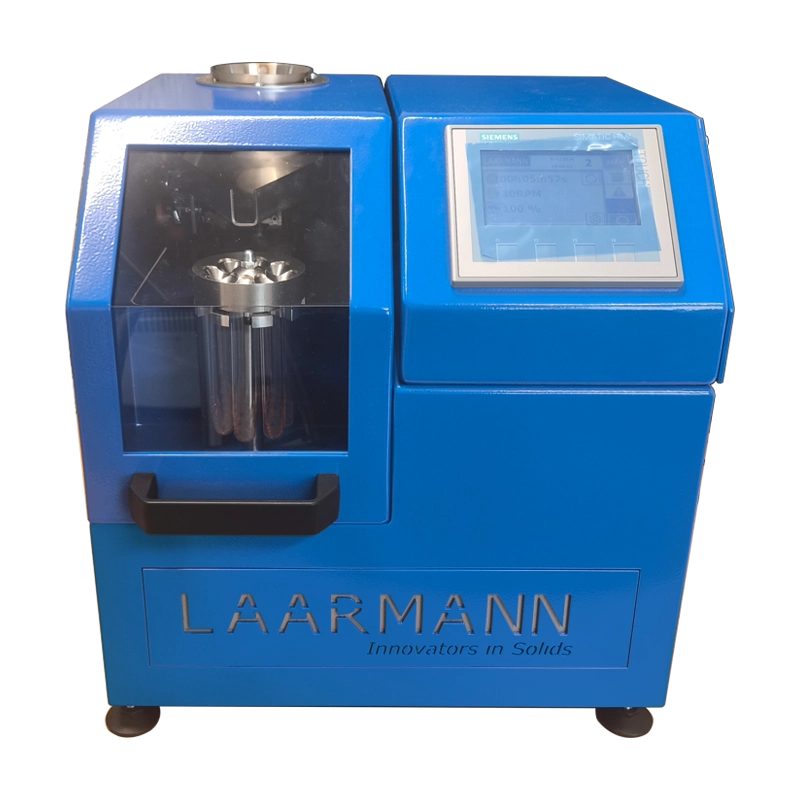
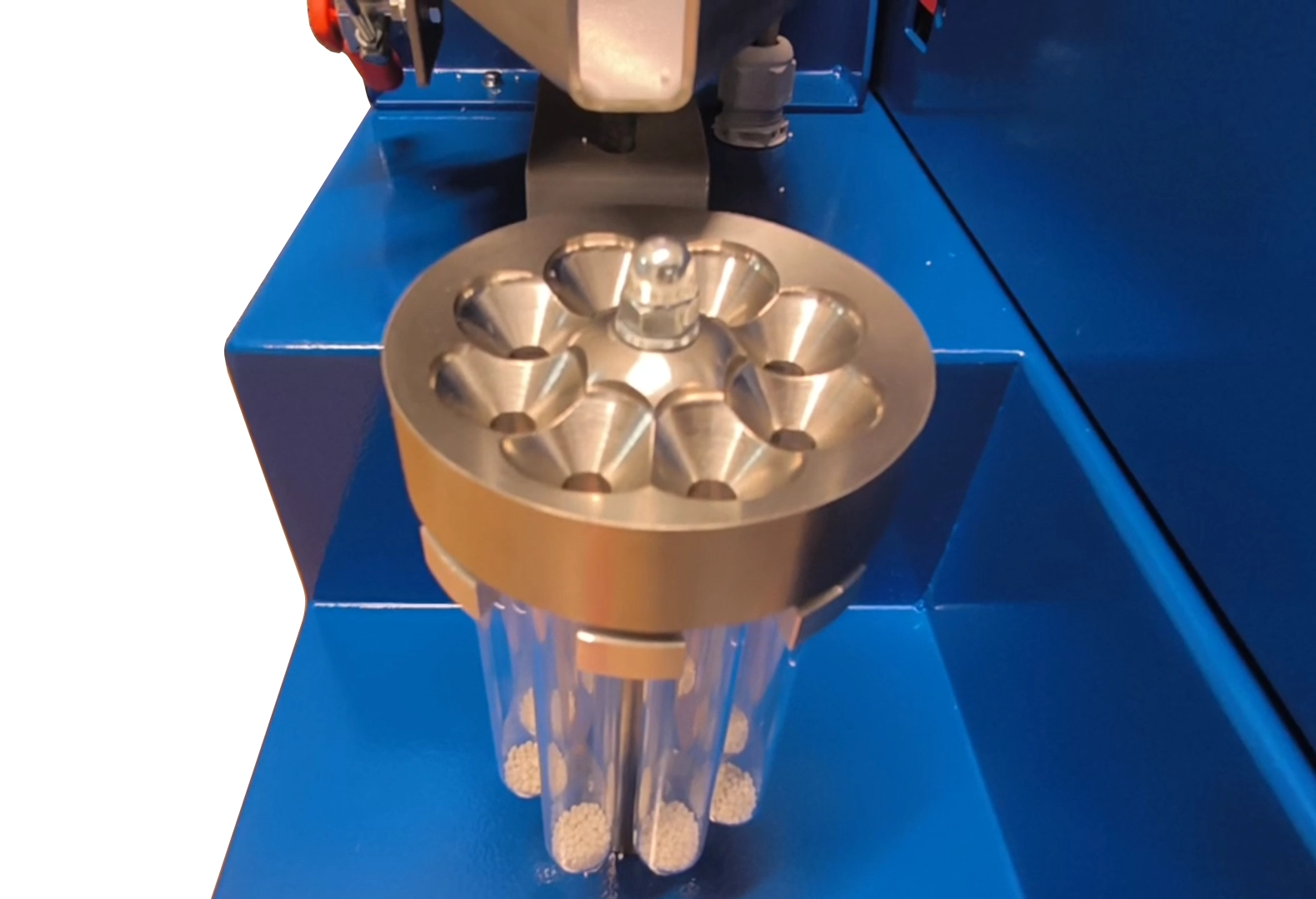
Small model of the rotary sample divider for accurate laboratory sampling results. The Mini sample divider has a bowl that has a vibratory component under it build in to increase or decrease the feeding speed of the sample The feed sample is fed at a controlled rate as a falling stream that is divided either into one part or into equal segments by the action of a "circle" of segmental vials being rotated beneath the stream. The unit operates in accordance with internationally recognized sampling protocols.
Features and Benefits
- Even division into 6 / 8 / 10 vials
- Handles fine material up to < 2.5 mm feed size
- Up to 160 ml per batch (material dependent)
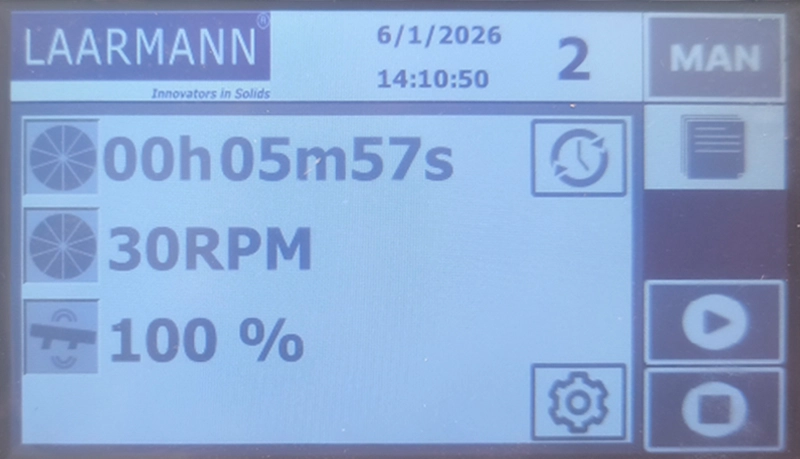
- Adjustable rotation speed and vibration to stabilize feed
- Rapidly and evenly divides small quantities of material
- Compact benchtop design for laboratory and desk usage
- Ensures a representative sample
- Simple operation and easy cleaning/maintenance
Technical Specifications
| Applications | sampling, sample division, sample reduction |
| Applications fields | Agriculture | Biology | Chemistry / Plastics | Construction Materials | Engineering / Electronics | Environment / Recycling | Geology / Metallurgy | Glass / Ceramics | Medicine / Pharmaceuticals | Mining and Mineral Processing | Cement and Building Materials Industry | Food and Feed Production | Pharmaceuticals | Environmental Labs (e.g. Soil and Waste Analysis) |
| Working principle | The mini sample divider evenly distributes material through a rotating feeder into multiple collection reagent tubes, ensuring a representative sample. |
| Maximum feed size* | ≤ 2.5 mm |
| Batch size / feed quantity* | ≤ 160 ml |
| Throughput | ≤ 160 ml per batch |
| Speed setting | 18-53 rpm |
| Number of divisions | 6 - 8 - 10 reagent tubes |
| Collector Volume | 16 ml / tube |
| Hopper volume | 150 ml |
| Sample volume | 16 ml |
| Material transport method | Vibrating chute |
| Product-contact parts | Stainless steel / Aluminum. Other materials on request |
| Setting adjustment method | Touchscreen-HMI with direct PLC-communication |
| Setting options | Rotation speed, vibration frequency |
| Fuses | 10 A glass fuse |
| Noise emission | 65-72 dB(A) |
| Electrical requirements | 400 Watt |
| Power supply | 110-120V or 220-240V, 50/60 Hz |
| Power connection | 1 phase |
| Standard | CE |
| Protection code | IP54 |
| Weight | 15kg |
| Dimensions (width x length x height) | 300 x 500 x 400 mm |
Mini sample divider working principle
The LAARMANN Mini Sample Divider is a compact rotary sample divider designed to split small laboratory batches into
consistent, representative sub-samples. It is typically used for powders, granules, and fine crushed materials
(up to ≤ 2.5 mm feed size) when reliable analytical results depend on unbiased sample splitting.
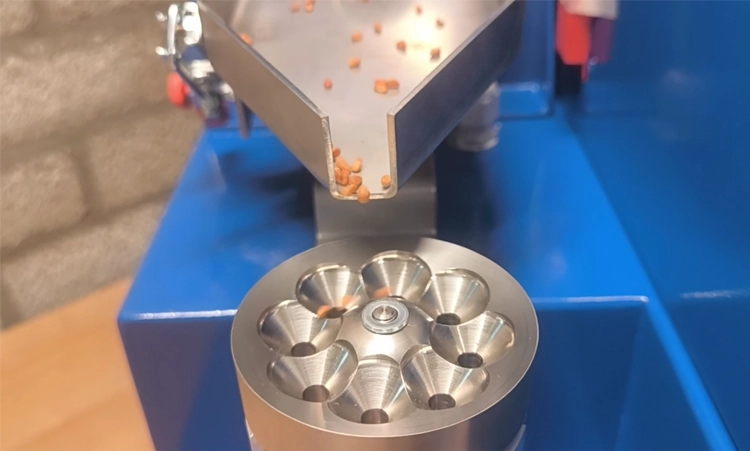
Sample material is loaded into the feed hopper and guided into the dosing section, where the material flow is
stabilized (for example by controlled vibration) to create a steady, repeatable feed stream. A constant feed stream
is essential: it prevents "slugging" and helps ensure each receiving vial gets an equal opportunity to collect the
full range of particle sizes present in the batch.
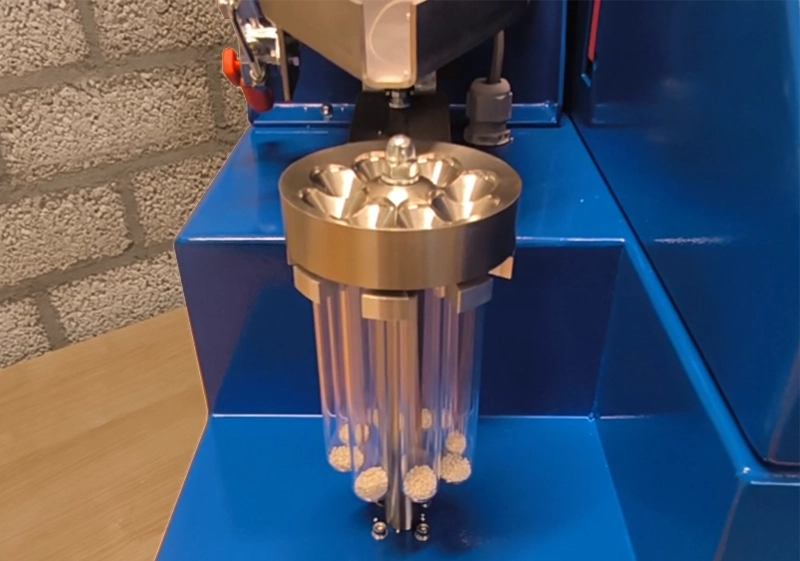
From the dosing section, the material is directed to the center of a rotating carousel. As the carousel turns, the
stream is divided over a ring of evenly spaced collection positions. The Mini Sample Divider can be configured with
6, 8, or 10 sample vials/tubes, allowing you to create multiple representative sub-samples in a single run.
Division accuracy is controlled by synchronizing the carousel rotation speed with the material feed rate. By tuning
these settings to the material characteristics, the instrument distributes the batch evenly across all vials and
produces repeatable splits from run to run.
After the run, the vials are removed for analysis or further preparation. All parts in contact with the sample are
designed for laboratory use and easy cleaning, helping reduce cross-contamination between samples.
The Mini Sample Divider is intended for small batches (up to 160 ml, material dependent) and fits on a laboratory
bench, making it a practical solution for routine QA/QC and sample preparation workflows.
How it works
The material with a feed size under 2.5 millimeters is placed into the feed hopper. The vibratory feeder ensures a consistent flow rate into the rotating vials.
As the small carousel rotates, the sample is evenly distributed across the collection vials. The rotation ensures that each container receives an equal and representative portion of the material.
The design ensures precision, even with small quantities, like the maximum 120 cubic millimeters this device.
After the material has been fully distributed, the rotation stops, and the collection containers can be removed. Each container holds a representative sub-sample ready for further analysis.
The sub-samples can be analyzed directly or further divided, depending on the specific needs of the laboratory procedures.
Mini Sample Divider FAQ (Frequently Asked Questions)
Applications
- Used to prepare fine ore or mineral samples for chemical analysis, ensuring representative sub-samples.
- Ideal for dividing fine powders or granules for quality control testing.
- Used to split fine soil or seed samples for various agricultural studies.
- Suitable for preparing small sub-samples of fine particulate matter for environmental testing.