

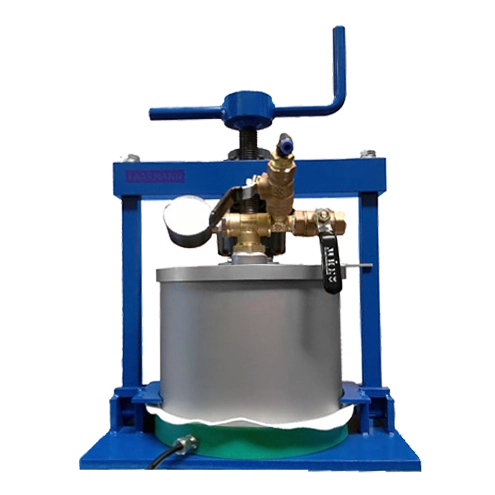
LMPF Pressure Filter Table mounted version
Laboratory Pressure Filtration Unit with proven design for rapid filtration and enabling of difficult separations
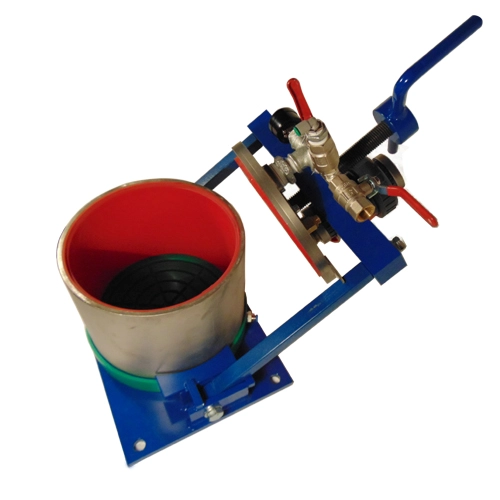
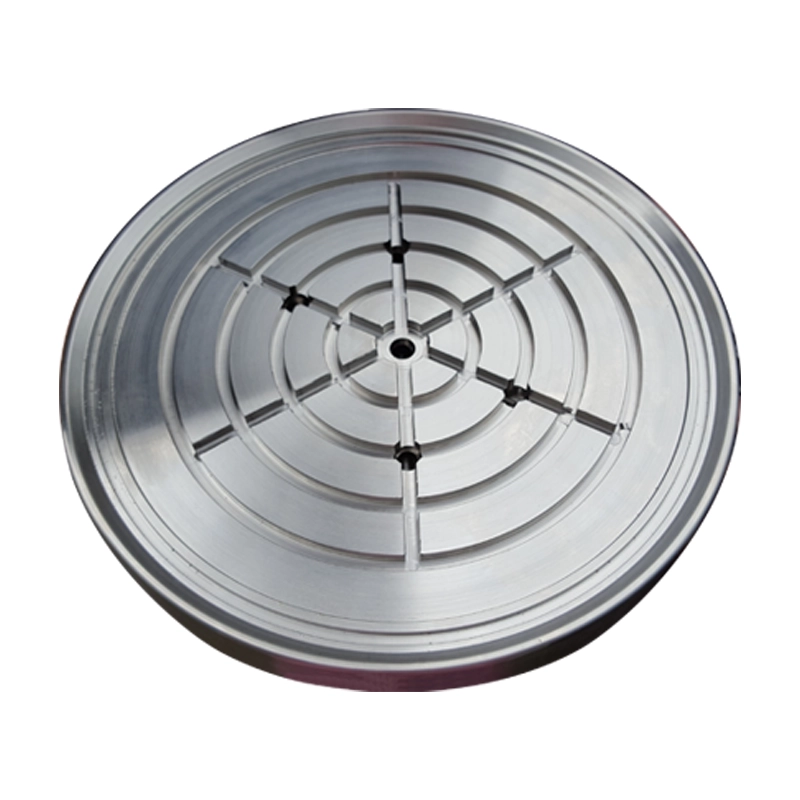
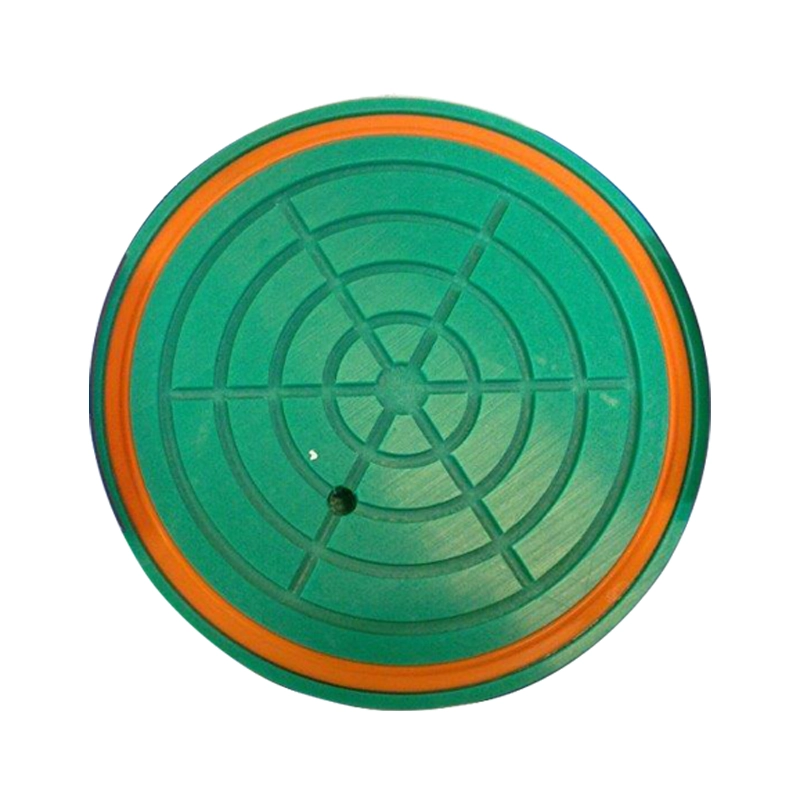
The Laboratory Pressure Filtration Unit Table mounted version (TM) has a proven design which achieves rapid filtration, enabling difficult separations that would otherwise be extremely slow. The Pressure Filters are available in a standard range of sizes: 4, 13, 24, and 41. Combinations of construction materials are available including Stainless Steel 306 & 316 and Mild Steel, with the barrels in natural finish or with either Rubber or Polyurethane lining.
Features and Benefits
- A minimum table space is required
- low energy consumption
- Minimised risk of environmental hazard from toxic, flammable or volatile cakes
- For the easy handling of saturated brines
- Reslurry washing / cake washing
- Sharp separation
- Suitable for filter cakes which tend to crack
- Easily recovering of the filter cake
- A full range of filter cloth with various permeability is available

Technical Specifications
| Applications | Filtering chemicals, pigments, and pharmaceuticals |
| Working principle | Dewatering concentrates and removing moisture with high pressure |
| Max air pressure to the filter | 500 kPa |
| Barrel coating | manganese steel, tungsten carbide, hardened steel, PFA, heavy metal free steel and stainless steel (others on request) |
| Barrel available volume | 4, 13, 24, 41 Litres |
| Standard | CE |
| Weight | 180kg |
| Dimensions (width x length x height) | 800 x 600 x 1800 mm |
Pressure filter working principle
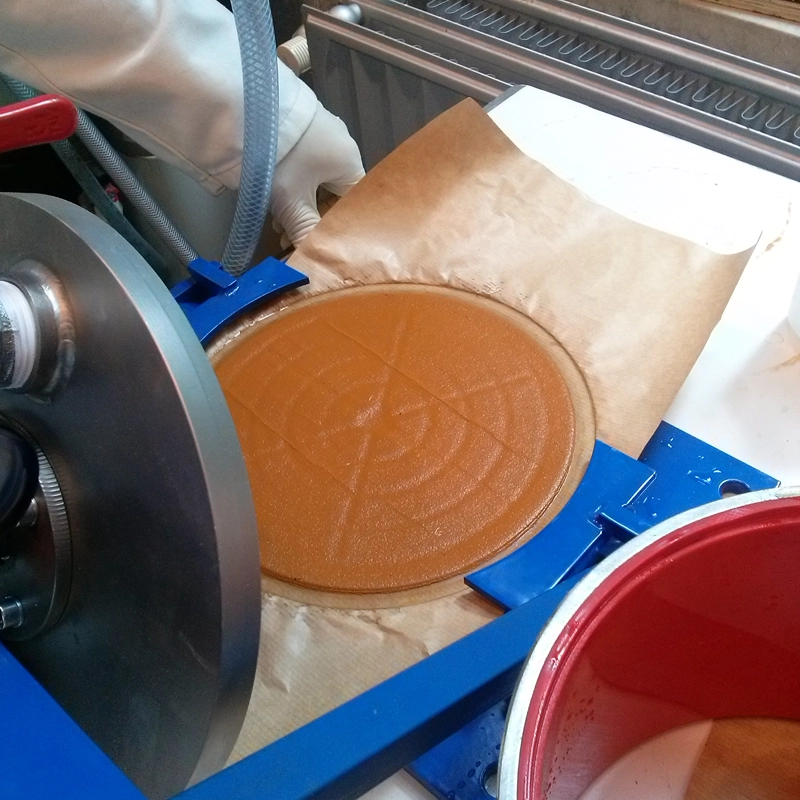
The table-mounted pressure filter separates solids from slurry using pressure-driven filtration in a compact, bench-friendly design. Compressed air is applied above the slurry, forcing liquid through a filter medium while solids accumulate as a cake. Filtration performance depends on slurry solids content, particle size distribution, viscosity, cloth permeability and applied pressure/time. The removable barrel simplifies cake removal, cleaning, and fast turnaround between tests.

How it works
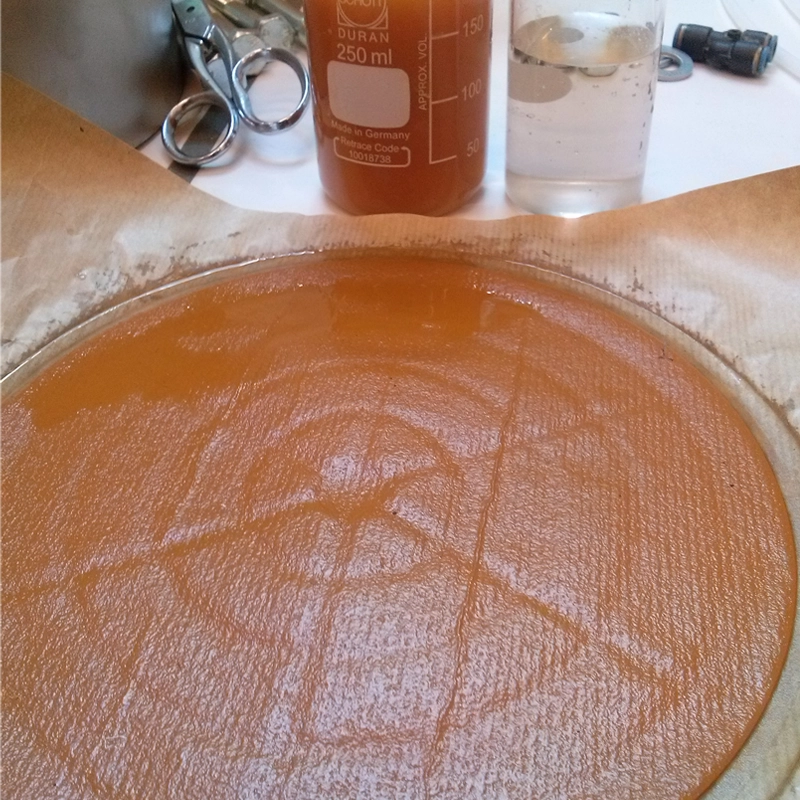
The selected filter cloth is fitted and the sealing surfaces are checked for cleanliness before closing the lid. The slurry is then loaded and the vessel is pressurised so that liquid is driven through the filter cloth, while solids are retained and form a filter cake. Filtrate is collected from the outlet and the run continues until the chosen endpoint is reached, such as a target filtration time, filtrate volume, or cake dryness. After filtration, the pressure is released safely using the bleed valve until zero pressure is confirmed. The unit is opened and the filter cake is removed, after which the cloth and internal parts can be cleaned quickly for the next test.
Pressure Filter Table Mounted FAQ (Frequently Asked Questions)
Applications
- After flotation or other beneficiation processes, pressure filters are used to dewater the mineral concentrate, producing a dry cake that can be easily transported or processed.
- Pressure filters are ideal for dewatering tailings, reducing the volume and water content of waste materials, and making disposal safer and more cost-effective.
- In hydrometallurgical processes like heap leaching, pressure filters are used to separate the metal-rich leachate from the solid ore residue, enabling efficient metal recovery.
- In processes where the liquid phase needs to be reused or treated, pressure filters provide clear, high-quality filtrate, improving process efficiency.